
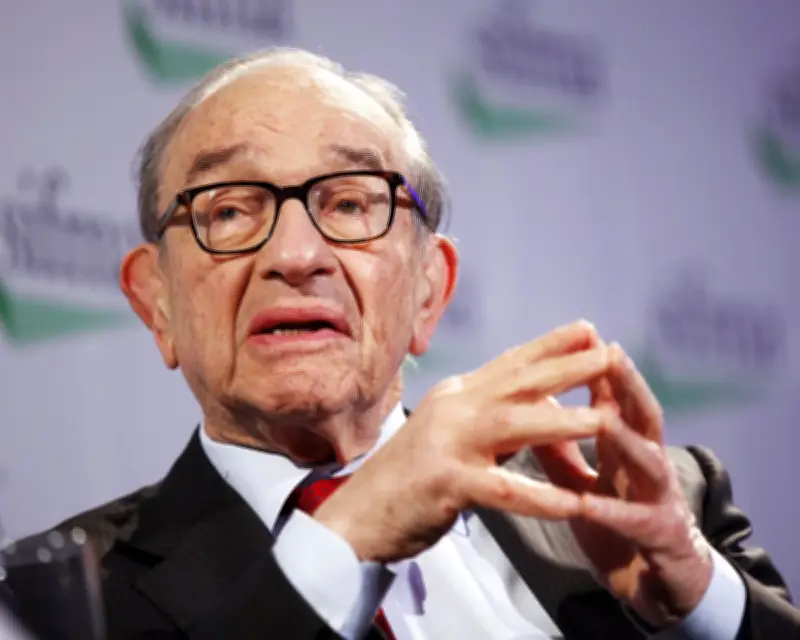
Alan Greenspan, the former chairman of the US Federal Reserve who presided over the central bank for nearly two decades, has died at the age of 100. His death was announced by his family in a statement on Monday.
Greenspan's tenure at the Fed
Greenspan served as Fed chairman from 1987 to 2006, under four presidents: Ronald Reagan, George H.W. Bush, Bill Clinton, and George W. Bush. He was known for his cautious approach to monetary policy and his often cryptic public statements. During his tenure, the US economy experienced a period of low inflation and steady growth, known as the "Great Moderation."
According to the Federal Reserve, Greenspan's leadership helped navigate the 1987 stock market crash, the savings and loan crisis, and the dot-com bubble. However, his policies have also been criticized for contributing to the housing bubble that led to the 2008 financial crisis.
Early life and career
Born on March 6, 1926, in New York City, Greenspan studied economics at New York University and Columbia University. Before joining the Fed, he worked as an economic consultant and served as chairman of the Council of Economic Advisers under President Gerald Ford.
Greenspan was also a key advisor to President Richard Nixon and later to President Ronald Reagan, who appointed him as Fed chairman in 1987.
Impact and legacy
Greenspan's influence extended beyond the US. He was a vocal advocate for free markets and globalization, and his ideas shaped economic policy worldwide. His memoir, "The Age of Turbulence," was published in 2007 and became a bestseller.
In a statement, current Fed Chairman Jerome Powell said, "Alan Greenspan was a giant in the field of economics. His dedication to public service and his deep understanding of the economy left an indelible mark on the Federal Reserve and the nation."
Greenspan is survived by his wife, Andrea Mitchell, a journalist for NBC News, and his two children from a previous marriage.




