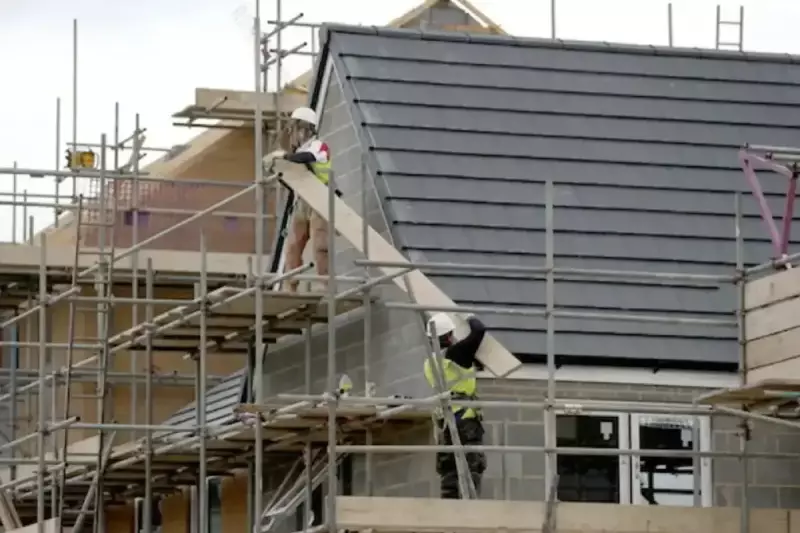
The UK's construction industry has now been in a state of contraction for an entire year, dealing a significant blow to the Labour government's flagship pledge to build 1.5 million new homes before the end of the decade.
A Full Year of Falling Output
According to the closely watched monthly survey from S&P Global, the sector's output has remained below the neutral threshold for twelve consecutive months. The data for December 2025 showed the second-lowest reading since May 2020, highlighting the depth of the ongoing slump.
The downturn has been particularly acute in housing and commercial construction. Activity in these areas fell at the fastest rate since the early pandemic period, as measured by S&P Global's Purchasing Managers' Index (PMI). Economists point to a toxic mix of low business confidence and soaring costs—including higher taxes and raw material prices—as the primary causes.
Government Targets Under Threat
This sustained decline casts serious doubt on the government's ability to deliver its ambitious "build, baby, build" agenda. The central pledge to construct 1.5 million new homes by 2030 now appears increasingly unattainable without a dramatic and rapid turnaround.
Housing Secretary Steve Reed is expected to face intensified scrutiny over the effectiveness of the government's planning reforms, which are being rolled out this year. The latest figures suggest these measures may be too little, too late to reverse the current trend.
Analysts at S&P Global noted that pre-Budget speculation over property taxes further dampened activity across engineering, house building, and commercial projects in the latter part of 2025. Tim Moore, Economics Director at S&P Global, stated, "Despite a lifting of Budget-related uncertainty, delayed spending decisions were still cited as contributing to weak sales pipelines at the close of the year."
Job Losses and Cautious Optimism
The survey also revealed continued job shedding in December, although at a more moderate pace, and a concerning lack of new orders to replace completed projects. This paints a picture of an industry retrenching rather than gearing up for growth.
Despite the grim headline figures, there was a slight recovery in business optimism. Some 37 per cent of firms anticipate a rise in output over the coming year, driven largely by expectations of greater investment in utilities like water and energy infrastructure. However, a significant minority—one in five (20 per cent)—still forecast a decline.
Amy Wood, a real estate economist at Capital Economics, linked the data directly to the housing shortage: "The weakness in the housing balance is consistent with the low supply of new homes in 2025. New housing starts are likely to rise this year, though they will remain low by past standards and undershoot the government’s homebuilding target."
Looking ahead, analysts at Pantheon Macroeconomics warned that the continued contractions will likely weigh on the UK's growth forecasts for 2026, even if actual activity manages to "outperform the signal from the PMI." The road to recovery for British construction—and the government's housing ambitions—looks set to be a long one.