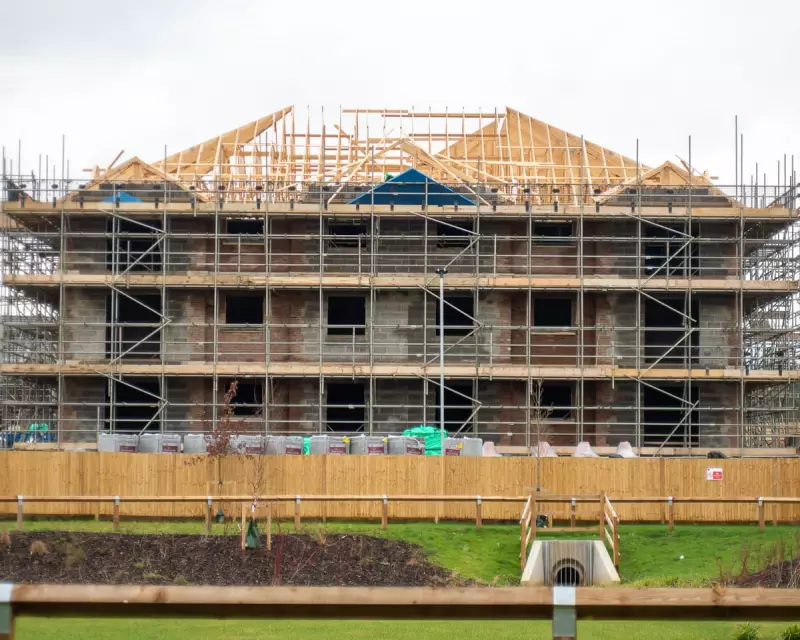
The UK's construction sector is enduring its most prolonged period of decline since the depths of the global financial crisis, with housebuilding activity sinking to a level not seen since the first Covid-19 lockdown.
A Sector in Sustained Contraction
According to the closely watched S&P Global / CIPS UK Construction Purchasing Managers’ Index (PMI), output shrank for the twelfth consecutive month in December 2023. This marks the longest unbroken sequence of falling activity since the 2007-2009 financial crash. The headline PMI reading was 40.1, only a slight improvement from November's five-and-a-half-year low of 39.4. Any figure below 50 indicates contraction.
Tim Moore, Economics Director at S&P Global Market Intelligence, noted that while the pace of decline moderated from November's steep drop, conditions remained severely challenging. "Many firms cited subdued demand and fragile client confidence," he said. "Delayed spending decisions were still cited as contributing to weak sales pipelines at the close of the year."
Housebuilding in the Deepest Slump
The most alarming data came from the residential building sector. The housebuilding subindex plummeted to 33.5 in December, its lowest point since May 2020 when construction sites were forcibly closed by the pandemic lockdown. This severe downturn presents a significant hurdle for the government's housing targets.
Housing Secretary Steve Reed recently acknowledged the need for a sharp increase in building to meet Labour's pledge of 1.5 million new homes over five years, a goal that housebuilders have already warned is at risk.
The pain was not confined to housing. Commercial construction activity also fell at its fastest rate in over five-and-a-half years, with its index at 42.0. Civil engineering remained the weakest sector overall, despite a slight easing in its downturn, recording a reading of 32.9.
Glimmers of Hope Amid the Gloom
Despite the bleak current data, there were signs of growing optimism for the year ahead. Construction companies' confidence for the next 12 months rose to its highest level since July 2023. This shift in sentiment is attributed to the prospect of lower borrowing costs and reduced uncertainty following the Autumn Statement.
The survey revealed that 37% of companies forecast a rise in output in the coming year, compared to just 20% predicting a further decline. Expectations of rising infrastructure spending and easing inflationary pressures are fuelling hopes of a eventual turnaround.
Employment and new orders continued to fall in December, but at a slower pace than in the previous month. The broader all-sector PMI, which includes services and manufacturing, edged up to 50.4, indicating a marginal expansion across the whole UK economy.
However, economists urge caution. Elliott Jordan-Doak, Senior UK Economist at Pantheon Macroeconomics, warned: "We expect the construction PMI itself to remain subdued in the coming months, given how entrenched negative sentiment appears to be within the sector." He pointed to the Chancellor's focus on welfare over investment and the new high-value council tax surcharge—dubbed a 'mansion tax'—on properties over £2m from April 2028 as factors likely to constrain growth.
The sector's struggle coincides with a mixed housing market outlook. While UK house prices fell unexpectedly in December, Nationwide building society has tipped prices to rise by up to 4% in 2024, with first-time buyers expected to be a key driver.