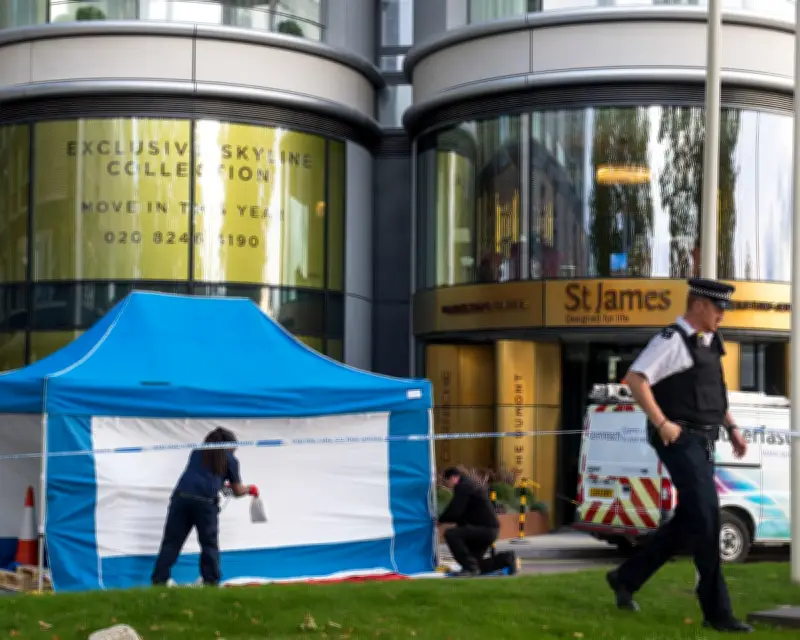
A jury at Inner London crown court has cleared Foster + Partners (F+P), the architecture firm founded by Norman Foster, of responsibility for the death of Mick Ferris, a 53-year-old coach driver who was killed when a 130kg (287lbs) window fell from the penthouse of the Corniche, a luxury tower block on Albert Embankment, central London, in October 2018. However, the project managers St James and the project’s engineers Lindner Prater were found guilty of safety breaches under the Health and Safety at Work Act 1974.
Fatal incident and prior warning
The court heard that Ferris was struck instantly by the window, which had been blown off its hinges when the building was nearly complete. A woman pushing a wheelchair narrowly avoided being hit. The prosecution, brought by the Health and Safety Executive, argued that the death was foreseeable, noting that a similar window panel had fallen from the same development in August 2017, miraculously causing no injuries but leading to no design changes.
Prosecutor Gordon Menzies told the jury: “It wasn’t an accident waiting to happen … it was an accident that had already happened in August 2017. The prosecution say it was an accident waiting to happen again.” He detailed that the wind was strong enough to blow the window open beyond 8.5 inches, causing the oversailing glass to clash with the frame and prise off the hinges.
Design flaws and missed opportunities
The jury was told of 12 “missed opportunities” where designers should have considered the risks of outward-opening, side-hung windows. The designers failed to account for the “catastrophic” consequences if a restrictor—a device meant to prevent the window from blowing off—failed. They also overlooked the fulcrum effect of an 85cm (33in) window being forced off its hinges. A restrictor had been removed at the time of the incident.
Originally, the windows were designed to open inward, but the design was changed to avoid clashing with an internal ceiling coffer containing wires and pipes. It was only after Ferris’s death that the design reverted to inward-opening. The prosecution argued that F+P, with its specialist knowledge of glass-covered buildings like the Gherkin, should have known of these risks.
Defence and verdict
All four defendants denied the charges, claiming they did all that was reasonably practicable to ensure safety. Lawyers for F+P argued that the firm’s role was limited to visual aspects of the design and did not involve technical issues. After more than 11 hours of deliberation, the jury cleared F+P and the building’s design engineer, Wintech, but found St James and Lindner Prater guilty of failing in their duty to protect the public.
A spokesperson for F+P said: “Our thoughts remain with Mr Ferris’s family, as they have since October 2018. We note the court’s decision and are grateful to the jury for the time and care they have taken in considering this matter.” A spokesperson for Wintech added: “While the court has reached its conclusion, the tragedy of what happened remains. It is vital that we continue to reflect and learn, and as an industry, remain committed to strengthening standards and practices to help prevent such incidents in the future.”
Reactions and implications
A spokesperson for St James said: “The death of Mick Ferris in 2018 was tragic. Our thoughts remain with his family and friends. We acknowledge today’s verdict and will carefully consider its implications.” Lindner Prater has been approached for comment. The verdict highlights the importance of rigorous safety assessments in high-rise construction, particularly for outward-opening windows in luxury developments.