
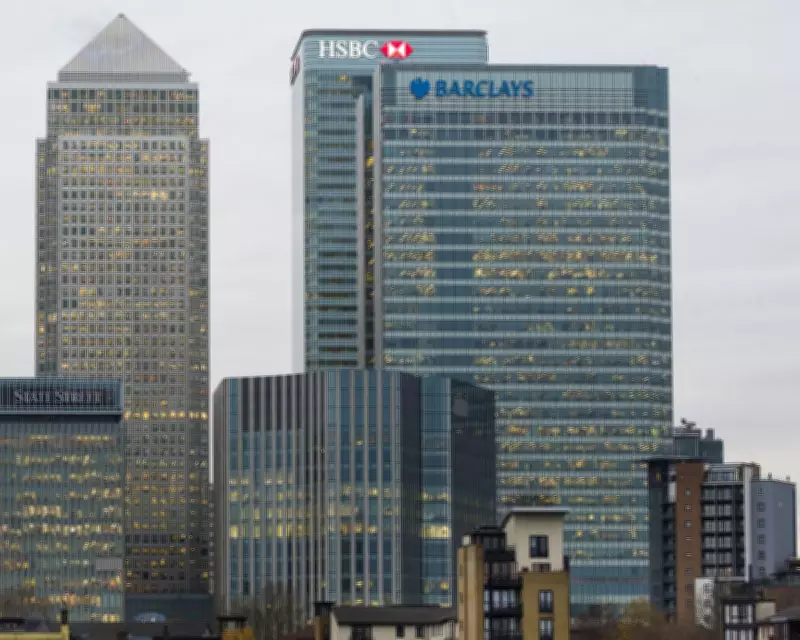
UK Banks Forge National Payment Network to Counter Trump-Linked Risks
In a bold move to safeguard the UK's financial infrastructure, bank executives are convening to launch a domestic payments system as an alternative to Visa and Mastercard. This initiative, driven by escalating fears over potential disruptions from US political actions, marks a significant step toward reducing reliance on American-owned networks that dominate the UK's card transactions.
First Meeting to Address Sovereign Payments Concerns
The inaugural meeting, scheduled for this Thursday, will be chaired by Vim Maru, the UK chief executive of Barclays. It will assemble a coalition of City funders tasked with covering the costs of establishing a new payments company. This entity aims to ensure the UK economy remains operational in the event of operational failures or geopolitical tensions affecting existing systems.
Discussions for this City-funded, government-backed project have been ongoing for years, but recent threats from Donald Trump against NATO allies have intensified worries. With approximately 95% of UK card transactions processed through Visa and Mastercard, as reported by the UK's Payment Systems Regulator in 2025, the vulnerability of the economy to external shocks has become a pressing issue. The decline in cash usage further amplifies this risk, making a sovereign payments system increasingly critical.
Global Context and EU Parallels
The urgency for a backup system is echoed globally, particularly in the European Union, where politicians advocate for locally owned networks to prevent arbitrary shutdowns by foreign powers. Aurore Lalucq, chair of the European Parliament's economic and monetary affairs committee, recently issued a viral warning, emphasizing that reliance on US companies like Visa and Mastercard poses a severe threat, stating, "Trump can cut everything off."
In Russia, where Visa and Mastercard handle 60% of payments, US sanctions that forced these companies to suspend services left citizens stranded without access to funds, highlighting the potential for widespread disruption. This scenario underscores the need for the UK to develop resilient alternatives to avoid similar crises.
Collaborative Approach with Industry Stakeholders
Unlike the EU's more aggressive stance, the UK initiative involves collaboration with Visa and Mastercard, both of which are part of the funders group. This coalition includes major banks and payment firms such as Santander UK, NatWest, Nationwide, Lloyds Banking Group, Link, and Coventry Building Society, ensuring a broad-based effort to create a competitive yet cooperative framework.
UK officials have emphasized the need for enhanced resilience without explicitly citing US threats. Sarah Breeden, deputy governor of the Bank of England, noted in a recent speech that the new system would provide "extra resilience in the UK payments landscape" amid growing cyber and operational risks. Joe Garner, former Nationwide chief executive and government adviser, reinforced this, stating that regardless of political developments, the UK requires a sovereign payments solution to future-proof its economy.
Implementation and Future Outlook
The City funders will oversee the legal structure, leadership plans, and funding models for the new entity, known as DeliveryCo. Concurrently, the Bank of England is developing infrastructure blueprints to be transferred to the group next year, with the system expected to be operational by 2030.
Visa and Mastercard have expressed commitment to the UK market, welcoming competition. Visa highlighted its focus on providing secure, innovative payments, while Mastercard reiterated its long-term investment in the UK. However, the trade association UK Finance declined to comment on the project, and the Treasury and Bank of England have not provided additional statements.
This strategic move reflects a proactive effort to bolster the UK's financial sovereignty, ensuring that payment systems remain robust and independent in an increasingly uncertain global landscape.




