
Labour's Inheritance Tax Overhaul Sparks Entrepreneurial Backlash
The Labour government's controversial inheritance tax reforms have ignited a firestorm of warnings from Britain's most prominent entrepreneurs and family business owners. The elimination of Business Property Relief, a decades-old tax carve-out, is forcing business leaders to confront the possibility of selling or breaking up their companies upon their death to cover substantial tax liabilities.
The End of Business Property Relief
Introduced under a Labour government in the 1970s, Business Property Relief allowed individuals to pass down ownership of family businesses completely free from inheritance tax. This provision enabled business owners to manage their firms with confidence, knowing their death wouldn't burden their heirs with overwhelming tax bills.
However, in its first budget after 14 years out of power, the current Labour administration terminated this allowance. Starting April 2026, any shareholding in a family business exceeding £2.5 million will be taxed at a reduced rate of 20 percent. While this represents a concession from the original £1 million threshold following farmer protests, it still marks a dramatic departure from previous policy.
Entrepreneurs Sound the Alarm
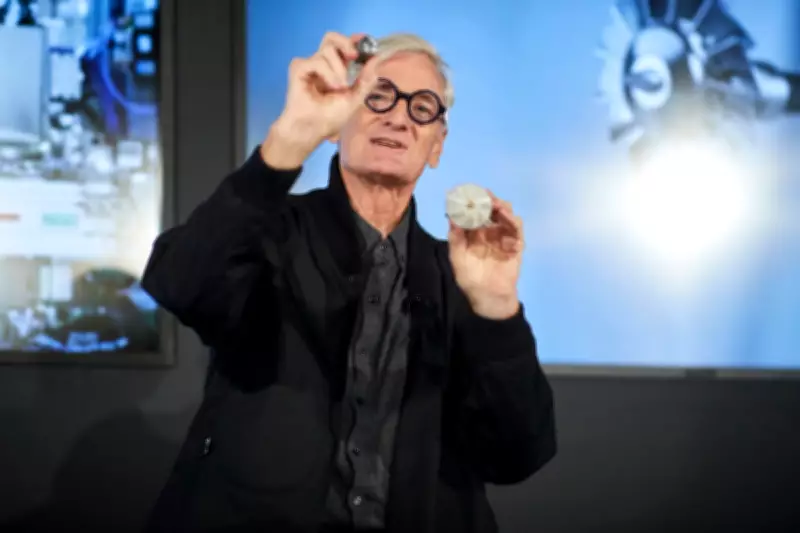
Sir James Dyson, founder of the consumer electronics giant bearing his name, delivered perhaps the most stark warning. Speaking to Radio 4's Today programme, Dyson explained that his family "could not pay" what promises to be a multi-billion-pound inheritance tax bill. "We haven't got billions of cash... so you have to sell the business to pay it," he stated bluntly. Dyson emphasized that company value represents "paper money" based on profit multiples rather than liquid assets available for tax payments.
Sir Rocco Forte, whose luxury hotel empire spans Italy, the UK, and Belgium, echoed these concerns. He told City AM that his family would need to sell hotels or similar assets to cover their looming tax obligation. "If I drop dead tomorrow... there's no way my family can pay that tax without selling the business or breaking it up," Forte declared, adding that the issue affects all family businesses crucial to the economy.
Steve Perez, founder of Global Brands (maker of VK, Hooch, and Franklin and Sons), has taken dramatic steps in response to the changes. He has paused investment in a hotel business and factory expansion to reduce his heirs' future tax exposure. Perez has even launched a legal challenge against the government, arguing the changes bypassed proper consultation processes.
Centuries-Old Traditions at Risk
Lizzy Rudd, chair of Britain's oldest wine merchant Berry Bros and Rudd, highlighted how the policy threatens business traditions dating back over three centuries. "As a 327-year-old family business, we always strived to be stewards for future generations," she explained. Rudd questioned how businesses can build long-term value when heirs must pay taxes on "paper" value that only materializes through asset sales.
Jo Bamford, heir to the JCB fortune and entrepreneur behind Ryze Power and Wrightbus, revealed his family's historical concerns about government intervention. He and his sister were born in the United States due to fears of potential nationalization. Bamford warned that inheritance tax pressures might push businesses overseas again, stating, "It could quite easily become an American business."
Broader Industry Concerns
The discontent extends beyond these high-profile cases. Other family business leaders speaking out against the inheritance tax changes include:
- William Lees-Jones, managing director of JW Lees Brewery
- Nick Showering, founder of Showerings Cider
- Steve Rigby, co-chief executive of Rigby Group
These entrepreneurs collectively warn that the inheritance tax changes will force undesirable behaviors, including disinvestment from business growth and potential relocation of operations abroad. The government's revenue-raising measure, intended to bolster Treasury coffers, now threatens to undermine the very family enterprises that form the backbone of British business heritage and economic stability.




