
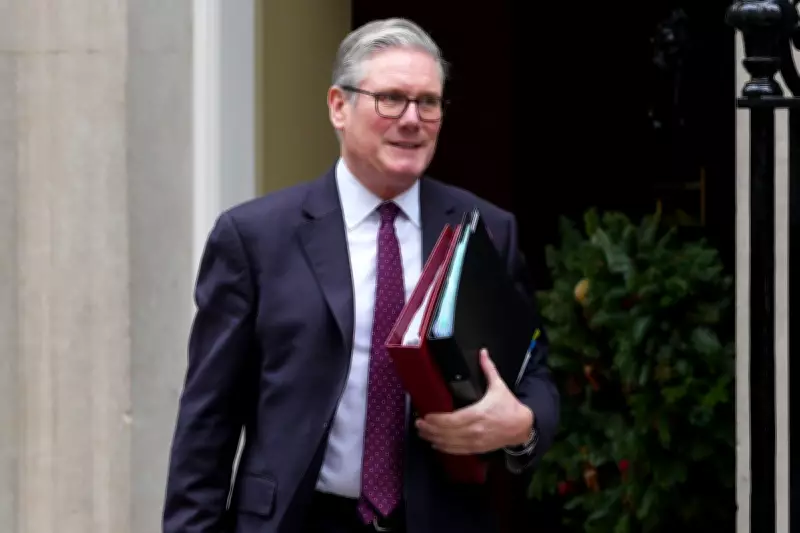
Downing Street Resignations Spark UK Bond Market Anxiety
UK bond markets displayed heightened unease on Monday morning as a series of high-profile resignations from Downing Street intensified investor concerns over Prime Minister Sir Keir Starmer's leadership stability. The political turmoil has cast a shadow over the government's economic credibility, with gilt yields climbing in response to the unfolding crisis.
Gilt Yields Rise Amid Political Uncertainty
The 10-year gilt yield, a crucial benchmark for UK government borrowing costs, increased by as much as six basis points to reach 4.57 per cent. This movement followed the resignation of Downing Street communications chief Tim Allan, marking the second departure of a key Starmer aide within 24 hours. Chief of staff Morgan McSweeney had stepped down on Sunday, creating a ripple effect through financial markets.
While this yield shift exceeded the average daily movement of approximately four basis points, it remained below last week's peak of 4.6 per cent. The market reaction proved more subdued compared to previous political shocks, such as the 16 basis point surge triggered last July when Chancellor Rachel Reeves was observed in distress during a House of Commons session.
Leadership Crisis Deepens with Key Departures
Prime Minister Starmer faces mounting pressure following the resignation of his chief of staff and trusted adviser, Morgan McSweeney. McSweeney accepted responsibility for recommending the appointment of Peter Mandelson as US ambassador, a decision that has attracted intense scrutiny. Recent revelations from the Epstein files have exposed close connections between the Labour veteran and the convicted sex offender, including indications that Mandelson shared market-sensitive information during his tenure as business secretary.
In his resignation statement, McSweeney acknowledged that advising Starmer on Mandelson's appointment was "wrong" and he assumed "full responsibility" for the error. This development came shortly after Starmer publicly expressed unwavering confidence in McSweeney during Prime Minister's Questions, stating he had "of course" full faith in his top adviser.
Communications chief Tim Allan announced his departure on Monday, stating: "I have decided to stand down to allow a new No10 team to be built. I wish the PM and his team every success."
Yield Curve Signals Investor Apprehension
Over the past week, nervousness has permeated the bond market, reflecting investor bets against the stability of the Starmer government. The yield curve, which measures the price difference between short- and long-term UK debt, reached its widest point since 2018 last Thursday. This indicator suggests investors are losing confidence in the long-term credibility of the UK economy, despite improvements in the interest rate outlook.
Borrowing costs for the 10-year gilt remained elevated throughout last week as traders anticipated the possibility of a new leader from the left implementing looser fiscal discipline. The sell-off on Thursday expanded the gap between two- and ten-year bonds to over 95 basis points, representing the highest spread in nearly eight years.
Fiscal Policy Concerns Loom Large
Investors fear that any potential replacement for Starmer might adopt more relaxed fiscal policies and weaken commitments to government spending controls, potentially driving up public borrowing further. However, it is noteworthy that current bond yields remain below their 2025 peak of approximately 4.9 per cent, indicating some residual market resilience.
Allies of the Prime Minister have strongly rejected suggestions of an imminent regime change. On Sunday, Work and Pensions Secretary Pat McFadden, a close Starmer confidant, dismissed calls for a no-confidence vote during an appearance on the BBC's Sunday with Laura Kuenssberg programme.
McFadden argued: "Maybe one way we can be different is to not drop the pilot after 18 months and to stick with a leader and have consistency in leadership." This defence underscores the internal support for Starmer despite the external market pressures and political challenges.




