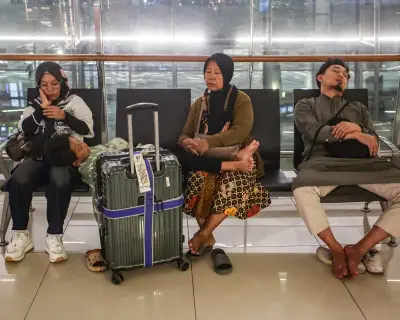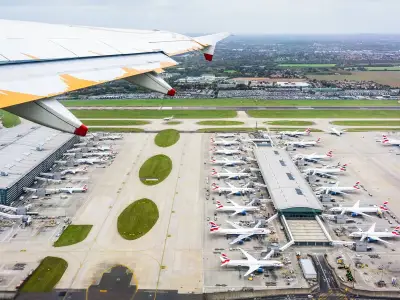
The United Kingdom is introducing new legislation to protect holidaymakers from last-minute flight cancellations caused by the ongoing jet fuel crisis. Under the new rules, airlines must provide passengers with at least 14 days' notice if their flight is to be disrupted, offering greater certainty during the upcoming half term and summer holidays.
Background of the Crisis
The jet fuel shortage has been driven by soaring fuel prices following the war in Iran and the closure of the Strait of Hormuz, a critical shipping lane. On April 16, Fatih Birol, head of the International Energy Agency (IEA), warned that Europe had 'maybe six weeks or so [of] jet fuel left,' raising concerns about widespread cancellations. Two airlines, Ascend Airways (operating from London Gatwick and Stansted) and US-based Spirit Airlines, have already ceased operations due to fuel costs.
New Government Measures
Transport Secretary Heidi Alexander announced the new legislation, stating: 'This legislation will give airlines the tools to adjust flights in good time if they need to.' The rules allow airlines to cancel empty flights, merge identical services on the same day, and adjust timetables to use their fleets more efficiently. Passengers may be moved to similar services to save fuel.

The Civil Aviation Authority (CAA) stipulates that compensation for delays or cancellations is required if they occur with less than 14 days' notice. A government spokesperson confirmed: 'If it's less than 14 days, [passengers] are entitled to significant compensation, so there's no incentive for [airlines] to cancel under 14 days.' The spokesperson described the 14-day limit as the 'absolute drop dead day' for airlines, adding that in practice, airlines are expected to provide even more advance warning, possibly month on month.
Industry Collaboration
The legislation follows discussions with representatives from airlines and airports, including Heathrow, Gatwick, British Airways, Virgin Atlantic, and easyJet. Alexander emphasized that while there are no immediate supply issues, the government is preparing to give families long-term certainty and avoid unnecessary disruption at departure gates.
Passenger Rights
The government reminded passengers of their rights under EU regulations: if a flight is cancelled, passengers have a legal right to choose between re-routing or a refund. For significant delays (at least 2 hours for short-haul, 3 hours for medium-haul, and 4 hours for long-haul), passengers are entitled to care and assistance, including food, drink, and overnight accommodation.
Advice from Consumer Watchdog
Consumer watchdog Which? urged travellers not to cancel their flights pre-emptively. Travel journalist Kate Pasola advised: 'Hold your nerve and wait for the airline to cancel your flight for you, before requesting a refund.' Cancelling a paid booking may forfeit the right to compensation under EC261 rules.
What Is the Strait of Hormuz?
The Strait of Hormuz is a 60-mile-wide waterway connecting the Gulf to the Arabian Sea. During peacetime, about 20% of the world's oil and gas passes through it. The UN allows countries to control their territorial seas up to 13.8 miles from their coastlines, and parts of the Strait lie within Iran and Oman's territorial waters. At its narrowest point, the Strait is just 24 miles across, making it easy for Iran to target vessels.
The new legislation aims to prevent ghost flights (near-empty planes) and reduce wasted fuel, while ensuring passengers are informed well in advance. The government stressed that this is not 'carte blanche for airlines to cancel vast swathes of flights' but a measure to keep Britain flying this summer.