President Donald Trump has once again threatened to reduce the number of US troops stationed in Germany, following critical comments by German Chancellor Friedrich Merz. The US currently has approximately 36,400 military personnel based in Germany, a key component of NATO's defense and a crucial hub for US global military operations. Trump stated that a decision on the troop reduction would be made "over the next short period of time."
Why Does the US Have Military Bases in Germany?
The US military presence in Germany dates back to the end of World War II in 1945. After the Nazi surrender, 1.6 million US troops were stationed in the country, a number that quickly dropped to under 300,000 as the focus shifted to managing the American occupation zone. During the Cold War, the mission evolved from denazification to rebuilding West Germany as a bulwark against the Soviet Union. With the founding of NATO and the Federal Republic of Germany in 1949, bases became permanent fixtures.
At the height of the Cold War, the US operated about 50 major bases and over 800 sites in Germany, including airfields, barracks, and listening posts. Many have closed since the fall of the Berlin Wall in 1989 and the collapse of the USSR in 1991. In the 1960s through the 1980s, US troop numbers often exceeded 250,000, with hundreds of thousands of family members living in self-contained American communities with schools, stores, and cinemas.

Current Size and Role of US Bases
According to the US Defense Manpower Data Center, as of the end of last year, the US military had 68,000 active-duty personnel permanently assigned to bases in Europe, with just over half—about 36,400—stationed in Germany. These personnel are spread across 20 to 40 bases, depending on definition. Key installations include the Stuttgart headquarters of European Command (EUCOM) and Africa Command (AFRICOM), which coordinate US military operations across two continents.
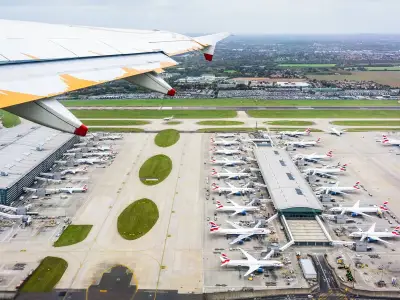
Five of the seven US Army garrisons in Europe are in Germany, with the others in Belgium and Italy. Major bases include Ramstein Airbase, headquarters for US Air Forces in Europe (USAFE), housing 8,500 air force personnel. Grafenwöhr, Vilseck, and Hohenfels form the largest US training area in Europe, while Wiesbaden garrison serves as US Army Europe and Africa's headquarters. Landstuhl Medical Center is the largest US military hospital outside the United States.
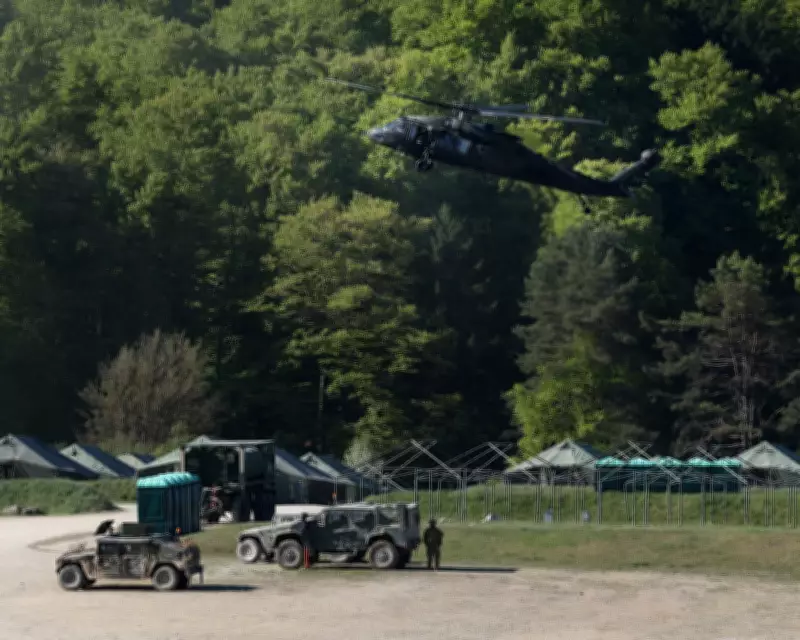
The role of these bases has shifted dramatically since the Cold War. They now serve as forward-staging sites and logistical hubs for US military operations, supporting wars in Iraq, Afghanistan, and most recently, operations against Iran.
Has Trump Made Similar Threats Before?
Yes, this is not the first time Trump has threatened to reduce US troops in Germany. In 2020, during his first term, he called Germany "delinquent" for low defense spending and support for the Nord Stream 2 gas pipeline, and announced a plan to slash troop numbers by a third. The announcement surprised the Pentagon, State Department, German officials, and NATO allies. The plan involved sending some troops home and redeploying others to Poland and Italy, but faced bipartisan opposition in Congress and logistical challenges. President Joe Biden froze the plan in February 2021 and later canceled it.
Will This Threat Be Different?
The obstacles to a major troop drawdown remain significant. Anitta Hipper, European Commission security spokesperson, noted that US troops in Europe serve US interests as well as European security. Jeff Rathke of the American-German Institute at Johns Hopkins University emphasized that US forces in Europe are "not a charitable contribution to ungrateful Europeans—they are an instrument of America's global military reach." The US benefits from forward presence at bases like Ramstein, without which many operations would be much harder.
While the US could theoretically shift troops within Europe—currently 13,000 in Italy, 10,000 in the UK, and 4,000 in Spain—the 2026 National Defense Authorization Act (NDAA) mandates a minimum of 75,000 troops permanently stationed in Europe. Substantive reductions at strategic hubs like Stuttgart and Ramstein, developed over decades, would come at a huge cost to US military reach, making a full withdrawal unlikely.