A groundbreaking new study has revealed that climate-heating emissions from global aviation could be slashed by half without reducing the number of passenger journeys. The key lies in implementing three major efficiency measures: removing premium seating, ensuring flights fly near capacity, and consistently using the most modern, fuel-efficient aircraft.
The Three Levers for a Cleaner Sky
According to exclusive analysis published in the journal Communications Earth & Environment, these operational changes could be far more impactful in tackling flying's fast-growing carbon footprint than current reliance on nascent sustainable fuels or controversial carbon offset schemes. The research, led by Professor Stefan Gössling of Linnaeus University in Sweden, analysed data from more than 27 million commercial flights in 2023, carrying some 3.5 billion passengers.
"I always thought air transport was already very efficient, and that is also what airlines like to tell people," Gössling said. "But, in reality, it’s very inefficient because of the three factors: using old aircraft, transporting people in premium seats with lots of space, and often having aircraft that are not really fully loaded."

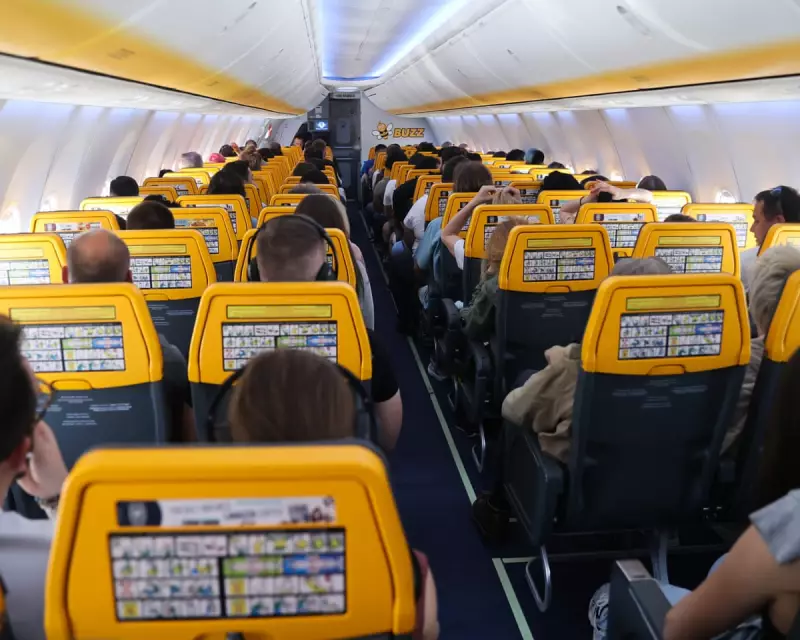
The study found that combining all-economy seating configurations, achieving 95% seat occupancy, and deploying today's most efficient planes could reduce fuel use and associated emissions by a staggering 50-75%. "That is huge," Gössling emphasised.
Global Hotspots of Inefficiency
The research assessed the efficiency of flights between 26,000 city pairs based on CO2 emitted per passenger kilometre. It uncovered significant global disparities. Airports in the United States and Australia, particularly smaller regional ones, were common origins for more polluting flights, as were parts of Africa and the Middle East.
In a stark contrast, Atlanta and New York ranked among the airports with the least efficient flights overall, performing almost 50% worse than the most efficient hubs like Abu Dhabi and Madrid. The US, responsible for a quarter of all aviation emissions, had flights that were 14% more polluting than the global average.
The variation on specific routes was even more extreme. The most efficient route identified was from Milan to Incheon airport near Seoul (31.6g CO2/pkm), largely due to modern, full planes with fewer premium seats. The least efficient was a route in Papua New Guinea, with the second worst running from Ironwood airport to Minneapolis/St Paul in the US (805g CO2/pkm).
Beyond Offsets and Sustainable Fuel Promises
The findings challenge the aviation industry's current roadmap for decarbonisation. The UN's International Civil Aviation Organization (ICAO) is heavily reliant on its Carbon Offsetting and Reduction Scheme for International Aviation (Corsia), which researchers describe as "unambitious and problematic." Meanwhile, the EU's target for airlines to use 6% sustainable aviation fuel (SAF) by 2030 faces hurdles of limited supply and high cost.
"We are currently stuck with a global situation where there is no hope that aviation will reduce its emissions," Professor Gössling warned. He argued that improving operational efficiency would also drastically reduce the volume of expensive sustainable fuel needed to make flying near emissions-free in the future.
The study highlights that premium seating is a major culprit. First and business class passengers are responsible for more than three times the emissions of economy passengers, and up to 13 times more in the most spacious cabins. Replacing these seats with denser economy configurations was cited as potentially the most important single factor.
To drive change, the researchers suggest policies ranging from "softer" options like efficiency ratings for each flight route—similar to energy labels on appliances—to market measures like higher landing fees for polluting aircraft, and ultimately regulation to ban the most inefficient planes.

The aviation industry, however, points to practical challenges. Marie Owens Thomsen, Senior Vice-President of Sustainability at the International Air Transport Association (IATA), noted that while airlines have a strong incentive to reduce fuel burn, "supply-chain failures have caused an aircraft order backlog of over 5,000 planes."
The research underscores a stark inequality in flying. Just 1% of the world’s population is responsible for 50% of aviation emissions, and only about 10% of people fly in any given year. The study suggests the industry could shift from a model of growing passenger numbers through cheap tickets to one of fewer, fuller flights with higher fares, which would also curb induced demand for non-essential travel.