Thousands of sailors remain stranded in the Strait of Hormuz more than 24 hours after Donald Trump announced 'Project Freedom,' with little change for tankers caught in the high-pressure zone. The narrow passage has become the focal point of the war in Iran, initiated by the US and Israel on February 28, which saw Tehran blockade the strait.
In an effort to ease shipping, Trump announced 'Project Freedom,' a US-led operation to guide neutral vessels out of the strait. Some seafarers have been stranded for months since the strait became effectively closed, with shipping companies hesitant to transit through for fear of Iranian attacks.
The US said two American-flagged merchant vessels moved through the strait on Monday after the project kicked off. However, experts warn this is a drop in the ocean compared to the 135 vessels that transited daily before the war. The International Maritime Organization expressed concern for the welfare of 20,000 seafarers affected by the instability.

Seafarers' Ordeal
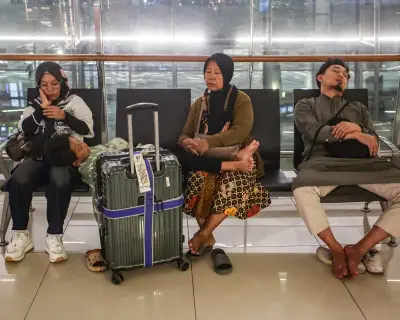
A Ukrainian sailor described being trapped for two months, forcing crews to fish from the deck and find ways to entertain themselves while separated from families. 'I contacted my family, calmed them down and explained that it's not as scary here as it is in Ukraine,' he told the New Voice of Ukraine. 'That was actually true. I also told them that as long as we're at anchor, everything will be fine.'
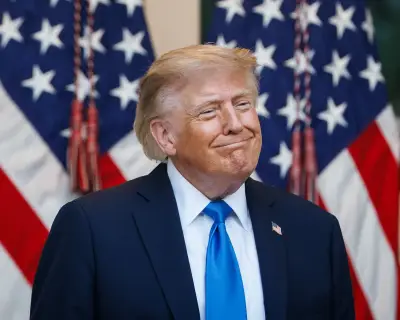
Trump announced over the weekend that 'Project Freedom' would start Monday morning to 'free up people, companies, and Countries that have done absolutely nothing wrong – they are victims of circumstance.' He described it as a 'humanitarian gesture on behalf of the United States, Middle Eastern countries, but, in particular, the country of Iran.'
However, the project appears to have done little to ease the situation, with fears that direct fighting, paused since the April ceasefire, could escalate. US forces reported shooting at Iranian forces, sinking six small boats, while the United Arab Emirates said it had been targeted by Iran for the first time in weeks, including a drone-caused fire at an oil facility.
US Defense Secretary's Statement
US Defense Secretary Pete Hegseth claimed the shipping operation is 'separate and distinct' from the war against Iran, branded as 'Operation Epic Fury.' Speaking at the Pentagon, Hegseth said: 'To be clear, this operation is separate and distinct from Operation Epic Fury. Project Freedom is defensive in nature, focused in scope and temporary in duration, with one mission, protecting innocent commercial shipping from Iranian aggression.' He insisted troops taking part will not enter Iranian airspace or territorial waters, a crucial detail as US law requires the president to terminate any use of armed forces after 60 days without congressional approval, which the war in Iran did not have.
Iran has warned that any passage through the strait must be coordinated with it 'under all circumstances.' Foreign Minister Abbas Araghchi labelled 'Project Freedom' as 'Project Deadlock' on X, stating the stalemate has 'no military solution.' After a brief opening of the strait last month, the Iranian Revolutionary Guard Corps warned ships from passing before soldiers boarded and attacked merchant ships. The regime then laid mines across the passage, leading the US to block Iranian oil ports in a bid to strangle the regime's major income source.
Global Impact
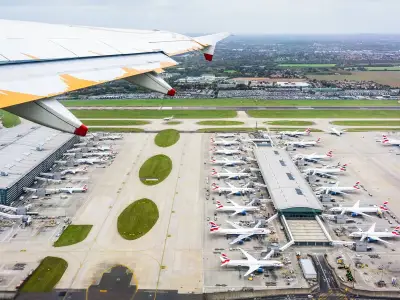
Oil and fuel prices have skyrocketed worldwide, including in the UK, since the blockade, causing anxiety about when the stalemate will end and how long fuel supplies will last. The uncertainty has hit the aviation industry, with US-based Spirit Airlines shutting down over the weekend. While the UK government and fuel industry insist Britain does not have a fuel shortage, alarm has been raised over low levels that could see flights cancelled this summer. The government announced emergency measures, such as relaxing flight take-off and landing rules, to give airlines flexibility, including consolidating flights and moving passengers onto earlier flights on specific routes instead of full cancellations.