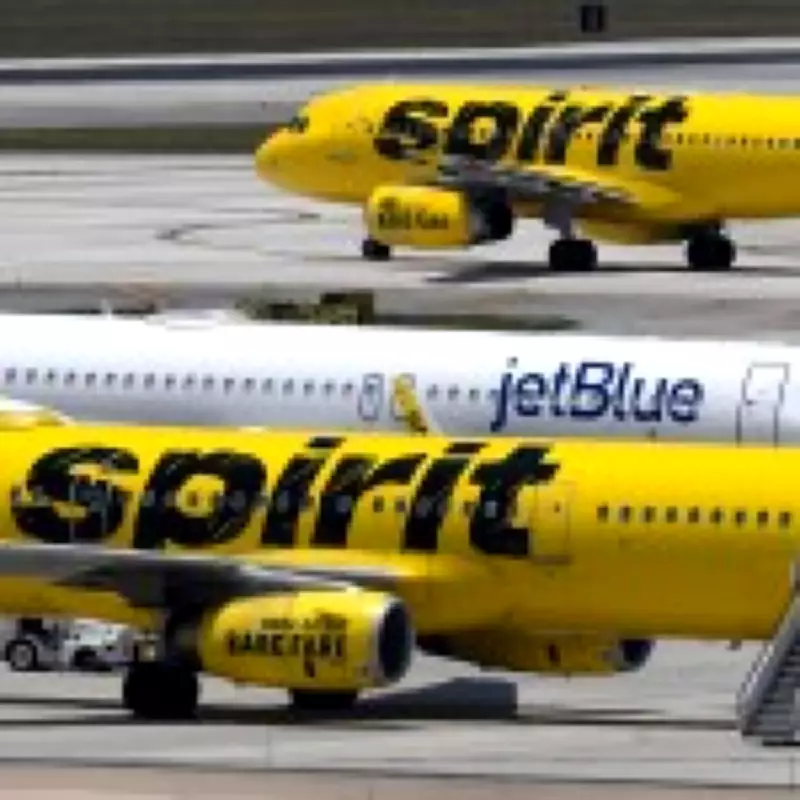
Spirit Airlines collapsed over the weekend, stranding thousands of passengers across the United States after the discount carrier ceased operations due to a surge in jet fuel costs linked to the war on Iran. The shutdown, described as the industry’s first casualty of the conflict, left travelers, travel agents, and the US government scrambling to find alternative flights.
Sudden Shutdown Leaves Passengers in Disarray
The airline cancelled all flights, halted customer service, and told passengers not to come to the airport. Customers were issued refunds and instructed to rebook with other airlines. At New York’s LaGuardia Airport, a sheet of paper taped over a cardboard sign at the Spirit window read: ‘We regret to inform you that Spirit Airlines has ceased global operations. All Spirit flights have been cancelled, and customer service is no longer available.’ Overhead, a departures board showed nine Spirit flights marked ‘cancelled’ to cities across Texas, Florida, Michigan, North Carolina, and South Carolina.
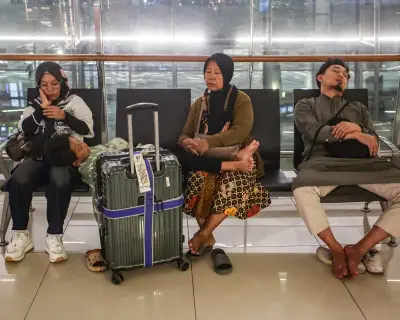
Some passengers were unaware of the collapse. Yash Kothari told CBS News he learned about the shutdown only after arriving at Philadelphia International Airport for a 5:45 am flight. ‘The email came in at 1am, so I was unaware,’ he said. Another passenger said she saw the notification but ‘honestly thought the app was being hacked.’ One family heading to a relative’s funeral was among those stranded, while another family returning from Walt Disney World rented a car for a 17-hour drive home to Michigan.

Industry First in 25 Years
The collapse is remarkable as the first time in 25 years that a US airline of Spirit’s size has gone out of business due to lack of funds. At its peak, the carrier accounted for 5% of all US flights. Spirit was emerging from its second bankruptcy filing in recent years before the US and Israeli attacks on Iran pushed jet fuel costs to unsustainable levels. The airline was in talks with the US government for a $500 million rescue deal, but discussions collapsed.
In an announcement on its website on Saturday, Spirit said with ‘great disappointment’ it had ‘started an orderly wind-down of our operations, effective immediately.’ The shutdown will result in the loss of about 15,000 jobs for employees and contractors, the airline said. Spirit flew around 1.7 million US domestic passengers in February and had 4,119 domestic flights scheduled between May 1 and May 15.
Rescue Efforts and Refunds
Several airlines, including American, Southwest, United, Frontier, JetBlue, and Delta, offered ‘rescue fares’ to stranded Spirit customers. Spirit said it would automatically process refunds for flights booked directly with a credit or debit card, but a bankruptcy court will determine compensation for those who used vouchers, credits, or airline points. The airline cannot reimburse guests for emergency hotel stays or replacement flights. US Transportation Secretary Sean Duffy posted on X that the federal government was coordinating with airlines to ‘bring relief to Spirit customers and its workforce.’
Emotional Send-Off for Pilot
Amid the chaos, a Spirit pilot received an emotional retirement send-off. Jon Jackson’s final flight was cancelled, so he boarded a Southwest flight from Fort Lauderdale to Baltimore. His son Chris, a Southwest pilot, mentioned it to the crew, who organized a water cannon salute and greeted him with cheers and a bottle of bubbly. ‘Very overwhelming, I can’t thank you all enough,’ Jackson said.
Crowdfunding Campaign to Buy Spirit
A viral crowdfunding campaign, ‘Let’s Buy Spirit,’ launched by TikTok creator Hunter Peterson, has attracted over 36,000 supporters and nearly $23 million in non-binding pledges. The campaign aims to prevent private equity firms from acquiring the airline and proposes a community-owned model. However, the estimated cost to acquire the airline is around $1.7 billion. Peterson said the idea began as a joke but quickly gained traction.

Jet Fuel Crisis Impact
The jet fuel crisis stems from US-Israeli strikes on Iran that disrupted traffic through the Strait of Hormuz, which handles 20% of the world’s oil supply. Since late February, the strait has been effectively blocked, sending jet fuel costs from $85-$90 per barrel to $150-$200. Jet fuel accounts for about a quarter of airlines’ operating expenses. Spirit’s collapse shows how the fuel-price shock has exposed weaker airlines. Mohamed El-Erian, economist at Wharton, told Reuters: ‘The war’s spillovers, if not contained, risk pushing other fragile businesses over the edge.’
The crisis has already claimed one UK airline: Ascend Airways cancelled all flights last week. The collapse of Spirit marks a significant blow to budget travel and raises concerns about further casualties in the aviation industry.