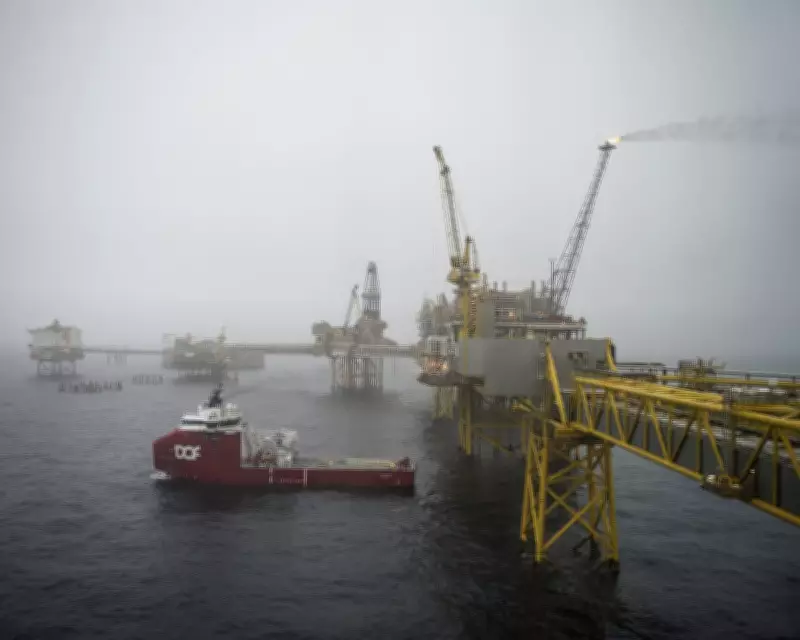
The Norwegian government has come under heavy criticism for approving plans to reopen three North Sea gasfields nearly three decades after they were closed, aiming to fill energy supply gaps caused by the Middle East conflict.
Government Decision Sparks Outrage
Amid sharp price rises in oil and gas since the US and Israel's attack on Iran in February, Oslo has also given the green light for oil and gas companies to explore in 70 new locations across the North Sea, Barents Sea, and Norwegian Sea. The decision by the Labour-run government goes against the advice of the country's environment agency and has infuriated left-leaning parties.
Prime Minister Jonas Gahr Støre said the move would “create great value for the community, lay the foundation for good jobs throughout the country, ensure our common welfare and contribute to Europe’s energy security and safety.”

Details of the Reopening Plan
The Albuskjell, Vest Ekofisk, and Tommeliten Gamma gasfields were closed in 1998. The government plans to spend 19 billion kroner (£1.5 billion) on restarting them by the end of 2028, with production continuing until 2048. Gas will be sent via pipeline to Germany, while light oil will go to the UK.
Norway's expansion plans come amid a UK debate over hydrocarbons. The Labour government has banned new exploration licences, but Energy Secretary Ed Miliband faces pressure to decide on two projects previously granted licences. Equinor hopes to develop the Rosebank oilfield, while Shell awaits a decision on its Jackdaw gas project. Climate campaigners argue these undermine the UK's climate agenda, while some experts say domestic fossil fuels have lower emissions than US imports.
Environmental Concerns
The 70 new exploration areas include zones closer to the coast than ever before. Companies have until September 1 to apply, with licences granted early next year. Lars Haltbrekken, deputy leader of the Socialist Left party, called the decision “madness” and accused the government of “greenwashing.” He said: “It shows that the government is once again blatantly ignoring environmental advice from its own experts. All the talk about responsible oil extraction is nothing but nonsense. It’s greenwashing through and through, with vulnerable and important natural areas being put at risk with full awareness.”
He warned that expanding exploration areas could have “potentially catastrophic consequences for fish and bird populations” and risked oil drilling “right up to the shoreline.”
Record Production and Profits
Equinor has pumped record amounts of oil and gas since the US-Israeli war with Iran disrupted Gulf supplies. It produced 2.31 million barrels of oil equivalent per day in the first quarter, nearly 9% more than the previous year and almost double analyst predictions. Record production and surging prices led to its highest quarterly profits since 2023, when Russia's invasion of Ukraine caused a European gas supply shock. Equinor expects current disruptions to last beyond any end to hostilities.
Energy Minister Terje Aasland stated: “Norwegian production of oil and gas is an important contribution to energy security in Europe. Development of new gasfields helps Norway maintain high deliveries in the long term. This has become more important after Russia’s full-scale invasion of Ukraine and the conflict in the Middle East.” The prime minister's office declined to comment.