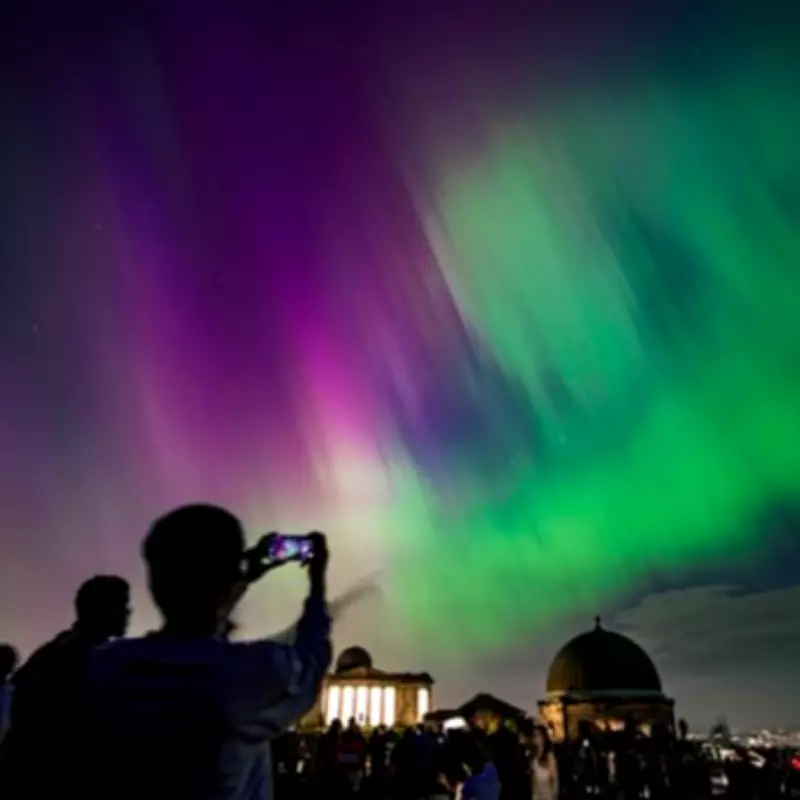
Stargazers may witness a spectacular display this evening as the Northern Lights could be visible across parts of the UK. A substantial solar flare has been discharged from the Sun, triggering radio disruptions in certain regions globally, while also generating predictions for Aurora Borealis sightings tonight.
What Are the Northern Lights?
The Northern Lights, scientifically termed Aurora Borealis, represent a natural luminous phenomenon in Earth's atmosphere, manifesting as dancing waves or curtains of colour, primarily in shades of green, pink, and red. These mesmerising colours have fascinated humanity for centuries, and scientists have established that they result from charged particles originating from the Sun, or solar winds, interacting with gases in Earth's upper atmosphere.
Recent Solar Activity
The most recent solar flare burst forth from sunspot region AR4436 on Sunday, which is currently rotating towards Earth. Classified as a coronal mass ejection (CME), it departed the Sun at approximately 1.30pm on May 10, reports the Mirror. This eruption has propelled billions of tonnes of solar plasma and magnetic particles speeding towards Earth.

Northern Scotland stands the greatest chance of observing the magnificent spectacle tonight, according to the Met Office. The national meteorological service reports: "Auroral activity is expected to be mostly at background levels. However, there is the potential for a glancing CME (coronal mass ejection) arriving into early UTC on 13 May and also the likely onset of coronal hole fast winds on the 15 May. These events may bring some weak enhancement to the auroral oval, perhaps allowing sightings across northern Scotland and similar geomagnetic latitudes, where skies are clear."
However, the Met Office also confirms: "No Earth-directed Coronal Mass Ejections (CME) were observed in the past 24hrs."
Weather Conditions
Meteorological conditions obviously influence whether individuals have the opportunity to witness the spectacle, and prospects appear uncertain with a low-pressure system delivering waves of rainfall. "A cool and breezy evening with further showers. Overnight some inland areas becoming dry with lengthy clear spells developing here," forecasts the Met Office.
The optimal locations typically for observing the display are in regions nearer to polar zones owing to the Earth's magnetic field channelling particles towards the poles. Consequently, the Northern Lights can ordinarily be viewed more effectively in Scotland, North England, North Wales and Northern Ireland. Nevertheless, during extreme space weather circumstances, the lights can be witnessed across the UK.
This year marks a once-in-a-decade occurrence with the solar maximum. This exceptional event witnesses the Sun experiencing intensified magnetic activity and scientists anticipate it will reach its peak before diminishing once more until the mid 2030s.