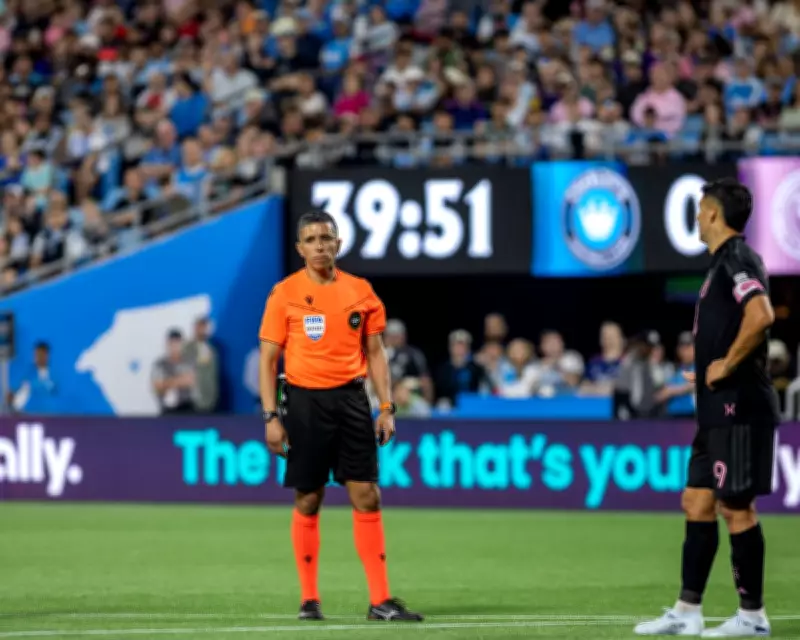
Major League Soccer has engaged in discussions with the International Football Association Board (Ifab), the global governing body for soccer rules, regarding the potential trial of a stopped clock during matches. This concept, which would halt the clock for injuries, substitutions, set pieces, and other stoppages, challenges the traditional continuous timekeeping method that has been a cornerstone of the sport for over a century.
Historical Context and Current Interest
The stopped clock is not new to MLS. The league used a countdown clock that stopped during pauses from its inception in 1996 until the end of the 1999 season. This practice remains in use in U.S. college soccer. Paul Grafer, MLS vice-president of competition, stated that reintroducing a stopped clock is a frequent topic in discussions about the game's future. He emphasized the league's openness to trials worldwide, working alongside Ifab to address gamesmanship and match manipulation.
Ali Curtis, MLS executive vice-president of sporting development, confirmed preliminary conversations with Ifab on innovation areas, including a stopped clock and improved timekeeping transparency. These measures aim to enhance consistency and fan understanding.

Ifab's Previous Stance and Current Challenges
Ifab last debated the stopped clock in 2017, opting instead to refine rules subtly. Ahead of the 2022 World Cup, referees were instructed to add unprecedented stoppage time to counteract time-wasting. Sources within Ifab revealed that the initial stopped clock efforts were shelved due to concerns over unpredictable match lengths disrupting broadcast schedules. Others expressed a philosophical attachment to the traditional 90-minute format.
An Ifab source indicated that MLS faces significant hurdles in implementing timekeeping changes, noting that the stopped clock currently has minimal support among stakeholders. Trials are only permitted if there is widespread interest, which is lacking at present.
MLS as a Testing Ground for Innovation
MLS has historically served as a proving ground for rule changes and technologies that later gained global adoption. For instance, measures to combat time-wasting during injuries and substitutions, first tested in MLS Next Pro, were adopted by MLS and later incorporated into Ifab's laws. The league also collaborated with Ifab to implement and test VAR in 2017, partnering with the lower-division USL before full adoption in 2018.
Any adjustments to timekeeping would likely follow a similar trajectory. Grafer noted that the standard procedure involves trialing new rules in MLS Next Pro, which acts as an incubator. Data from these trials would inform decisions on broader implementation.
Historical Precedents and Future Outlook
The current conversation echoes earlier experiments. In its planning stages, MLS considered a 60-minute stopped clock and even trialed it in the USISL in 1995. The league abandoned the countdown clock after 1999, along with the 35-yard shootout used to decide regular-season ties. Commissioner Don Garber stated at the time that the league had listened to its core audience.
Nearly three decades later, elements of those early timekeeping standards are resurfacing. Curtis described the discussions with Ifab as exploratory but reflective of a broader commitment to modernize soccer while preserving its unique essence. The outcome remains uncertain, but MLS continues to push for innovation in timekeeping.