Europe's Jet Fuel Crisis Deepens as Airlines Cancel Thousands of Flights
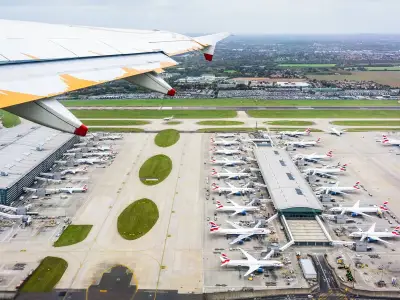
The International Energy Agency has issued a stark warning that Europe possesses merely six weeks' worth of jet fuel reserves due to the escalating Middle East conflict. This critical shortage has already prompted major airlines across the continent to cancel thousands of flights, with further disruptions anticipated in the coming weeks.
Dire Warning from International Energy Agency
Fatih Birol, executive director of the International Energy Agency, cautioned that flight cancellations could occur "soon" if oil supplies remain disrupted by the ongoing Iran conflict. The Strait of Hormuz, a crucial maritime passage controlled by Iran, has become a focal point of what Birol described as "the largest energy crisis we have ever faced."
Birol emphasized that Asian countries including Japan, India and China, which rely significantly on Middle Eastern energy resources, are on "the front line" of this crisis. The impact is expected to "come to Europe and the Americas" soon afterwards, creating a global aviation emergency.

Major Airlines Grounding Flights
Several prominent carriers have already taken decisive action in response to the fuel shortage. Swedish national carrier SAS has announced it will cancel 1,000 flights in April due to elevated oil and jet fuel costs, having already scrapped a "couple hundred" flights in March.
Dutch carrier KLM has eliminated 160 flights over the coming month, while United Airlines revealed that five per cent of services would be axed during the second and third quarters of 2026. German aviation group Lufthansa disclosed plans to retire 27 aircraft operating its short-haul CityLine division sooner than originally intended, directly citing jet fuel price pressures.
Global Impact on Aviation Industry
The crisis extends far beyond European borders. South Korean carrier Asiana will cut 22 services between April and July owing to rising fuel expenses. Hong Kong-based Cathay Pacific will reduce certain flights from mid-May through to the end of June, with approximately 2% of its scheduled passenger services affected.
Vietnam Airlines intends to axe 23 flights weekly on domestic routes from April, while Air New Zealand confirmed in March it would be scaling back services over the next two months, affecting around 1,100 flights. Norse Atlantic Airways has removed all services to Los Angeles International Airport from its summer timetable, explicitly citing the fuel shortage.
Financial Toll on Airlines
The Middle East conflict has generated significant financial strain across the aviation sector. EasyJet disclosed that the conflict cost the airline approximately £25 million in increased jet fuel expenses last month alone. The Luton-headquartered carrier indicated it expects to report a headline pre-tax loss of between £540 million and £560 million for the six months concluding in March.
EasyJet chief executive Kenton Jarvis attempted to provide reassurance to travellers, declaring that all airports served by the carrier are "operating as normal." However, he acknowledged the conflict has created "near-term uncertainty around fuel costs and customer demand," with reservations falling by two percentage points for the three-month periods finishing in both June and September compared with the prior year.
Market Reaction and Future Outlook
The warning about greater-than-expected first half losses caused easyJet shares to plunge by as much as 9% during early Thursday trading, before recovering to settle around 4% lower. While major carriers including British Airways, Ryanair and easyJet have acknowledged the potential impact of rising fuel prices on ticket costs and timetables, they have not yet cancelled flights as a direct result of the current crisis.
British Airways is discontinuing its route from London Heathrow to Jeddah, though this is attributed to changing demand patterns rather than fuel shortages. The aviation industry now faces unprecedented challenges as it navigates what the International Energy Agency director has characterized as the most severe energy crisis in modern history.