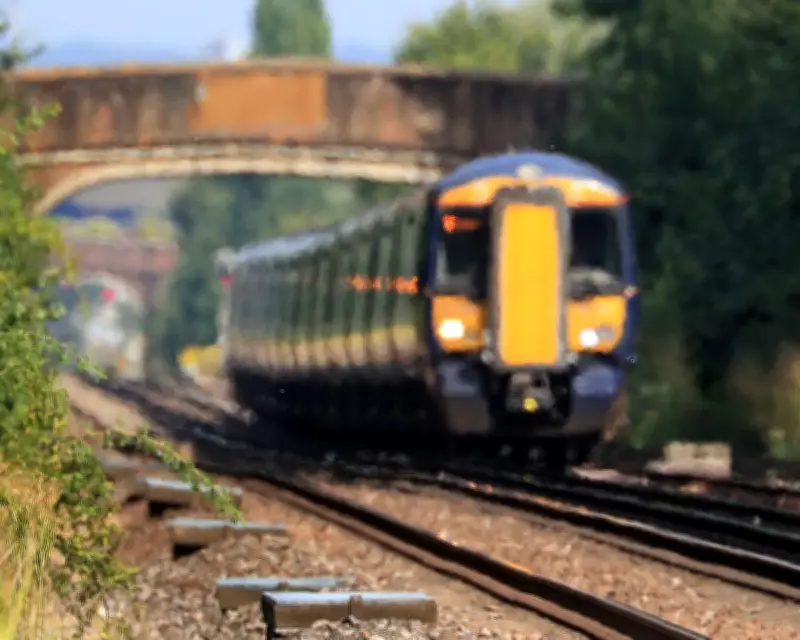
Persistent drought conditions caused by the climate crisis are expected to cause further disruption to trains across England, as the lack of rainfall affects the ground supporting railway embankments. On Tuesday, South Western Railway (SWR) became the latest large rail company to announce timetable changes and reduced speeds to cope with the effects of hot and dry weather.
SWR introduces amended timetable
From Monday 10 August, trains between Yeovil and Exeter St Davids will be reduced to one every two hours, under an amended timetable. Passengers travelling between London Waterloo and Exeter are also advised to allow extra time to complete their journeys, which are expected to take up to 27 minutes longer. Full details of the expected disruption have been published on the company’s website.
The move comes after operators in the east of England said they were going to take similar steps. Network Rail said last week that late-night speed restrictions and altered timetables would need to come into effect from 3 August “until the ground conditions have recovered”.

Affected routes and causes
Affected routes include those run by Great Northern in Cambridgeshire and Norfolk, by Greater Anglia and c2c in Essex, and the eastern end of the Elizabeth line from London. The moves are in response to “soil moisture deficit” (SMD) caused by spring’s unusually low rainfall followed by hot, dry summer weather as the UK enters its fourth heatwave of the year.
Many sections of Britain’s railway network are built on embankments containing clay soil, which normally retains a lot of water. Long periods of drought reduce the volume of moisture in the soil, causing it to shrink, which in turn disturbs the ground that tracks are built on, causing sleepers to drop or move out of position. Even relatively small changes in track geometry – the positioning, alignment and measurements of the line – mean trains must reduce their speed to run safely.
Vulnerability and previous measures
SWR’s West of England line is particularly vulnerable to the problem of SMD, with the rail operator taking similar steps a year ago after another dry spring and summer. Lawrence Bowman, the managing director of SWR and Network Rail Wessex, said: “Extreme weather events are becoming increasingly common, and this is the second year in a row that prolonged hot, dry weather has affected our network. Since last summer’s intervention, we’ve invested in strengthening the route, carried out extensive work to the track and embankments, and developed a plan that customers can rely on. As a result of that careful planning, we’ve managed to reduce journey times in our amended timetable by around 30 minutes compared to last year, minimising the impact on our customers while also keeping them safe.”
Other operators' actions
Last week, Great Northern announced timetable changes from 3 August on the Great Northern line to and from King’s Lynn in Norfolk. Greater Anglia will alter some evening Essex services including rail replacement buses, some late c2c services to Shoeburyness will change, and the Elizabeth line will operate a reduced 11pm to midnight service between Gidea Park and Shenfield on certain dates.
Engineering solutions
Network Rail said its engineers reduce the effects of dried-out soil by using machines called tampers to lift the track, push stone ballast underneath and create a solid foundation so trains can run smoothly. New ballast is also put down to help raise the level of the track. Last year, engineers treated about 62 miles (100km) of track on Anglia routes using tampers to help tackle the effects of dried-out soil. In the run-up to summer, teams have already dropped thousands of tonnes of ballast to help keep the track as smooth as possible, with 49,000 tonnes expected to be used over the course of 2026.