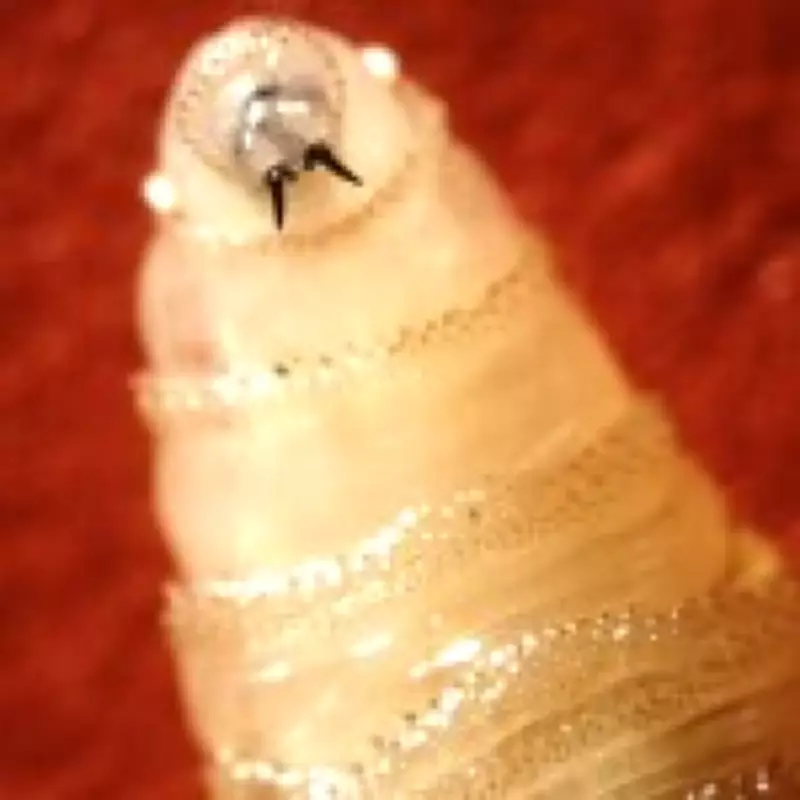
Fears have been raised over the spread of a parasitic worm that could have a devastating impact on the food chain. The New World screwworm has been found in Mexico just 30 miles from the US border.
What Is the New World Screwworm?
This devastating parasite can kill fully-grown cows in less than two weeks. Its spread has spooked US officials, who fear the US food supply could be impacted if it crosses into the country.
The latest detection of the fly was in a six-month-old sheep in the Coahuila state. As of May 20, there have been more than 171,000 reported cases in animals in Central America and Mexico, and more than 1,960 cases in people.

Why Is It So Feared?
The maggots lay eggs in open wounds, which then feed on the blood of their hosts. The parasite was eradicated in the US in the 1960s, but there was an outbreak in Texas in 1976 that affected more than 1,400,000 cattle. Today, that would cost the economy in Texas alone an estimated $1,800,000,000.
Human transmission is rare, but the first ever case of infestation was confirmed in August last year. The US Centers for Disease Control and Prevention (CDC) issued advice to Americans living near livestock. It said people should contact their healthcare provider immediately if they 'see or feel maggots (larvae) in or on a wound or other area of your body'.
Symptoms to Watch For
Symptoms can also include unexplained wounds that do not heal, a foul-smelling odour from the site of infestation, and seeing maggots in open wounds or in areas of the body such as the nose, mouth, eyes, ears or genitals.
The US Customs and Border Protection office has launched a campaign raising awareness about screwworm. Donald R Kusser from the Laredo office said: 'We are working to increase public awareness regarding New World Screwworm so that the public can help prevent this invasive pest from reaching the US and adversely affecting US livestock and pets.'