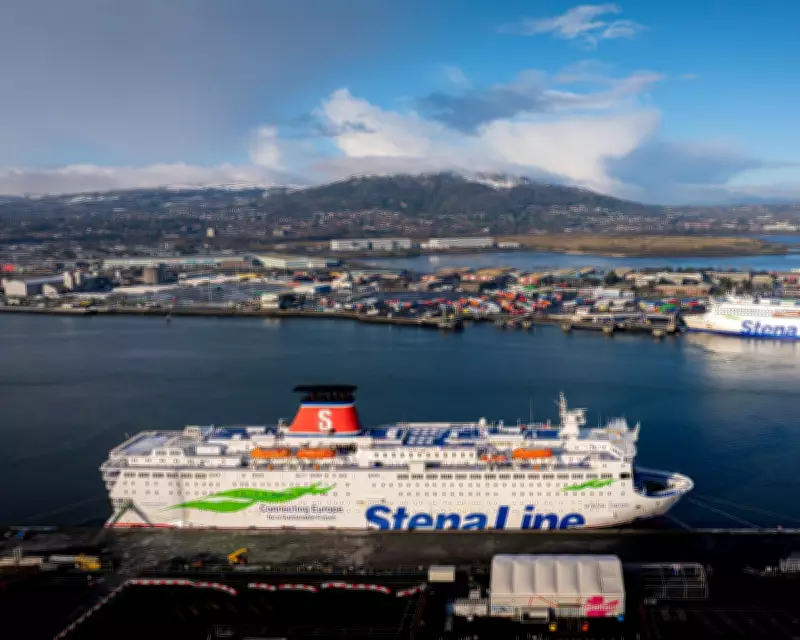
The operator of Belfast harbour has announced plans to invest £1.3bn over the next 25 years, capitalising on robust economic growth in Northern Ireland. This marks one of the largest non-governmental investments in the region's history.
The Belfast Harbour Commissioners, a non-profit trust port, stated that the funds will be allocated to upgrading port infrastructure. Additionally, residential property developments could bring an extra £750m in investment.
The first £300m phase is already underway, focusing on new facilities for offshore wind projects. Other projects include quays for grain and animal trade, ferry terminal upgrades, expanded container shipping facilities, and power connections for cruise ships.

Northern Ireland's economy has outpaced the UK average in recent years, with further acceleration expected due to the post-Brexit settlement granting access to both UK and EU markets.
However, the investment plan depends on the Northern Ireland Assembly passing legislation to allow the commissioners to borrow on financial markets. Chief executive Joe O'Neill expressed confidence that changes would be enacted by spring 2027.
Belfast harbour is an independent statutory body, relying solely on its own funds for investments. O'Neill highlighted the potential benefits from developing the Dublin-Belfast corridor, the island's two largest cities.
"If there's accelerated economic growth, we are building ahead of the curve," O'Neill said. "As capacity tightens at key ports on the Irish east coast, we are providing the planned capacity the island needs."
Annual port trade could rise from 24m tonnes to between 30m and 50m tonnes by 2050, according to consultancy forecasts.
The harbour, largely built on reclaimed land, once hosted the Harland & Wolff shipyard that built the Titanic. That yard is now operated by Spain's Navantia, which has a contract to build Royal Navy fleet solid support ships. The growth plan includes reclaiming more land for the first time in 25 years to build a new container terminal.