Australia will send a hi-tech military plane to join an international mission to reopen the Strait of Hormuz, but the Labor government has not ruled out sending more assets to the Middle East.
Defence Minister's Announcement
Defence Minister Richard Marles joined an overnight meeting of defence ministers from 40 other countries to discuss global efforts to reopen the key shipping channel off the Iranian coastline, which has been closed or heavily restricted since the beginning of the US-Israel assault in February. Marles said the meeting resolved to back "collective diplomatic, economic and military capabilities to support freedom of navigation through the Strait of Hormuz."
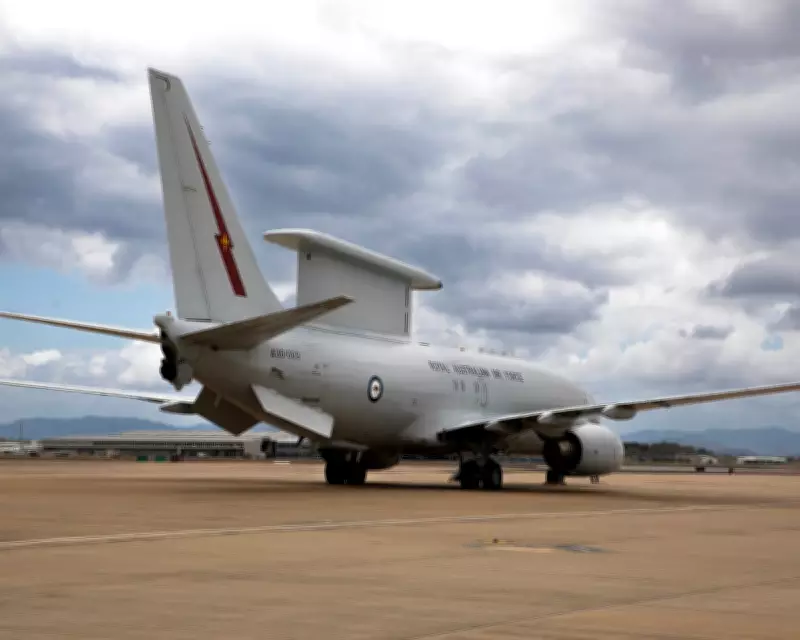
"Australia stands ready to support an independent and strictly defensive multinational military mission, led by the United Kingdom and France, once it is established," Marles said. "Our intention is to contribute Australia's world-leading E-7A Wedgetail aircraft to this defensive effort." Later on Wednesday, Marles told parliament that Australia would continue speaking with the UK and France "about how else we can contribute" to the mission.

Current Deployment and Capabilities
The Wedgetail, accompanied by approximately 85 Australian Defence Force staff, has been deployed to the United Arab Emirates since March in a defensive capacity to help protect Gulf nations from Iranian attacks. The surveillance plane has been feeding information and intelligence back to the Combined Air Operations Centre in Qatar, but Australian defence officials maintain it is not assisting the US in offensive capabilities. Initially deployed for a four-week period, the Wedgetail had its deployment extended once and is now likely to remain in the region for some time. Prime Minister Anthony Albanese told Guardian Australia in April that the extended deployment would initially be for an additional four weeks.
Additional Defence Measures
The government in March also announced it would provide advanced medium-range air-to-air missiles (AMRAAMs) to the UAE. Tuesday night's federal budget allocated $6.6 million in 2025–26 to provide the AMRAAMs to the UAE "for use in self-defence." The Wall Street Journal reported the UAE had secretly launched a major attack on Iran during the conflict, including targeting a refinery on Lavan Island in early April.
Strategic Importance
Australia has a fleet of several Wedgetail aircraft, but it is understood the same Wedgetail in the UAE would likely be redeployed to the Strait of Hormuz if needed. "While this platform is already doing work in the region, providing this capability would make a valuable contribution to the multinational mission and efforts to secure freedom of navigation in the Strait of Hormuz," Marles said. "We want to see this conflict end, the Strait of Hormuz open and freedom of navigation resume. The longer this conflict goes on, the more significant the impact on Australia will be. Our government is doing all we can to shield Australians from the impacts."
In question time in parliament, Marles said a "defensive military mission" would be required to safeguard freedom of navigation in the strait. "The conflict in the Middle East has highlighted the volatile nature of the world in which we live: the acute pressure being placed upon the global rules-based order, and the impact on Australia, our region, and the world of disrupted sea lanes of communication," he said. "Looking forward, this is really our most consequential stake risk: that a future adversary would seek to coerce Australia by disrupting those sea lanes."
Tuesday's budget included a major boost to defence spending of $53 billion over the coming decade. The government defended its decision to trim the National Disability Insurance Scheme just days after announcing that new spending.