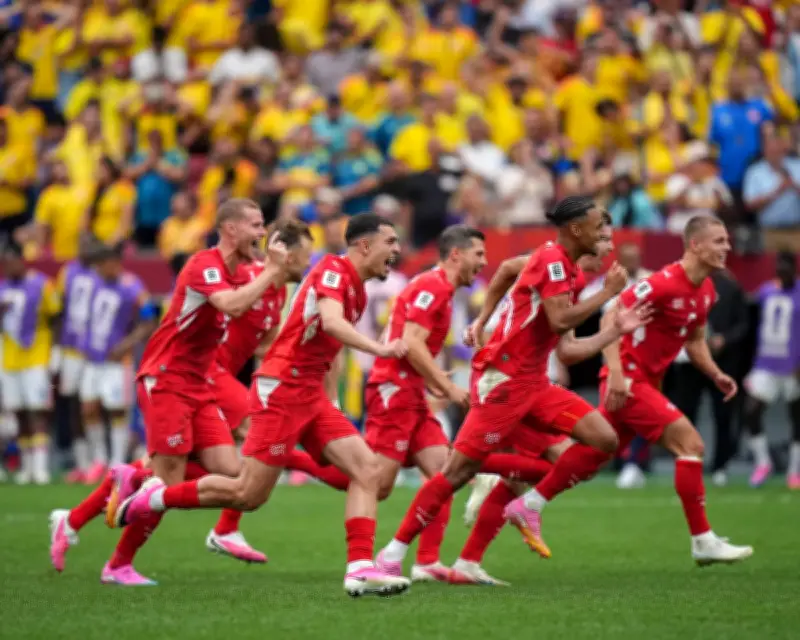
All four penalty shootouts at the ongoing World Cup have been won by the team that went second. This continues a striking trend: 13 of the past 15 shootouts at World Cups (86.7%) have been won by the team taking penalties second. The only exceptions were Morocco's win over Spain and Croatia's victory against Brazil in the 2022 World Cup.
Historical data shows no clear advantage
Before 2026, 18 of 35 World Cup shootouts (51.4%) were won by the team going second, nearly a 50-50 split. With the latest four, that rises to 22 of 39 (56.4%). However, earlier World Cups favored the team going first: only nine of the first 24 shootouts (37.5%) were won by the second team, which may have created the belief that going first is better.
Other competitions paint a mixed picture
At the European Championship, 12 of 25 shootouts (48%) were won by the team going second, essentially even. In the European Cup (excluding qualifiers), only 16 of 42 shootouts (38.1%) were won by the team going second, suggesting an advantage to going first. But in the FA Cup since 2013-14, 43 of 75 shootouts (57.3%) were won by the team going second, with last season's 12 of 17 (70.6%) reinforcing the recent trend. The League Cup, with the largest sample of 207 shootouts (excluding ABBA format trials), saw 104 wins (50.2%) for the team going second, almost exactly 50-50.
The impact of missing first
In seven of the past 15 World Cup shootouts, the first kick was missed, giving an immediate boost to the second team, which won every time. Overall, of 12 instances where a team missed the first penalty in a World Cup shootout, only two recovered to win: Sweden against Romania in 1994 and Ukraine against Switzerland in 2006.
Psychological factors and captain choices
There may be a placebo effect: teams believing going second is an advantage may feel calmer, improving performance. Yet at this World Cup, only one captain (Egypt's Mohamed Salah) chose to go second after winning the toss; the other three chose first and lost. According to Opta Analyst, the data broadly suggests the order matters little over the long term, and the quality of takers and goalkeepers is more decisive.