The 2026 World Cup, co-hosted by the US, Mexico, and Canada, may hold up a useful hand mirror to the isolationism and divisiveness of the Trump-era United States, according to Guardian journalist Barney Ronay. Writing from New York, Ronay suggests that the tournament could bring the best out of the US, not the worst, by modeling ideas of connection and togetherness through sport.
Rocky Statue and the Hand-Sized American Dream
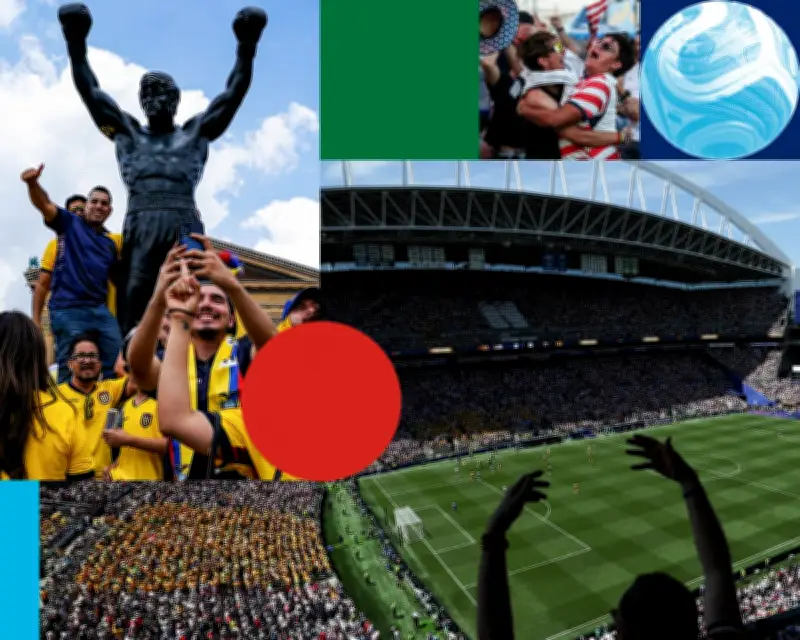
In Philadelphia, queues of fans in Brazil and Haiti shirts climbed the steps to the Rocky statue, a symbol of clenched fists and human-scale ambition. Ronay theorizes that great American creations—the hamburger, the .45 Colt, the baseball mitt, the chocolate chip cookie—are designed to fit the hand, suggesting a scalable, democratizing dream. However, he notes this is deceptive: the US is also a violently stratified place built on slavery and economic colonialism.
Ronay argues that the US began losing its way when it lost this hand-sized scale, with oversized food and a shift to limbless digital spaces. He writes, "The end of the US won't lie in political revolution or tanks on the hill. It's choking to death on a basketball-sized M&M behind the non-wheel of your self-driving car."
World Cup as Economic and Cultural Force
The World Cup, 11 days in, has been assessed on logistics and football. Ronay lists negatives: "the wretched and mendacious mid-half advert break" and FIFA president Gianni Infantino's "boggle-eyed posturing." Positives include American cities, stadiums, and a warm diaspora feel. But the tournament's true aims are financial: to make $14bn (£10.6bn) from 300 hours of TV content, reach the world's largest leisure market, and bolster Infantino's war chest.
Ronay emphasizes that the World Cup has always been about the US and the question of what it is: still the world's most powerful cultural and economic force, but newly hostile and inward-facing. He observes that traveling from California to Texas to New York, the tournament may reveal something unexpected: the best of the US.
Global Hatred and the Reality of the US
Ronay notes that people around the world now reflexively despise the US, citing recent actions: "The US entered this World Cup having recently murdered the head of state of the second-ranked team in Group G, not to mention offering support to a conflict of annihilation in Palestine." The Trump administration is toying with crashing the world economy, and ICE immigration militia is persecuting its own population. Yet he argues that hating a diverse nation of 350 million people with over 100 immigrant groups is a confusing idea.
"If America has become this single thing in so many people's minds, it is perhaps because this is the way we experience things now," Ronay writes. He points out that 77 million voted for Trump, but 272 million did not. The US is not Trump; it is a place of beauty, energy, flaws, and vices.
Sport as a Model for Connection
Ronay suggests that meeting people in real space is an act of revolutionary dissent. The reception from everyday Americans has been warm, with many wanting to apologize and rage against Trump's isolationism. He cites diaspora teams like Curaçao and Cape Verde, which model how countries interact with the world. Egypt and Iran will play in Seattle on the Friday of Pride celebration, forcing confrontation in real space.
"Football isn't going to unite the world but it may just hold up a useful little hand mirror," Ronay concludes. "This is a show that still provides a model of the best, not the worst, of what the US is supposed to be: a place on the human scale, an idea that fits into your hand."