The Rise and Fall of Will Lewis at The Washington Post
Will Lewis's appointment as publisher of The Washington Post in November 2023 was met with cautious optimism by some staff members. The veteran of Rupert Murdoch's media empire replaced Fred Ryan, who had presided over profitable years during the first Trump administration but lost staff confidence after contentious town hall meetings. Lewis, with his background as a reporter at the Financial Times and editor-in-chief of the Telegraph, seemed poised to bring fresh energy to the storied institution.
A Rocky Beginning and Immediate Controversy
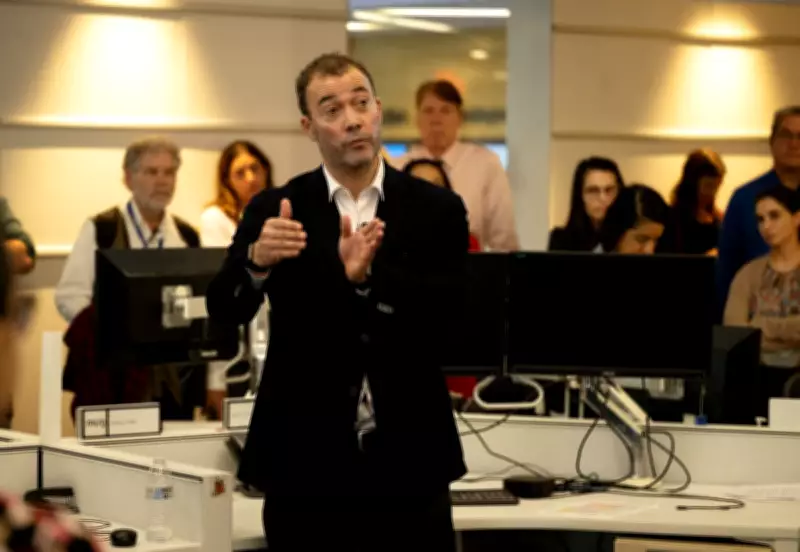
From his very first address to the entire company on June 3, 2024, Lewis struck a confrontational tone. Standing on the seventh floor of the Post's open newsroom, he delivered what he called "tough love" to the organization. "We are losing large amounts of money. Your audience has halved in recent years. People are not reading your stuff," Lewis declared. "I can't sugarcoat it any more. So I've had to take decisive, urgent action to set us on a different path."
This would prove to be one of the few times Lewis addressed the entire company directly. His tenure was immediately hampered by questions about his past, particularly his involvement in covering up a major hacking scandal at Murdoch's UK publications in the early 2010s. Even before assuming the job, Lewis told a Post reporter he would not comment on these allegations, though he has never been found to have committed any wrongdoing.

Clashes with Staff and Questionable Decisions
Lewis quickly alienated some of the Post's most respected journalists. During that first staff meeting, he snapped at Pulitzer prize-winning reporter Carol Leonnig when she asked about his vision for the newspaper. Leonnig later wrote on social media that Lewis "showed his horrendous leadership" and had no vision for the institution.
The publisher's handling of personnel matters drew particular criticism. In early June 2024, he faced blowback for his handling of the ouster of executive editor Sally Buzbee. His subsequent pick to replace Buzbee—Robert Winnett, a former colleague from the Telegraph—turned out to be disastrous. Just weeks after his appointment, after the Post published a story examining Winnett's ties to a self-described 'thief' who claimed role in his reporting, it was announced Winnett would remain at the Telegraph.
Lewis's management style created increasing tension. He rebuffed efforts by the Post's unionized staff to participate in town hall meetings. In May 2025, he was conspicuously absent when Post staffers gathered to celebrate their Pulitzer prize wins, with staffers told he was away on a long-planned trip. Last month, amid widespread anxiety about layoffs, Lewis was in Davos interviewing Bill Gates.
The Layoffs and Final Days
The defining moment of Lewis's tenure came on February 5, 2025, when The Washington Post slashed nearly a third of its entire staff in one of the largest layoffs in US media history. The cuts were delivered via an early morning Zoom meeting by top editor Matt Murray, with Lewis notably absent. Instead, Lewis was spotted a day later at pre-game festivities for the Super Bowl by a former Post sports reporter—an appearance that senior management found particularly galling given he had recently dismantled the sports section.
Just three days after the massive layoffs, Lewis abruptly announced his resignation. In a terse, subject-less email, he thanked owner Jeff Bezos "for his support and leadership" and told staffers that "the institution could not have a better owner." Bezos, in rare public remarks, praised the acting leadership team but said nothing about Lewis.
Legacy of Controversy and Financial Turmoil
Current and former staffers described Lewis's tenure as "ineffective" and marked by jargon-heavy initiatives that didn't amount to much. A senior Post journalist told The Guardian in November that Lewis was "universally reviled." Ruth Marcus, who resigned as a Post columnist in March 2025 after 40 years at the publication, said she was "surprised by the timing" but "not surprised by the outcome" of Lewis's departure.

"The news of Lewis's departure triggered a thousand celebratory messages and emojis—we were popping the digital champagne, caseloads of it," said a longtime Post staff writer who was not authorized to comment. "Here was a man who'd been handed the reins of one of the world's most storied journalistic institutions and who seemed, almost from the start, like a man who hated the job and hated us."
Despite initial optimism from some quarters—including personal emails from Lewis complimenting columns and warm receptions from veteran journalists like Sally Quinn, widow of former executive editor Ben Bradlee—the relationship soured quickly. Quinn noted that Lewis stopped contacting her after facing blowback for his handling of Buzbee's ouster.
Financial results remained dismal throughout Lewis's tenure. The Post continued to lose "large amounts of money," as Lewis himself acknowledged, with audience numbers halved in recent years. His background running The News Movement, a digital media startup he launched after leaving Dow Jones in 2020, failed to translate into success at the Post.
As the Post moves forward under acting publisher Jeff D'Onofrio, Lewis's two-year tenure stands as a cautionary tale about the challenges of leading a traditional media institution through digital transformation while maintaining staff morale and journalistic integrity.