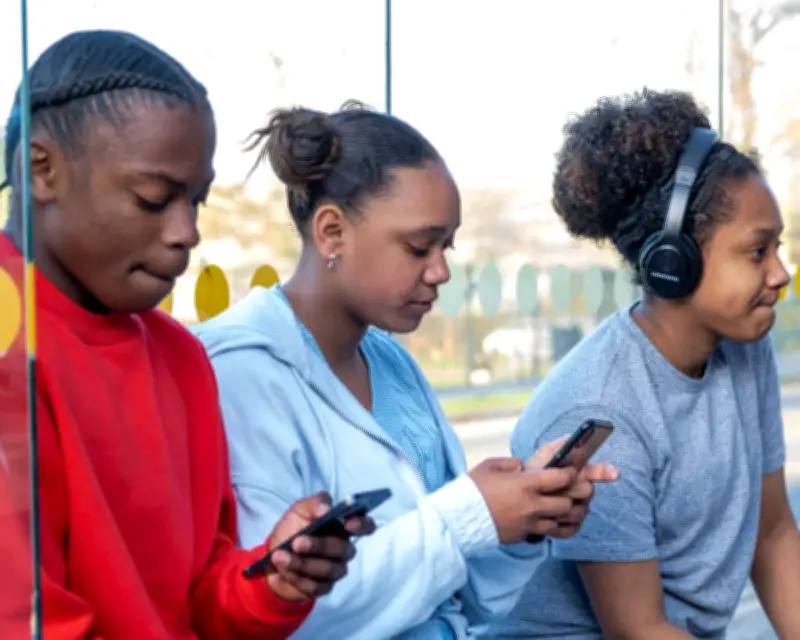
From next spring, 16- and 17-year-olds in Britain will be urged to observe a midnight to 6am social media curfew, with the block switched on by default. However, the curfew is not mandatory and can be overridden by changing account settings. The government also wants to disable “addictive” features like autoplay and infinite scroll as part of its efforts to protect young people from online harms.
Teens question effectiveness of opt-out curfew
Harvey, 16, from the south-east, believes the opt-out nature undermines the curfew. “Having it as an opt-out renders the whole thing meaningless, because if someone is addicted to Instagram and there’s a curfew but they can turn it off, they will turn it off,” he said. He spends one to two hours daily on social media and already has phone restrictions set by his parents. He also raised concerns about age verification, saying it “removes this idea of an anonymous internet.”
Archie*, 17, from Bedford, echoed similar sentiments. “The fact that it is not obligatory, then it’s almost like, what’s the point?” he said. He uses TikTok and Instagram for about three hours a day and already uses built-in settings to limit usage. He supports restrictions on infinite scrolling but believes they should apply to adults too.
Some teens see curfew as unnecessary or too broad
Alex, 16, from Scotland, called the proposals “ridiculous,” noting that at 16, people can legally move out, work full time, and enlist. “I should be allowed to use social media when I want,” he said, adding he will opt out. He uses TikTok, Instagram, and Snapchat for a few hours daily.
Meliha, 16, from Coventry, disagrees with the curfew for 16- and 17-year-olds but supports it for under-16s. “It’s silly to have a curfew when they can live independently and pay taxes,” she said. She spends four to five hours on social media and will opt out, noting that late-night use does not affect her sleep and that some study sessions go past midnight.
Government defends measures as part of wider online safety push
The government says the curfew is designed to protect young people from online harms, but teens argue it fails to account for different usage patterns. Harvey noted that during GCSE exam season, he stayed up late watching YouTube tutorials for studying. “Different circumstances demand different approaches,” he said. “I don’t think there is one single solution to this problem.”
The curfew is part of the Online Safety Act, which aims to make the UK the safest place to be online. Critics, including the teens interviewed, question whether an opt-out block will have any real impact. As Archie put it, “I’m not going to care if Instagram tells me to get off because I can regulate myself.”