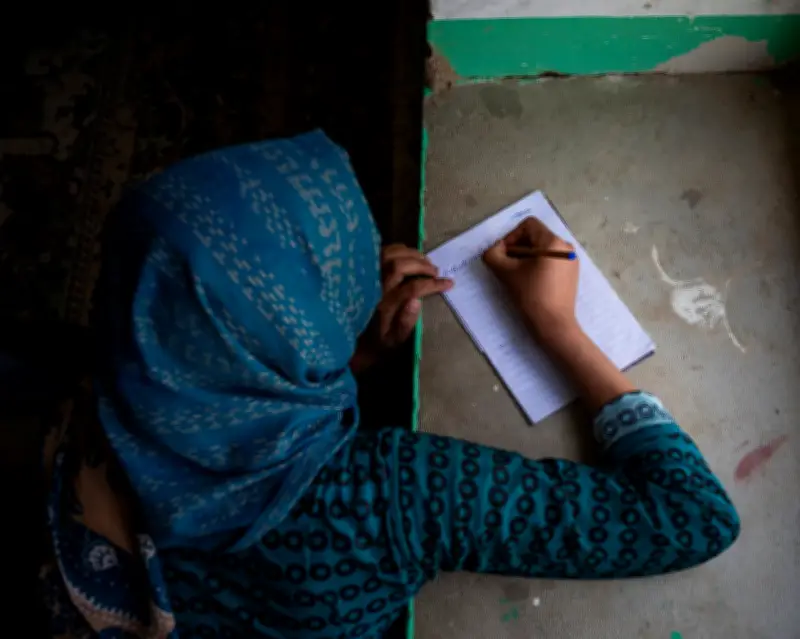
The British government has scrapped a flagship higher education programme designed to keep 1 million girls in school across Africa, Asia and the Middle East, just two years after it was announced. The scheme, Strengthening Higher Education for Female Empowerment (SHEFE), had a £45m budget and was unveiled by the previous Conservative government. The Foreign, Commonwealth and Development Office (FCDO) confirmed that the tender has been withdrawn.
Commitment questioned amid cuts
In May, Foreign Secretary Yvette Cooper stressed her commitment to women and girls, declaring them a priority at the FCDO and vowing to work across borders to ensure women's safety worldwide. However, critics say the cancellation undermines this pledge. Bambos Charalambous, Labour MP and chair of the all-party parliamentary group on global education, expressed alarm. "I'm alarmed that a flagship higher education programme designed to empower women and girls and help them achieve their potential appears to have been scrapped because of the aid cuts," he said. He noted that the FCDO has acknowledged how such partnerships transform lives and benefit UK institutions, urging planning to rebuild from the cuts.
Impact on girls and women
The programme was partly designed because girls who benefit from higher education are up to six times less likely to marry as children and less likely to experience partner violence. Women with advanced learning also increase their earnings. Joseph Nhan-O'Reilly, co-founder of the International Parliamentary Network for Education, criticised the government: "The government talks up its commitment to women and girls but at every turn it denies the world's most marginalised girls the thing that everyone agrees has the biggest impact on their lives and that of their communities: access to higher education."
Broader cuts to education aid
Earlier this year, the FCDO cancelled the tender for its Education for All programme in South Sudan, a £150m scheme supporting girls and children with disabilities in one of the world's poorest countries. Last year, a UK programme in the Democratic Republic of the Congo that helped tens of thousands of girls attend school for the first time was abandoned. Educational work was also cut in Ethiopia, Sierra Leone, Nigeria and Zimbabwe, and the FCDO Girls' Education Department lost 51% of its funding. According to Unicef, international aid to education is projected to fall by $3.2bn (£2.4bn) by 2026 – a 24% drop. It estimated that 6 million more children risk being out of school by the end of the year, with 30% in humanitarian settings – equivalent to emptying every primary school in Germany and Italy combined.
Visa restrictions add to barriers
The Home Office has blocked new study visas for applicants from Afghanistan, Sudan, Myanmar and Cameroon, meaning many women with restricted opportunities in their own countries miss out on life-changing education. British universities earn large sums from foreign students, who pay much higher fees than domestic students.
Political backlash and defence spending
Prime Minister Keir Starmer announced last year that the UK aid budget would be cut from 0.5% of gross national income to 0.3% in 2027, its lowest level since records began. The UN target is 0.7%. The cut reversed Labour manifesto pledges and led to the resignation of then international development minister Anneliese Dodds. Nhan-O'Reilly said: "We've been absolutely flabbergasted and devastated by these cuts happening under Labour. They're clearly a break in the manifesto. This was a huge mistake and betrayal of the sector." An FCDO spokesperson said the aid cuts fund an increase in defence spending, adding: "National security is the first duty of this government. This does not mean stepping back from our values – protecting women and girls is now a Foreign Office priority. Funding to tackle violence against women and girls is protected this year." A Bond spokesperson noted that polls found the UK public wanted programmes protecting women and girls to be shielded from cuts, urging the foreign secretary to uphold her commitment.