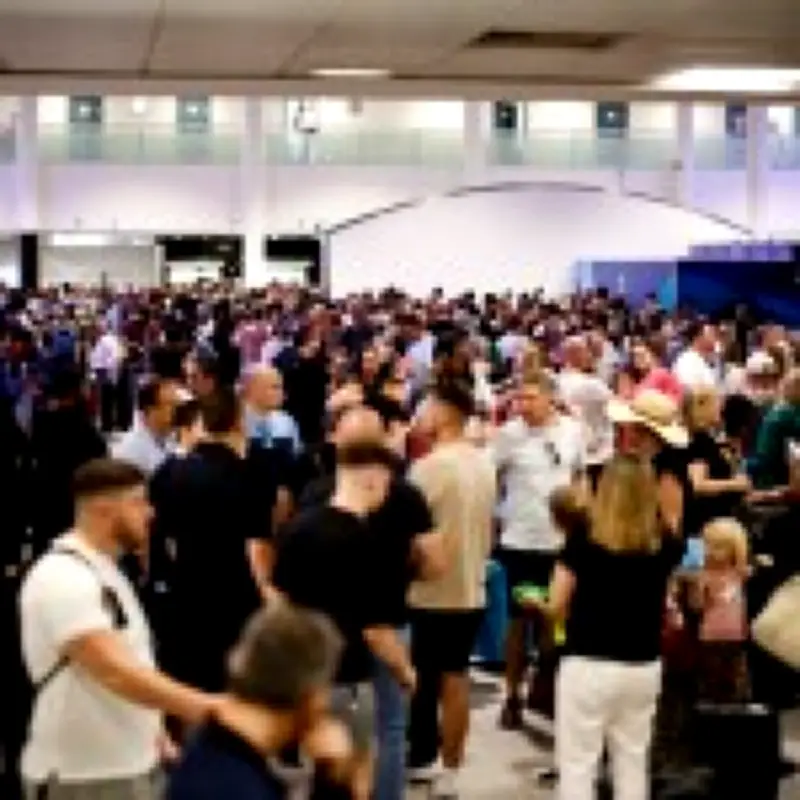
Severe thunderstorms have caused widespread disruption at Britain's busiest airports, with more than 900 flights delayed and dozens cancelled, leaving an estimated 40,000 passengers stranded this weekend, according to travel expert Simon Calder.
Flight delays and cancellations
Flight tracking data shows that 474 flights at London Heathrow and 439 at Gatwick were delayed, with some disruptions lasting up to 11 hours. One British Airways service from Santiago, Chile, scheduled to arrive at Heathrow at 10am on Saturday, was not expected to land until 9pm. More than 200 flights on British Airways have been cancelled to and from Heathrow, and on easyJet to and from Gatwick. Heathrow's online departure board showed several flights to European destinations cancelled on Sunday morning, including British Airways planes to Milan, Rome and Florence.
Passenger experiences
Passengers have reported poor communication from airlines. A British man in Dalaman, Turkey, said his easyJet flight was cancelled as he made his way to the airport at 10pm on Saturday. Over 11 hours later, he said he had 'absolutely no communication' from the airline about a rescheduled flight. Another passenger berated British Airways on X, stating: '[Heathrow] Terminal 5 customer service must have 150 people waiting after delayed flights and missed connections!! 3 staff trying to sort this out, it's sweltering and no air con or water to be had… Shocking to be honest!'

A man on a cancelled flight from Gatwick to Rhodes added: 'Five hours held on a plane with one refreshment offered. No clear answers, is it cancelled, do I have a flight on Monday? I need answers as the treatment has been DISGUSTING.'
Weather impact and wider disruption
The disruption highlights how rapidly extreme weather can affect airline operations during the summer season. Thunderstorms swept across the UK in the early hours of Saturday morning, with lightning strikes seen across London, where they are suspected of starting a house fire. The chaos was not confined to the UK; European air traffic manager Eurocontrol identified the airspace between southeast England and northwest Europe as the worst affected, with further thunderstorm development possible across a broad swathe of Europe extending from northern Spain to southern Sweden. Flights departing from Spain, Italy, France, Germany and Greece for London often had to wait for revised departure slots.
Why planes avoid thunderstorms
Commercial aircraft are designed to operate safely in a wide range of weather conditions, but thunderstorms remain a major operational hazard. Pilots routinely avoid intense storm cells because they may contain severe turbulence, wind shear, heavy rain, hail, and powerful updrafts and downdrafts. To avoid these risks, planes are rerouted by air traffic control, leading to longer flight paths and delays for later flights.
Passenger rights and advice
According to the UK Civil Aviation Authority (CAA), if your flight is cancelled, airlines must provide assistance under UK law, including a reasonable amount of food and drink, a means of communication, accommodation if rerouted the next day, and transport to and from accommodation. The CAA states: 'The airline must provide you with these items until it is able to fly you to your destination, no matter how long the delay lasts or what has caused it. Sometimes airlines are unable to arrange care and assistance for all passengers. This can happen when staff are stretched during major disruptions. If this happens, in our view, you have the right to organise reasonable care and assistance yourself, then claim the cost back later.' Passengers are advised to keep all receipts and not spend more than is reasonable. Passengers have been urged to monitor flight status online before leaving for the airport.