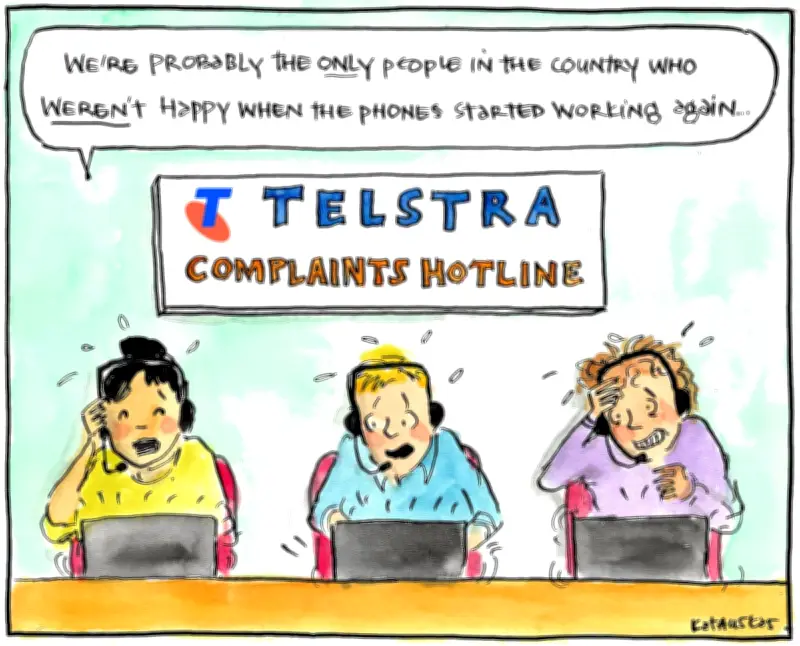
A widespread Telstra network outage on July 9 affected millions of customers across Australia, sparking debate over accountability and compensation. The disruption, which lasted several hours, left users without mobile and internet services, impacting businesses, emergency services, and daily communications.
Scope of the disruption
The outage began in the early morning, with reports of service failures in major cities including Sydney, Melbourne, Brisbane, and Perth. Telstra confirmed that the issue stemmed from a technical fault in its core network, affecting both consumer and business accounts. According to the company, approximately 10 million customers experienced interruptions, though some estimates suggest the number could be higher.
Impact on critical services
Beyond inconvenience, the outage raised serious concerns about reliance on a single provider for essential services. Emergency services reported difficulties in reaching some customers, while hospitals and other critical infrastructure faced communication challenges. Telstra stated that triple-zero calls were prioritized and maintained, but some users reported delays.
Official response and compensation
Telstra CEO Vicki Brady apologized for the failure, stating, “We understand how reliant our customers are on our network, and we are deeply sorry for the disruption.” The company announced it would offer compensation to affected customers, including a credit on their next bill. However, consumer groups argue that the compensation is insufficient, given the widespread impact.
The Australian Communications and Media Authority (ACMA) said it would investigate the incident. Communications Minister Michelle Rowland commented, “This outage highlights the need for robust network resilience and clear accountability measures.”
Broader implications
The event has reignited discussions about the vulnerability of Australia’s telecommunications infrastructure. Experts warn that as networks become more complex, the risk of large-scale outages increases. The outage also underscores the importance of competition and redundancy in the sector, with some calling for stronger regulatory oversight.