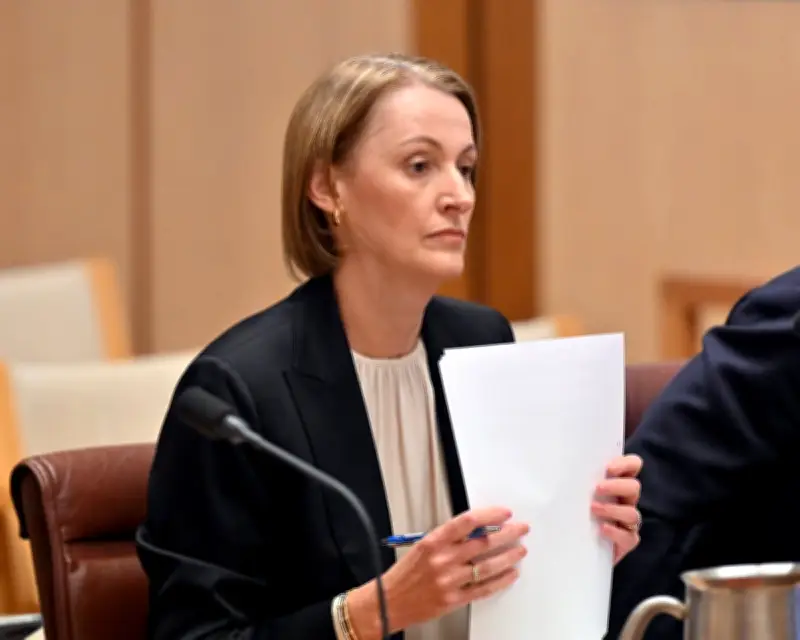
Telstra CEO Vicki Brady appeared before a Senate inquiry on Friday to explain the massive network outage that affected nearly half of all calls and data sessions last Wednesday. She blamed a neglected software update on a key time-keeping server for the nationwide chaos.
Outage details and impact
The outage began shortly before 4:30 am AEST on Wednesday, affecting 45% of all calls and data sessions across Telstra's mobile network. Customers experienced intermittent 'no service' errors, unable to make voice calls or use mobile data. Telstra reported that 58,835 triple-zero calls successfully connected, while 604 experienced an error.
Root cause: neglected software update
Brady identified the cause as a software configuration issue in one of Telstra's three Network Time Protocol (NTP) servers, a Microchip SSU 2000 model manufactured in 2011 and costing $30,000 to replace. During maintenance to replace faulty backup power, the Melbourne server was shut down and restarted. Due to an underlying software configuration, it restarted with the incorrect date of 2006. Over the next few hours, the incorrect date propagated across the network, causing authentication certificates in other servers to become invalid.
Telstra executives confirmed that the manufacturer had alerted the company in both 2022 and January 2024 about the need to update the software. Had the update been applied, the outage might have been avoided. Additionally, a design change made to fix an earlier fault was not properly documented for maintenance workers.
Redundancy and failure mode
Telstra insisted the issue was not a lack of redundancy. When the Melbourne NTP server disconnected for maintenance, the other two servers in Sydney and Perth operated as expected. However, when the Melbourne server supplied an incorrect date after restarting, downstream systems accepted that erroneous date for security, authentication, session, and policy-control processes. Telstra stated, 'The failure mode here was not inherently related to hardware, levels of redundancy, or the architecture of our network.'
CEO apologizes and promises compensation
Brady expressed deep regret: 'Last week, Telstra let Australians down, we let our customers down, we let the community down, and we fell short of what people rightly expect from us. For this, I am deeply sorry.' Telstra has promised to compensate affected customers. As of Friday, about 8,000 claims had been received from nearly 9 million affected customers, with approximately $100,000 paid out. Brady said most business customers, including the Australian Rail Track Corporation, would receive credit.
Senate inquiry criticism
Committee chair, Greens senator Sarah Hanson-Young, criticized Telstra for being 'pretty smug' in earlier hearings focused on last year's Optus outage. She noted Telstra had reported 3,641 outages in 2024 and 5,221 in 2025, while posting a $2.3 billion profit—a 31% increase. 'So … you're banking huge increases in profit [while] there are more outages, less reliability,' she said. Brady acknowledged that mobile networks are complex and not infallible but said Telstra is taking steps to mitigate risks.
Telstra's resilience improvements
Despite the outage, Brady noted that the number of minutes a customer's phone was out of service had dropped 91% from the previous year, and restoration time was down 22%, indicating improved network resilience overall.