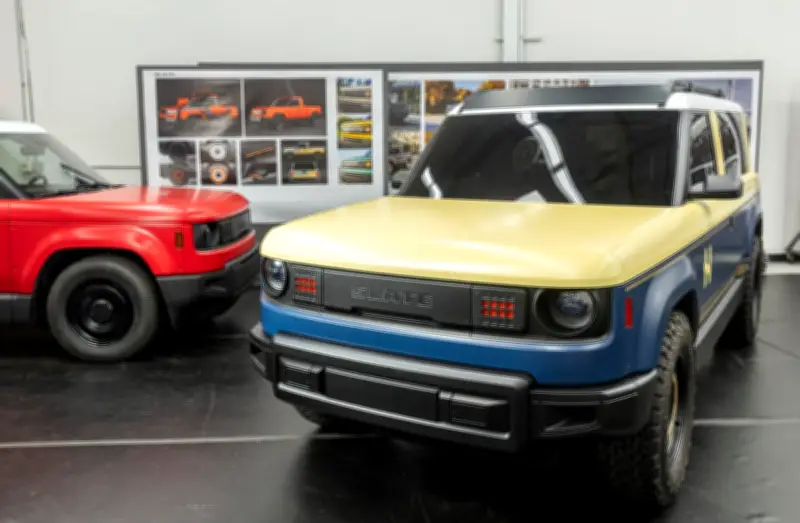
Earlier this month, a new Detroit-based electric vehicle startup, Slate Auto, backed by Jeff Bezos, launched with an affordable electric pickup truck priced at $24,950. This makes it one of the lowest-cost autos in the US market and nearly half the average new vehicle price. However, as US auto costs rise sharply, even Slate may lag behind in the global EV transition, which is entering a golden age powered by cheap Chinese cars that can be bought for as little as $10,000.
Chinese EVs Dominate Global Markets
In December, about 20% of new cars sold in the UK were Chinese-made, and 12% of vehicles sold throughout last year. Chinese cars also accounted for approximately 6.4% of European Union sales, despite new tariff programs. However, Chinese cars cannot be sold in the US. The US industry's shift is complicated by changing political ideologies and consumer demand, with American buyers gravitating toward larger, feature-rich vehicles.
According to Dan Krassner, executive director of the American EVs Jobs Alliance, "We can't hand the whole auto industry to Beijing. EVs are the big manufacturing prize of the century, and America has to get back in the race."

Slate's No-Frills Approach
Slate began accepting preorders last week and could fill a gap in the domestic market. Fewer than 5% of new vehicles in the US sold for $25,000 or less last year, down from nearly 21% in 2019, according to an Edmunds analysis. During the same period, the average new vehicle transaction price jumped about $11,000 to $48,402. The Slate truck is one of eight new US models available for under $25,000, compared to over 200 EVs and hybrids in China in the same price range, per industry analyst DCar.
The two-seat Slate truck at under $25,000 is basic: hand-crank windows, no stereo, no speakers, no ambient lighting, a smartphone mount instead of a navigation system, and standard cruise control. It has an estimated 205 miles of range and is 14.5 feet long, shorter than a Corolla. The $24,950 starting price can increase with 3D-printed accessories, a stereo, a fob, and an add-on converting it to a five-seat SUV. Customers can also pay extra for vinyl wraps instead of paint, eliminating the need for a paint shop at the plant.
Comparison with Chinese EVs
Jessica Caldwell, executive director of Insights with Edmunds, likens Slate to a budget airline like Ryanair: a cheap ticket with costly add-ons. She is skeptical this approach will take off in the US market. "I don't think they're going for the stripped-down version because the features, amenities, and technologies – those are part of why prices in the US are so inflated, because Americans wanted all the additions," Caldwell said.
In contrast, China's BYD offers vehicles loaded with features like driver's assist at about one-third the price of Slate. Its premium models, listing under $15,000, have a range of 314 miles. BYD aims to be the world's biggest automaker within five years and already produces more EVs than Tesla. Caldwell notes different consumer attitudes: the US has a deeply rooted car culture favoring big, powerful gas vehicles, while emerging markets in China have first-time buyers open to tiny, practical, cheap cars. Europeans are accustomed to smaller vehicles.
Can the US Pivot to Affordable EVs?
Despite disadvantages, Krassner is optimistic. "The price point is really attractive, and we hope Americans see that it matches their budgets and also shows automakers that there is hunger for cheaper electric vehicles," he said. The US cannot access BYDs or other $10,000 EVs, but if such cars were available, they might take off. The US EV industry faces a critical juncture, with economic and national security implications if it fails to compete globally.