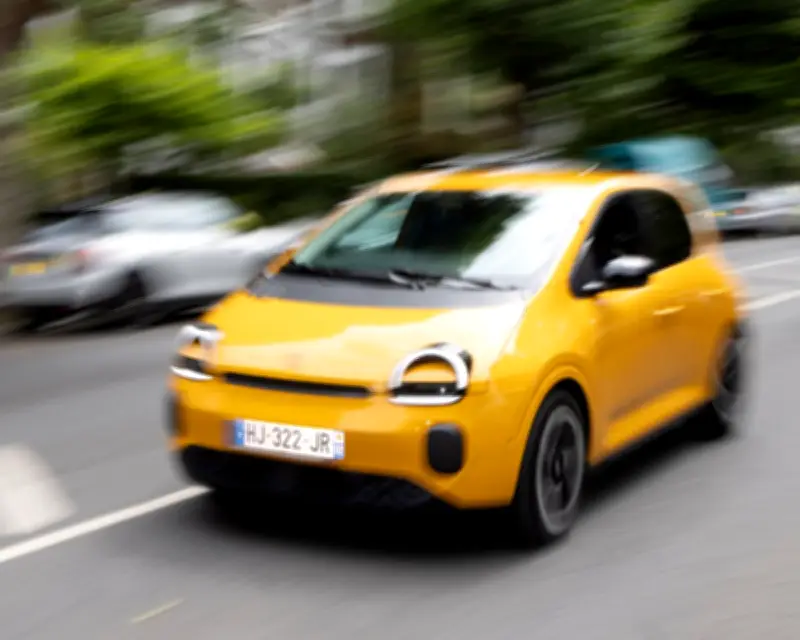
The Renault Twingo E-Tech is turning heads on London streets with its bulbous headlights and mango yellow paint, but it represents a broader shift in Europe's electric vehicle market toward smaller, more affordable cars designed for narrow city streets.
Small cars make a comeback
For years, manufacturers focused on larger SUVs because squeezing big batteries into smaller cars was too challenging and expensive. But battery technology has improved, and cost-cutting measures have made city cars viable again. The Twingo, priced from €19,490 in France and expected at about £18,000 in the UK next year, is part of a growing segment that includes the Citroën ë-C3, Peugeot E-208, and the Renault 5 E-Tech, which won the 2025 Car of the Year award.
Design challenges and trade-offs
Designing small electric cars presents unique challenges. Smart Europe's boss Wolfgang Üfer noted that the upcoming #2, an electric version of the Fortwo, took longer to develop due to packaging constraints in a footprint under three metres. "Making a big car is easy. Making a small car is a real big challenge," said Xuan-Zheng Goh, Smart Europe's director for product, marketing and communication. Renault cut the Twingo's parts count to 750 from the typical 1,500–2,000 and completed design in two years instead of four, with some engineering done in China. The trade-off is range: the Twingo's 27.5kWh battery offers 163 miles, requiring a 20-minute charge on a London-to-Oxford round trip.
Environmental and market drivers
Road transport accounts for about a fifth of EU emissions. Switching from a small petrol hatchback to an electric SUV represents "two steps forward and one step back," as larger vehicles require more energy and materials. Renault's chief design officer Laurens van den Acker said: "The world is not going to be saved by big SUVs that are electric. The world is going to be saved by small electric cars." Carmakers also face pressure to meet emissions targets or pay fines, pushing them toward EVs. However, some governments have faced industry pressure to slow the transition, and hybrids remain an option for models like the Toyota Aygo and Fiat 500.
Chinese competition and European production
Chinese rivals like BYD's Dolphin Surf and Leapmotor's T03 are entering the European market. Smart's cars are designed in Europe but made in China. Markus Haupt, CEO of Cupra and Seat, welcomed competition but urged Chinese manufacturers to source components and produce in Europe, given EU tariffs on Chinese cars due to subsidies. The EU's "Made in Europe" rules may incentivize local production, potentially attracting investment and jobs. Haupt noted that production costs for EVs should match petrol cars "by end of this or beginning of next decade."