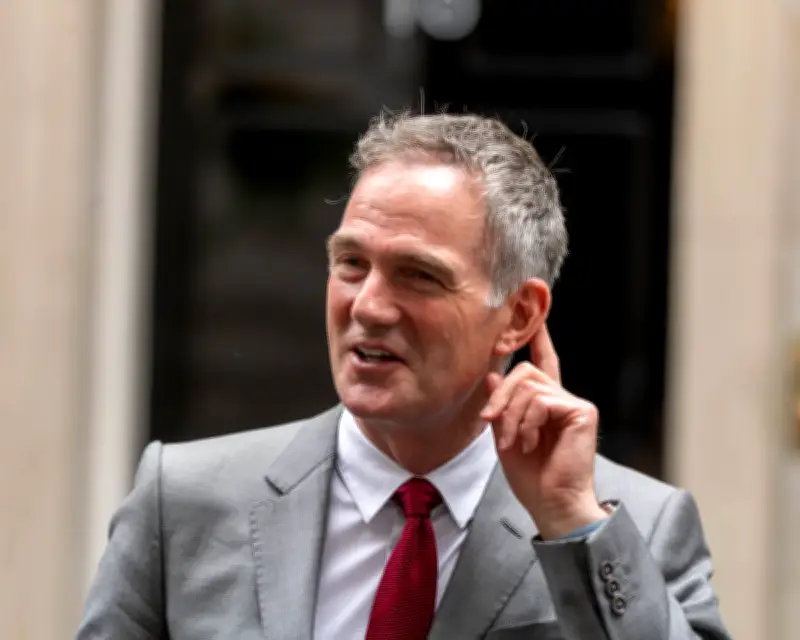
Business secretary Peter Kyle has warned UK pension funds to invest more in British companies or face legal mandates, expressing frustration over the lack of progress despite years of government initiatives. Speaking at an event at Lloyds Banking Group’s headquarters in London, Kyle urged asset managers to 'get off their high horses' and feel a patriotic duty to make Britain a success.
Kyle’s warning on mandatory investment
Kyle stated that while mandation is not ideal, he will use it if necessary because he is 'in a rush' to boost domestic investment. He said he was 'fed up' with the City asking for regulatory tweaks that fail to deliver results. 'Don’t make us come back, because we’ve got lots of other things we want to do … It feels like they are still sitting on the fence, so will more powers be needed? I hope not,' he said.
He added: 'They are representing British savers. And so they should feel a patriotic duty in making Britain a success. And not just sitting aside from the economy, in a walled-off garden. They are out there with the rest of us. They need to get off their high horses.'
Background on government efforts
Successive governments have pushed for higher UK pension fund investment in the British economy. Chancellor Rachel Reeves and her predecessor Jeremy Hunt both pursued initiatives. Last year, Reeves agreed a new 'Mansion House accord' with 17 of the UK’s largest pension funds to voluntarily release up to £50bn of investments, with at least half for British assets like clean energy and startups.
Earlier this year, Reeves secured powers in the Lords to mandate investment in UK assets, but the bill faced fierce City lobbying and Tory opposition, resulting in a watered-down version. The back-stop power cannot be used before 2028 and will expire by 2032 if unused, or by 2035 if used. The legislation also includes a 'saver’s interest test'.
Frustration with pension funds
Most pension providers already allocate funds to UK assets, but ministers are frustrated that many big overseas investors—such as Canadian and Australian pension schemes—often invest substantial amounts in UK infrastructure and private assets relative to domestic money managers. Andy Haldane, president of the British Chambers of Commerce, recently suggested that pension tax relief worth over £50bn should only be offered to savers who invest in Britain.
Political context and industrial strategy
Kyle’s comments come as Labour tries to smooth City concerns about a transition from Keir Starmer to Andy Burnham, expected to become prime minister by 20 July. Kyle pledged that the government’s industrial strategy would continue under Burnham, and he made a pitch to keep his job for stability. 'I want to stay, I’ll just stay where I am,' he said. 'If I was given one wish, I’ve had this job for 10 months. You’ve seen what I’ve got off the ground.'
In a speech to City figures marking the first year of the industrial strategy, Kyle said Britain needed 'Manchesterism'—Burnham’s plan for more devolution and state involvement in running services—to boost the economy outside London and the south-east. He said a change in leader would not unsettle the strategy. Asked about business confidence, he said: 'I’m concerned that it’s a potential outcome. [But] I don’t think it’s the one that we are going to deliver.'