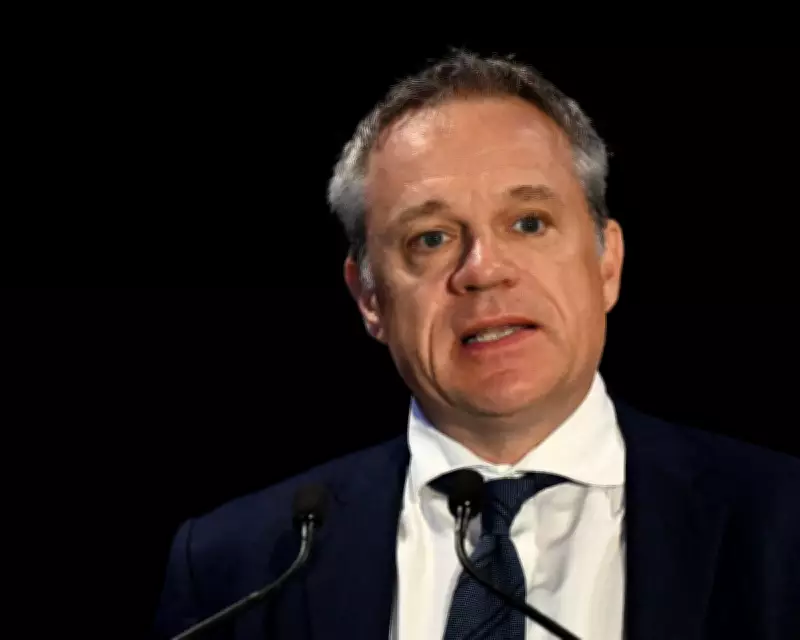
Nine CEO Calls for Urgent Action on Media Bargaining Code as AI Disruption Looms
The chief executive of Nine Entertainment, Matt Stanton, has issued a stark warning to Prime Minister Anthony Albanese, urging the government to elevate the priority of Australia's news media bargaining code. Stanton emphasized that further delays could jeopardize the policy's implementation, potentially pushing it into late 2026.
Critical Policy for Democracy and Economy
During the presentation of Nine's half-year financial results, Stanton highlighted the profound significance of the bargaining code. "This policy is not just of great importance to Nine and the journalism we so heavily invest in, it will have long-lasting impacts on the health of our democratic nation, the voices of its communities and the broader economy," he stated.
The proposed legislation aims to address the power imbalance between global tech platforms and Australian media publishers by compelling companies like Meta, Google, and ByteDance (owner of TikTok) to compensate for displaying news content. This comes as many deals under the original voluntary code have expired, raising concerns about its effectiveness.

AI Era Intensifies Challenges
Stanton pointed to the rapid evolution of artificial intelligence as a key factor exacerbating these challenges. The rise of "zero-click searches"—where users obtain information directly from AI models without visiting news sites—threatens to undermine traditional revenue models for publishers.
"Australia faces some significant challenges from the increasing influence of global tech giants and the rapid evolution of artificial intelligence," he remarked, noting that AI is fundamentally altering the relationship between journalists and audiences.
Policy Delays and Financial Pressures
The bargaining code has faced setbacks due to broader trade negotiations between Australia and the United States, complicated by former President Donald Trump's tariff policies. The policy would impose government charges on qualifying tech companies, offsettable through deals with publishers.
Amid these delays, Nine reported a 4% decline in half-year revenue to $1.06 billion, with its broadcast arm experiencing the sharpest drops. However, cost-cutting measures helped boost overall earnings by 6% to $192.2 million. The company has undergone structural changes, including selling assets like Domain and radio stations, to focus on digital growth areas such as outdoor advertising via QMS Media.
AI's Double-Edged Sword and Future Prospects
While AI poses threats, Nine has secured two licensing deals with domestic corporations for using its content to train large language models (LLMs). "We've done a couple of LLM deals that we announced today, and there's a good pipeline of other opportunities, both locally and we'll see globally over time," Stanton said.
On a positive note, Nine's mastheads—the Age, the Sydney Morning Herald, and the Australian Financial Review—offset advertising declines with a 12% growth in subscription income. Its streaming service, Stan, also remains a revenue driver, bolstered by English Premier League streaming rights.
The company declared a 4.5-cent interim dividend, and its shares rose over 3% following the results announcement. As the media landscape evolves, Stanton's call underscores the urgent need for policy action to safeguard Australia's democratic infrastructure against the disruptive forces of AI and global tech dominance.