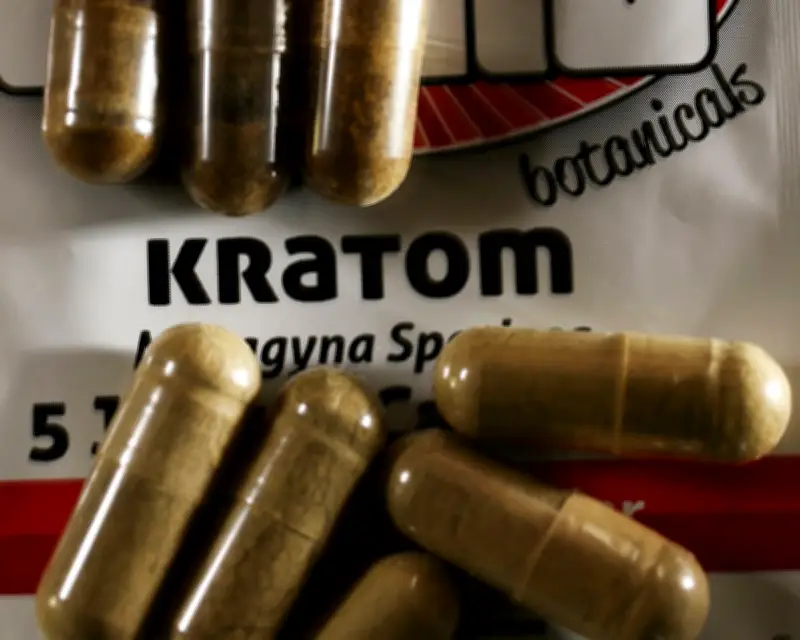
Capsules of the herbal supplement kratom. Photograph: Joe Raedle/Getty Images
More US states are pushing to ban the herbal supplement kratom, often called 'gas-station heroin', as usage rises and some users report addiction. At least eight states have banned the plant-derived product, while others consider similar measures.
Personal Story of Addiction
In 2024, Maizie Hepner, 24, began visiting a bar in Dubuque, Iowa, that served beverages containing kava and kratom, psychoactive plant substances. The drinks were marketed as 'herbal tea mocktails'. Hepner, a server and bartender, said she asked the owner if it was addictive and was told 'Absolutely not'. She started going three to four times a week, then purchased kratom powder from a liquor store to mix into her tea.
'I just didn't feel like myself without it,' Hepner said. 'I would start to get sweaty and irritable.'
Over the last decade, more Americans have used kratom, which can produce opioid-like effects. Some report addiction and side effects, while others claim it helps with substance abuse. A Reddit group, Quitting Kratom, has over 40,000 subscribers.
Rising Hospitalizations and State Bans
In 2015, there were 43 US hospitalizations linked solely to kratom, often sold at gas stations and smoke shops. By 2025, that number rose to 538, according to a University of Virginia study, which noted a spike coinciding with synthetic versions like 7-OH.
Lawmakers in Iowa and other states have deemed kratom dangerous and pushed for bans despite opposition from users and the kratom industry, who argue only synthetic versions are unsafe.
'It is increasing the prevalence of opioid use disorder,' said Dr Andrew Kolodny, director of the Opioid Policy Research Collaborative at Brandeis University. 'Being able to buy an opioid at a convenience store is going to make the opioid crisis worse.'
At least eight states—Alabama, Arkansas, Connecticut, Indiana, Louisiana, Tennessee, Vermont, and Wisconsin—have banned kratom. Other legislatures are considering bans or regulations on synthetic forms.
Industry and Political Pushback
Breyer Ferris, manager of a smoke shop in Tennessee, described kratom as 'the biggest bad' and hard to stop. Tennessee's ban takes effect July 1.
In Idaho, kratom was a contributing factor in 47 deaths between 2021 and 2023, per the state Office of Drug Policy, though other opioids appeared in all toxicology reports. Idaho lawmakers considered a ban and a bill to ban only 7-OH while allowing kratom sales to those 21 and older. A kratom business, Happy Hippo, and its parent company donated over $34,000 to Idaho state office campaigns between 2024 and 2026. Both measures failed.
In Bonneville County, Idaho, the coroner reported four deaths from acute mitragynine toxicity in 18 months. 'This is a wake-up call,' the coroner stated. Idaho Falls approved a ban effective July 1.
John Radford, a city council member who runs a nonprofit, said he spoke with hundreds trying to quit drugs who used kratom because it didn't show in urine tests. 'They said it was harder to come off kratom than other drugs,' he said.
Industry Denials and Regulatory Actions
Mac Haddow of the American Kratom Association denies kratom is addictive or dangerous, attributing issues to 'addiction personality' and mental health. He claims no evidence kratom alone caused deaths and blames 7-OH. The association supported HHS Secretary Robert Kennedy's 2025 call to ban 7-OH, but the DEA has not acted.
Kolodny called the industry's messaging 'deceptive', saying policymakers have fallen for the argument that harms are limited to 7-OH.
New York assembly member Phil Steck co-sponsored bipartisan legislation to ban 7-OH but not natural kratom, and previously required warning labels. 'I would not say you can use the natural product to an unlimited extent, but they are substantially different,' Steck said.
Hepner believes kratom should be banned. Iowa's legislature approved a criminalization bill in March, not yet signed. Kava Kava, where Hepner first consumed kratom, urged opposition, claiming it affects 'kava and sober communities'. The bill does not mention kava, and no national ban on kava is proposed.
Eric Schiesl, a former customer and now 'kavatender' at Kava Kava, said the drinks and community helped him stay sober for three years. He hasn't heard of addiction among customers. 'We definitely stress moderation,' he said, adding that prohibition didn't work and led to more crimes.
Hepner quit after reading reports and a fundraising page for a family whose father died from a kratom overdose. She suffered fever, tremors, and difficulty eating for three days. Now feeling better, she has no cravings. 'I think it's unsafe, and there's not a lot of knowledge about it,' she said. 'That is how people fall into it.'