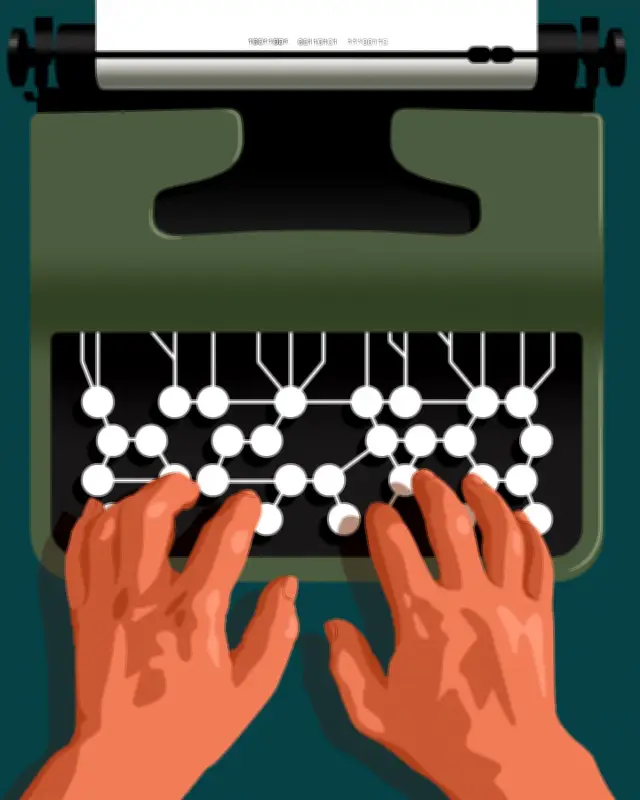
A test involving three hotel reviews reveals how difficult it is to distinguish AI-generated text from human writing. Only one review was authentic, yet most people correctly identify AI writing only about 60% of the time, according to Claire Hardaker, a professor of forensic linguistics at the University of Lancaster. Her online test, Bot or Not, asks users to spot fakes in a series of 15 reviews.
The limits of AI detection
Hardaker notes that people rely on simplistic rules, such as the presence of cliches, dashes, or the "rule of three," to identify AI language. However, these features are also common in human writing, as seen in Charles Dickens' use of em dashes and Julius Caesar's "Veni, vidi, vici." The uncertainty has led to widespread suspicion, with writers facing accusations of AI use. A debut horror novel, Shy Girl, was withdrawn by Hachette after online rumors, which the author denies. Steven Rosenbaum's book The Future of Truth contained hallucinated quotations, which he acknowledged.
AI's influence on human language
AI is not only trained on human writing but also influences it, creating a linguistic hall of mirrors. Words like "delve," "showcase," and "boast" have surged in usage since ChatGPT's release, according to studies. One analysis of unscripted conversations found that these words spiked after the AI's launch. However, the frequency of "delve" in academic abstracts dropped after it was singled out on social media, showing complex dynamics.
Hardaker is skeptical of commercial AI detectors, noting that neurodivergent individuals may write in ways that appear AI-like, and AI output can be modified to seem human. The detector Pangram, which claims a false positive rate of 1 in 10,000, was fooled by the author using a bombastic register that could be either AI or human.
Literary perspectives on AI
Novelist Gary Shteyngart observed anger among his students when one used AI to write part of a piece. He says, "There's a kind of implicit bargain between writer and reader where you know the work is generated by a human being." For Hardaker, AI "impinges on what we think of as what makes us special."
Peter Stockwell, professor of literary linguistics at the University of Nottingham, argues that AI excels at lower linguistic levels but struggles with narrative structure. "If you want something that's very familiar and very mediocre, it's amazingly good at that." He adds that linguists don't fully understand how language works at higher levels, making it impossible to build a machine that replicates great writing.
Originality and the human element
Jennifer Egan, whose novels were used to train Anthropic's Claude without permission, avoids AI entirely. "I feel a danger of infection," she says. She now interrogates her own use of em dashes and trios, traits associated with AI. Her advice to young writers: "Stay the fuck away. Use it to write emails, but if you want to be a writer: learn to write."
Jeanette Winterson takes a different view: "Every writer can make their own choice. Humans are tool-using animals." However, she notes that machines lack a limbic system, so "humans cannot have a thought without a feeling."
The future of literary innovation
Stockwell believes AI is inherently conservative, trained on existing language, and cannot produce true innovation. "Why does somebody do something new? Out of annoyance, irritation, or because they see things differently. AI works on existing material; it's the embodiment of the status quo." He cites historical artistic movements like Dada and psychedelia as reactions against uniformity, something AI cannot replicate.
As AI-generated text becomes ubiquitous, the challenge for writers is to maintain originality. Egan's quarantine from AI reflects a broader anxiety, but Winterson's openness suggests a spectrum of responses. Ultimately, the human body and social nature remain central to literature, as Shteyngart concludes: "The love of the body and its encounters with the physical world drives some of the best literature."