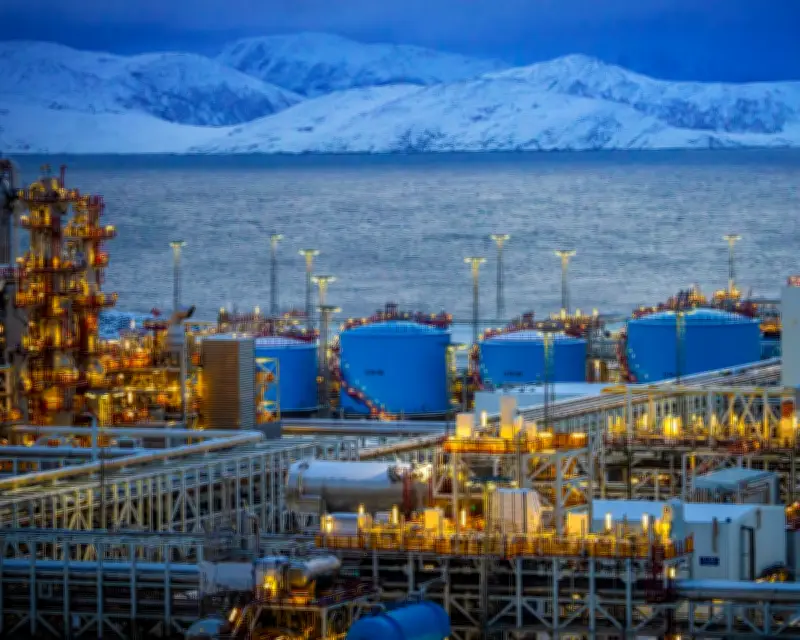
Norway's state oil company Equinor reported a near doubling of profits to $11.5bn (£8.6bn) in the second quarter of this year, driven by increased oil and gas production and higher prices amid the ongoing war against Iran. The company, which is the UK's largest gas supplier, benefited from a strategic decision to ramp up output at the start of the conflict, filling a market gap caused by a near-halt to shipping through the Strait of Hormuz that reduced Gulf oil flows.
Oil price volatility boosts earnings
Equinor also profited from the sharp rise in oil prices. Fears over global supply disruptions sent Brent crude prices fluctuating between $75 and over $100 a barrel between April and June, compared to roughly $60 to $70 during the same period last year. Although prices dipped after the US and Iran signed a memorandum of understanding last month, they have since rebounded amid renewed hostilities. On Wednesday, Brent crude rose to as high as $95 a barrel before easing to $94, a 3% increase on the day.
Equinor's president and chief executive, Anders Opedal, said: “Strong production in the second quarter enabled us to capture value from higher prices, contributing to strong cashflow and financial results. Reliable energy is important in a volatile world marked by heightened geopolitical tension. Our role is to deliver energy safely and efficiently every day.”

Adjusted profits surpass analyst expectations
The increased production and higher energy prices nearly doubled Equinor's adjusted profits from $6.5bn in the same period last year. The company also surpassed analysts' predicted profits of $11.37bn. The results come amid a broader rise in oil prices following the US military's 11th night of strikes on Iran, including attacks on aircraft hangars and drone storage sites, undermining hopes for a diplomatic resolution to the conflict.
Yemen's Iran-aligned Houthis, who control the coast at the mouth of the Red Sea, announced a naval blockade on Saudi Arabia, which has been relying on a pipeline to the Red Sea to export oil given the continued restrictions through the Strait of Hormuz. This development further escalated energy prices.
Climate groups criticize Equinor's profits
The climate campaign group Uplift criticized Equinor for “raking in billions in profits while millions of people across the UK are struggling with unaffordable energy bills.” Its executive director, Tessa Khan, accused the Norwegian state oil company of “pushing” the UK government to approve production at the Rosebank oilfield off the coast of the Shetland Islands “to keep those profits flowing.” Khan argued that “Rosebank won’t cut our bills – it’s overwhelmingly oil for export – but it will make Equinor and its part-owner, the Norwegian government, even richer.” She urged new UK Prime Minister Andy Burnham to step up renewable energy production and “put the public’s need for affordable energy and a safe climate ahead of this Norwegian oil giant’s profits, and reject Rosebank.”
Market analysts warn of rising supply risks
Susannah Streeter, chief investment strategist at investment platform Wealth Club, noted: “Brent crude has raced upwards again to trade around $93 a barrel, the highest level in six weeks. Risks to supplies are mounting again, with the effective blockage of the Strait of Hormuz remaining a chokehold as tankers are stranded in and around the waterway, while risks to other crude routes are also intensifying.”