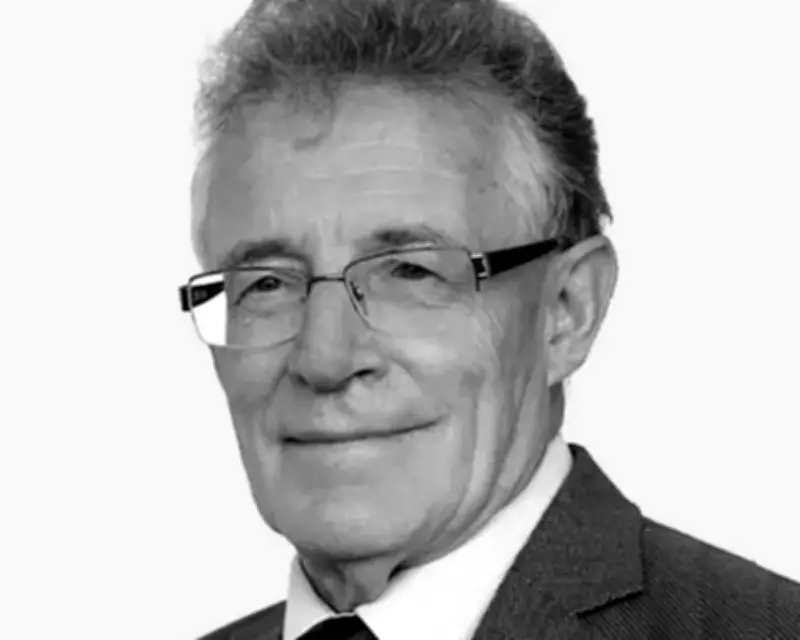
David Armstrong, a pioneering figure in systems psychodynamics who spent more than six decades placing psychoanalytic thinking at the heart of organisational life, has died aged 91. He had a rare knack for expressing complex ideas in simple language, giving consultants, entrepreneurs and business leaders a practical vocabulary for understanding the unconscious dimensions of work.
Early life and education
Born in Wisbech, Cambridgeshire, to Elsie (nee Clarke) and Charles Armstrong, who were missionaries on what was then the Gold Coast (now Ghana) and later in East Anglia and Italy, David was a twin and shared a close early bond with his brother, Michael. He was educated at Culford School, near Bury St Edmunds, and went on to read philosophy, politics and economics at Lincoln College, Oxford, in 1954. He then spent two years at King's College, Cambridge, studying psychology under Oliver Zangwill and later Larry Weiskrantz—an unusual combination that underpinned his later ability to bridge social theory and clinical insight.
Career at the Tavistock Institute
In 1959, Armstrong joined the Tavistock Institute of Human Relations as a junior project officer, working with Eric Trist on pioneering action research into socio-technical systems. These early studies explored automation and more democratic forms of organisation. From 1968 to 1970 he held a senior research fellowship at Chelsea College of Science and Technology (now part of King's College London), and from 1978 to 1994 he was a consultant at the Grubb Institute of Behavioural Studies, a thinktank that was dissolved in 2022.
Key contributions and ideas
Armstrong argued persuasively that workplace democracy—giving genuine authority to those engaged in the primary task—released energy for innovation while improving efficiency. Building on the psychologist Kurt Lewin's work, he showed how rigid hierarchies and command-and-control cultures, far from being models of efficiency, actually fostered defensive routines and institutional inertia.
His long association with the Tavistock, where he and I met a few years before the clinic's centenary in 2020, defined his legacy. His most widely read book, Organisation in the Mind (2005), offered a precise vocabulary for everyday organisational phenomena: anxiety, authority, containment and the internalisation of institutions. Later, with Michael Rustin, he co-edited Social Defences Against Anxiety (2014), extending these ideas across sectors and generations.
Teaching and personal life
He continued teaching until his 90s, notably on a Tavistock programme, where he had a gift for making the psychoanalyst Wilfred Bion's complex ideas both accessible and alive. He enjoyed playing the piano and discussing current affairs and the arts.
He is survived by his second wife, Carolyn Thomas, whom he married in 1984, their son, Philip, his stepson Nick, and his three children, Richard, Sarah and Rachel, from his first marriage to Jane Trevelyan, which ended in divorce.