The UK's Advertising Standards Authority (ASA) has issued a complete ban on a television advertisement for Call Of Duty: Black Ops 7, following nine formal complaints that the promotional material trivialised sexual violence against men. This marks a rare instance where a Call Of Duty commercial has faced such severe regulatory action, as the franchise's marketing efforts typically avoid major controversy despite the games themselves often courting it.
Controversial Content Sparks Outrage
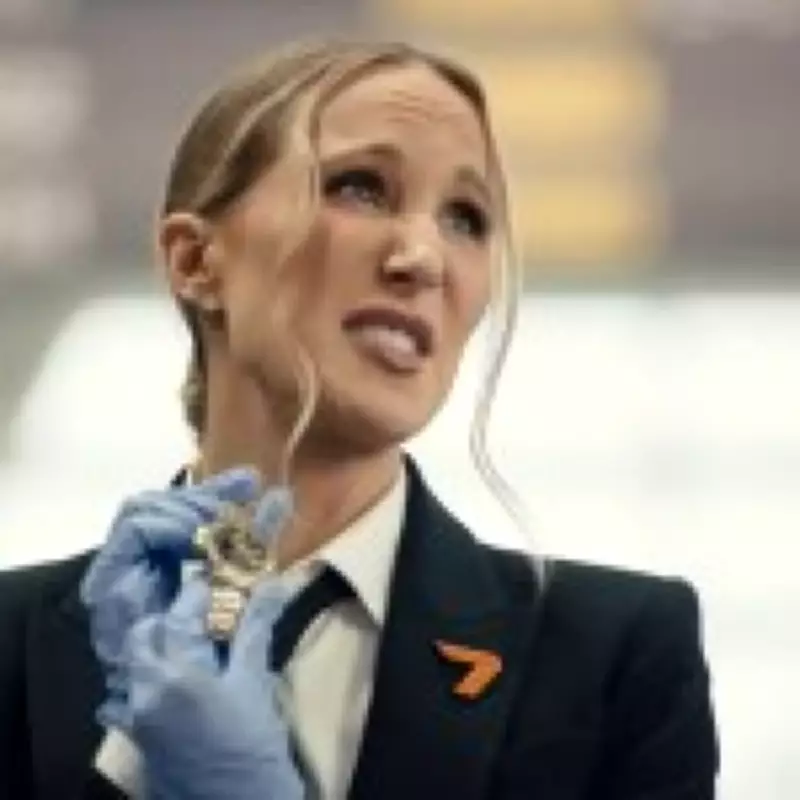
The banned advertisement, which remains accessible on YouTube and previously aired on ITV and Channel 5's on-demand platforms, features fictional 'replacer' officers at airport security who have substituted for real staff preoccupied with playing the game. In the contentious scene, a male replacer informs a male civilian passenger that he has been 'randomly selected to be manhandled.' The situation escalates as the passenger is instructed to remove his clothing while a female officer prepares a glove, remarking, 'time for the puppet show.'
The advertisement's most controversial moment occurs when the male replacer hands the passenger a handheld security scanner, stating, 'bite down on this, she's going in dry,' as the passenger places the device in his mouth. This specific dialogue and scenario formed the core of complaints alleging the advertisement made light of sexual violence.

Regulatory Investigation and Ruling
Following the nine complaints, the ASA launched a formal investigation. Complainants argued the advertisement was 'irresponsible and offensive' and specifically 'trivialised sexual violence.' Two additional complaints suggested the advertisement encouraged or condoned drug use, though this aspect was not upheld in the final ruling.
In their defense, Activision, the publisher behind Call Of Duty, maintained that the advertisement was exclusively targeted at adult audiences for the 18-rated game. The company asserted that adult gamers possess a 'higher tolerance for irreverent or exaggerated humour' and claimed the 'bite down' line referenced discomfort rather than sexual content. Activision also noted that the advertisement had been reviewed and approved by Clearcast, another advertising regulatory body, with an 'ex-kids' timing restriction to prevent exposure to younger viewers.
ASA's Final Determination
Despite Activision's arguments, the ASA ruled decisively against the advertisement. The regulatory body determined that the commercial 'alluded to non-consensual penetration' and 'framed it as an entertaining scenario,' thereby trivialising sexual violence. The ASA stated this made the advertisement 'irresponsible and offensive' and ordered Activision Blizzard to 'ensure that their ads were socially responsible and did not cause serious offence.'
The advertisement has been prohibited from airing 'in its current form' across all UK media platforms. This 'Airport Security' commercial was part of a series of live-action promotional clips for Black Ops 7, featuring celebrities including comedian Nikki Glaser, actor Terry Crews, and influencer Jake Paul in various 'replacer' roles such as astronauts and baristas.
Historical Context of Call Of Duty Controversies
While Call Of Duty games have frequently generated controversy, particularly with missions like 2009's 'No Russian' from Modern Warfare 2, their advertisements have seldom faced similar scrutiny. A notable exception occurred in 2012 when an advertisement for Call Of Duty: Modern Warfare 3 was restricted from daytime broadcasting due to scenes depicting 'violence and destruction.' However, the complete ban of the Black Ops 7 advertisement represents a more significant regulatory action, highlighting evolving standards in advertising content regulation.
The ASA's ruling emphasizes growing sensitivity around depictions of sexual violence in media, even within content targeted at adult audiences. As advertising standards continue to evolve, this case establishes a precedent for how regulators may approach similar content in future gaming promotions and other media targeting mature audiences.