Newly released figures have exposed a deeply troubling surge in hate-fuelled incidents across Britain's trains, buses, and trams. Data obtained by the Press Association shows a sharp 40% increase in recorded cases of racial and religious abuse on public transport networks over a recent three-year period.
A Disturbing National Trend
The statistics, compiled from freedom of information requests to police forces across England, Wales, and Scotland, paint a grim picture of daily commutes and journeys. In the financial year 2022/23, police logged 2,658 hate incidents linked to race or religion on public transport. This marks a significant jump from the 1,899 incidents recorded just three years earlier in 2019/20.
Experts and campaigners warn these numbers likely represent only the tip of the iceberg, as many victims do not feel confident enough to report their ordeals to authorities. The data underscores a growing climate of intolerance affecting passengers and transport staff alike.
Regional Hotspots and Police Response
The rise was not uniform across the country, with some regions experiencing more pronounced spikes. Notably, British Transport Police (BTP), which oversees the rail network in England, Wales, and Scotland, reported one of the largest increases. Their recorded incidents soared from 720 to 1,359 over the three-year span.
Other forces with jurisdiction over transport hubs and services also reported worrying climbs. For instance, Police Scotland noted a rise from 276 to 423 incidents. A BTP spokesperson acknowledged the increase, linking it partly to improved reporting mechanisms and a greater willingness of victims to come forward, but stressed that any abuse is unacceptable.
"We vigorously investigate all reports of hate crime and will do everything in our power to bring offenders before the courts," the spokesperson stated, highlighting the force's dedicated hate crime advisors and partnership work with charities.
Community Impact and Calls for Action
The human cost of this trend is immense. Advocacy groups like the Community Security Trust (CST), which monitors antisemitism, and Tell MAMA, which tracks anti-Muslim attacks, confirm that public transport is a common location for such abuse. Victims are often targeted in confined spaces, making escape difficult and the experience particularly traumatic.
Iman Atta, director of Tell MAMA, emphasised the fear this injects into everyday life. "For many, taking the bus or train is not a choice but a necessity. This data shows they are doing so under the shadow of potential harassment," she said. Campaigners are now urging transport operators, police, and the government to intensify efforts. Their demands include:
- More visible staff and security on vehicles and at stations.
- Clearer, simpler reporting systems, potentially via smartphone apps.
- Robust training for transport employees to recognise and respond to hate crimes.
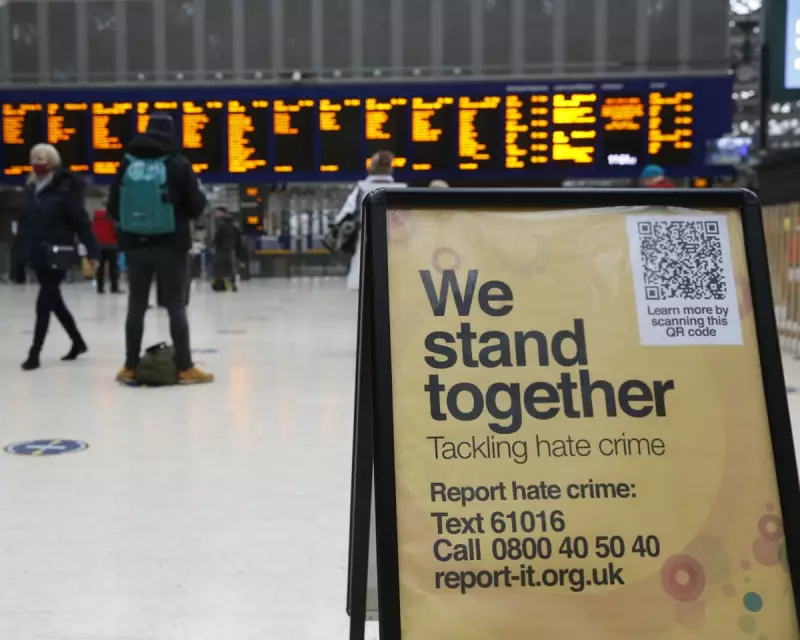
- Zero-tolerance advertising campaigns to deter offenders and reassure the public.
As the UK grapples with this unsettling rise in transport-related hate, the data serves as a stark reminder that the journey toward a truly inclusive and safe society is far from complete. The focus now shifts to whether authorities can implement effective measures to reverse this alarming trend and ensure public transport is safe for everyone.