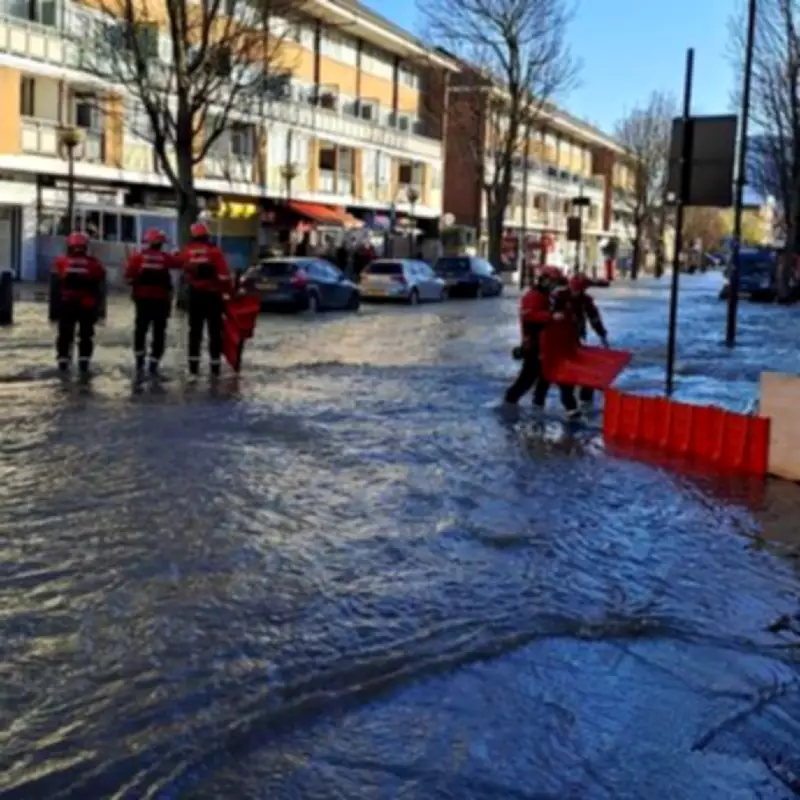
London remains highly vulnerable to flooding despite repeated warnings over the past decade, new research suggests. The capital has been named among the British cities most at risk from floods and storms, with almost 580,000 homes—more than one in seven of all households—located within danger zones. The study by building materials supplier Tradefix Direct highlights that aging sewer systems and the city's geography leave it exposed, particularly to surface water flooding caused by sudden heavy downpours.
Surface Water Flooding: A Growing Threat
Surface water flooding occurs when rainwater does not soak into the ground or drain through normal systems, instead flowing over streets, pavements, and buildings. In London, this risk is exacerbated by Victorian-era sewers designed for a population of four million, now serving over nine million people. Paul Kershaw from Tradefix Direct noted: "People in big cities often think they're more protected than small-town residents, but it isn't true. Even with entirely new neighbourhoods, London still has old sewers that have been in use since Victorian times."
According to the research, only 17,000 homes across the capital are classified as 'well protected' by flood defence programmes. While London experiences moderate rainfall—averaging 722mm per year with 120 rainy days—and a wind speed of 7.77 knots, its infrastructure lags behind coastal cities like Plymouth and Exeter, which face harsher conditions but have better defences.

Warnings Ignored for Years
As early as 2016, a Greater London Authority (GLA) document warned that the capital's drainage system needed a major overhaul to protect against future flooding. "Whilst London is currently very well protected against flooding from the tidal Thames, it has a relatively lower standard of protection against surface water flooding," the report stated. In 2024, the London Climate Resilience Review again urged better preparation for severe floods and heatwaves, criticising both government and businesses for inadequate planning. That same year, the GLA identified flash flooding as the primary environmental risk to Londoners.
The Thames Barrier, which has been closed hundreds of times over the past four decades, also requires upgrading and eventual replacement by 2070. Despite these warnings, progress has been slow.
Recent Funding and Action
In March 2026, a £1.4 million funding boost was approved for 20 sustainable drainage schemes under the Flood Ready London partnership, aimed at reducing surface water flooding in Central London and the Lee Valley. Additionally, City Hall committed £725,000 in new funding, building on £3 million already allocated by the Mayor, Thames Water, and partners in May 2025. A spokesperson for the Mayor of London said: "We know some areas in London are at risk of surface water flooding due to increased heavy rainfall associated with high temperatures. This is a direct impact of the climate emergency and can have a devastating impact on Londoners."
The spokesperson added that the Mayor commissioned the London Climate Resilience Review and has implemented several of its recommendations, including the launch of London's first Surface Water Strategy. "Work has already started on the first two surface water catchment areas—Central London and Lee Valley—with schemes focusing on practical ways to reduce the risk of surface water flooding to protect communities and help build a more resilient city for the future," they said.
What Needs to Be Done
Experts argue that more investment in modern drainage infrastructure, green spaces, and sustainable urban drainage systems is essential to mitigate flash flooding risks. With climate change increasing the frequency of extreme weather events, London's vulnerability remains a pressing concern for policymakers and residents alike.