Growing Calls for Transparency on Smart Motorway Safety Data
Road safety campaigners and leading motoring organisations have intensified their demands for the government to immediately release a series of "withheld" safety assessments concerning Britain's smart motorway network. These evaluations, some of which date back to 2022, are believed to contain critical information that could further question the safety and economic viability of these controversial road schemes.
What Are Smart Motorways?
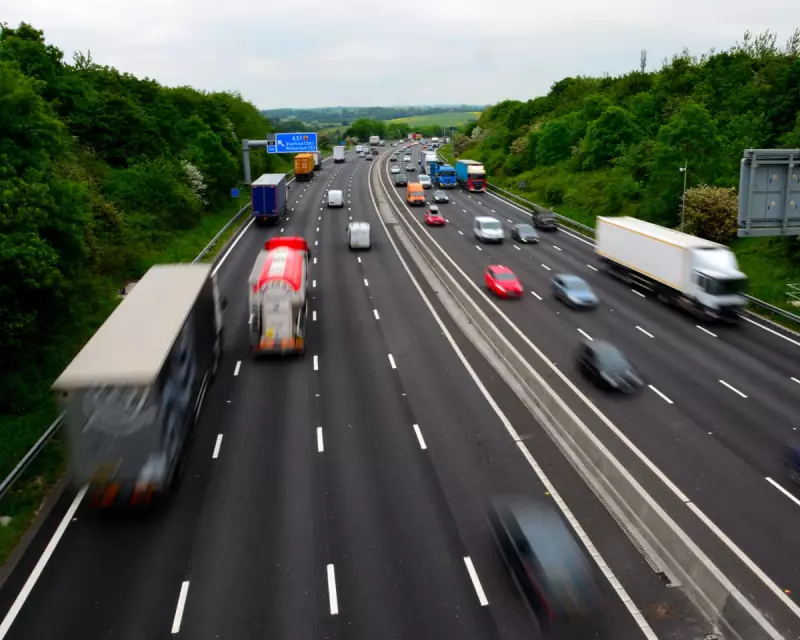
Smart motorways are designed to increase traffic capacity by converting the hard shoulder into a live lane of traffic. This system relies on occasional emergency laybys and electronic overhead signs to manage lane closures during incidents. The concept was introduced to alleviate congestion without the need for costly physical road widening, but it has faced significant scrutiny following several high-profile fatalities.
The Withheld Reports
The reports in question, known as Post-Opening Project Evaluations (Popes), are comprehensive assessments conducted by National Highways. Campaigners argue that these documents have been suppressed because they likely cast doubt on both the safety credentials and the economic benefits of smart motorways. The Department for Transport has stated that the reports will be published imminently and maintains that they do not undermine the broader case for smart motorways, which are statistically presented as the safest roads in the country.
However, the delay in publication has raised serious concerns. The last publicly available Pope report, released in 2021, examined a converted section of the M1 between junctions 10 and 13. Its findings were stark: over the first five years of operation, journey times had actually slowed, the number of accidents resulting in severe injuries had increased, and a forecasted economic boost of £1 billion had turned into a deficit of £200 million.
Campaigner and Organisational Responses
Claire Mercer, who leads the Smart Motorways Kill campaign after her husband Jason was killed on the M1 in 2019, has been vocal in her criticism. She demonstrated outside the Department for Transport with her local MP last November, urging the government to "release the Popes." Mercer expressed frustration, stating, "The longer it takes, you think either they are that uninterested, or there really is something going on. If the reports showed good news, they'd release them."
Jack Cousens, head of roads policy at the AA, echoed these sentiments, emphasising that the reports have been withheld for far too long. He argued that transparency is essential, regardless of whether the findings highlight failures or successes. The AA and its surveyed drivers advocate for the restoration of hard shoulders, noting that while the hard shoulder can be dangerous, it is less perilous than breaking down in a live lane with uncertain technological detection.
Government Actions and Ongoing Concerns
In response to mounting pressure, the Conservative government implemented a moratorium on new smart motorways in 2020, although existing conversion projects continued. Since then, measures have been introduced to enhance safety, including:
- Upgraded vehicle detection technology
- Increased number of emergency stopping areas
- Additional signage indicating distances to safe stopping points
- Enhanced enforcement cameras to detect vehicles ignoring lane closure signals
Despite these improvements, campaigners remain unconvinced. Mercer pointedly remarked, "We've had stocktakes, select committees, ombudsmen ... We continually investigate smart motorways – but leave them running. All they have to do is turn the first lane off. Any company would be done for corporate manslaughter by now."
Statistical Claims and Future Transparency
National Highways and the Department for Transport continue to assert that smart motorways are the safest roads in terms of fatalities and serious injuries. A spokesperson for National Highways stated, "Safety is our number one priority, and we're doing everything in our control to make sure our roads are even safer. Our latest analysis continues to show that overall, smart motorways remain our safest roads."
Nevertheless, the ongoing delay in publishing the Pope reports, coupled with internal communications suggesting officials are anxious about how the results will be presented, fuels speculation that the findings may be unfavourable. Chris Ames, author of the Transport Insights blog, noted that the continued postponement implies the contents "must be really, really bad."
As the debate rages on, the call for immediate publication grows louder, with stakeholders demanding full transparency to ensure informed decisions about the future of Britain's road infrastructure.