Newly released government papers have exposed a bitter behind-the-scenes battle in the 1990s, where senior Treasury figures, including then-Chancellor Kenneth Clarke, campaigned to stop the project that would become the Elizabeth Line, branding it a wasteful "folie de grandeur".
Treasury's 'Rearguard Action' Against Crossrail
Correspondence released to the National Archives shows a protracted campaign by Treasury ministers in early 1994 to shelve the ambitious rail scheme. At the time, the Conservative government under John Major was preparing to introduce a bill to Parliament to approve the construction of twin tunnels between the City of London and Paddington.
Kenneth Clarke, Chancellor from 1993 to 1997, led the charge. In a memo to the then Transport Secretary, Sir John MacGregor, Clarke stated he would not support a parliamentary motion for the railway. He argued it was excessively expensive and that cheaper alternatives could deliver similar economic benefits.

"I repeat my view that the only sensible course… is to stand back from Crossrail and think seriously about better options," Clarke wrote. He added, "I detect an increasing reluctance on the part of taxpayers to pay for such follies [sic] de grandeur in future." Copies of this memo were sent to Prime Minister John Major and the head of the civil service, Robin Butler.
Portillo's Prediction: 'It Will Never Be Built'
Clarke was bolstered by the then Chief Secretary to the Treasury, Michael Portillo. In a letter to the Prime Minister, Portillo made the stark prediction that the Elizabeth Line would "never be built".
Portillo, who later became Defence Secretary, argued that difficulties in securing private funding would delay construction until 2006, with an opening date as late as 2011. He warned that going ahead with the bill would simply mean a future government would have to cancel it.
Both ministers expressed scepticism about future passenger demand and pushed for cheaper options, such as extending the Heathrow Express into the City and improving signalling on the Northern Line.
A Project Delayed But Ultimately Triumphant
The Treasury's opposition ultimately succeeded in the short term. The Conservative government abandoned the plans in the 1990s, and the project was only revived by Tony Blair's Labour administration in 2006.
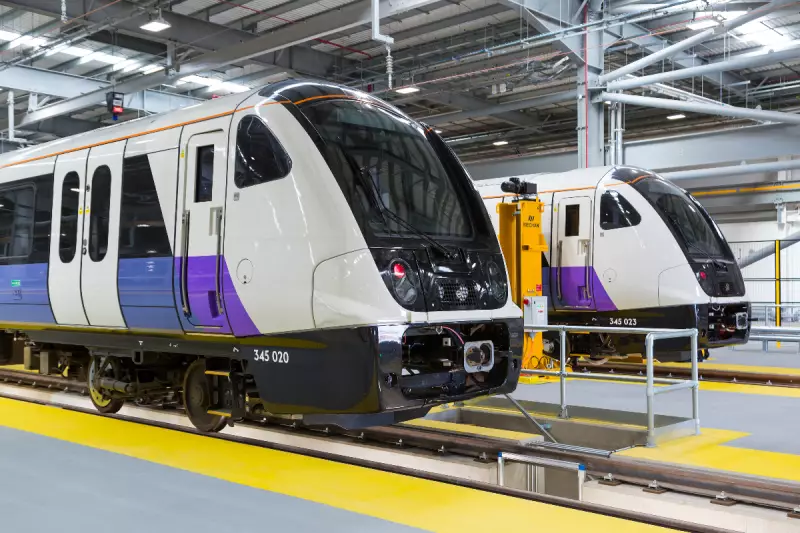
The warnings from Clarke and Portillo now stand in stark contrast to the line's reality. Since opening in 2022, demand has vastly outstripped official forecasts, cementing its reputation as one of the UK's few major infrastructure successes of recent decades.
However, the megaproject was not without its problems. It was plagued by delays and significant budget overruns. The final cost ballooned from an initial £14.8bn to £18.8bn, and it opened to passengers four years behind its original 2018 schedule.
The released archives reveal a fascinating historical counterpoint, showing how close one of London's most vital transport links came to being cancelled before a single track was laid.