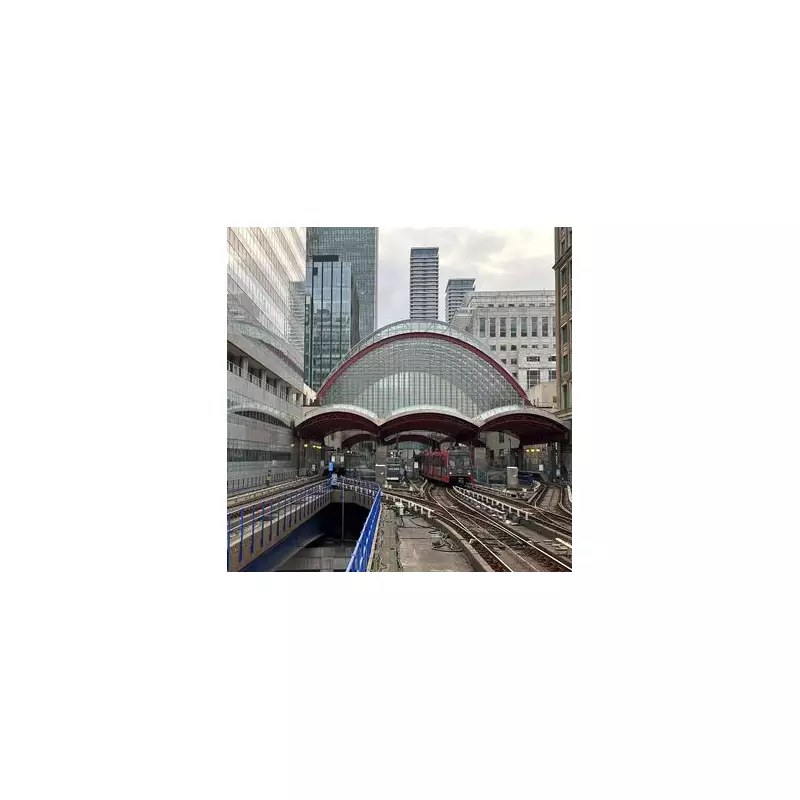
London's vast transport network is famed for its complexity, but one station in East London stands out for a particularly curious reason. West India Quay on the Docklands Light Railway (DLR) holds a dubious record: it is the closest station to another on the entire London Underground and DLR system.
A Record-Breaking Short Hop
The platform at West India Quay DLR offers a clear view of its neighbour, Canary Wharf station, just 199 metres away. The journey between these two stops is astonishingly brief, lasting around 30 seconds. Situated south of Billingsgate Road and Aspen Way, this station sits on the edge of the main Docklands redevelopment area.
While its tracks provide a shortcut over part of the dock for pedestrians, the station's overall usefulness is hotly debated. Its extreme proximity to the major hub of Canary Wharf leads many to question its purpose. However, it does serve as the closest station to the Museum of London Docklands and the restaurants and bars within the historic West India Quay warehouse.
A Station With a Stop-Start History
West India Quay DLR first opened to passengers in August 1987. Its early years were interrupted, however, as it was temporarily closed between 1991 and 1993 during significant redevelopment of the surrounding area.
Both West India Quay and Canary Wharf were part of the original DLR plans, which always intended for the stations to be close together. Interestingly, the launch of Canary Wharf DLR was initially delayed. Planners realised the area's development would create demand far beyond the station's original capacity.
Changing Routes and Commuter Frustration
The station's role has diminished over time. It fell so far out of favour with commuters that it no longer serves the DLR route from Bank to Lewisham. A route change in 2017 meant passengers on that line had to alight at Canary Wharf and board a train heading back the way they came to reach West India Quay.
This quirky piece of transport infrastructure remains a fascinating footnote in London's travel story. It serves as a reminder of how urban planning and passenger needs evolve, sometimes leaving behind stations whose primary claim to fame is being remarkably close to another.