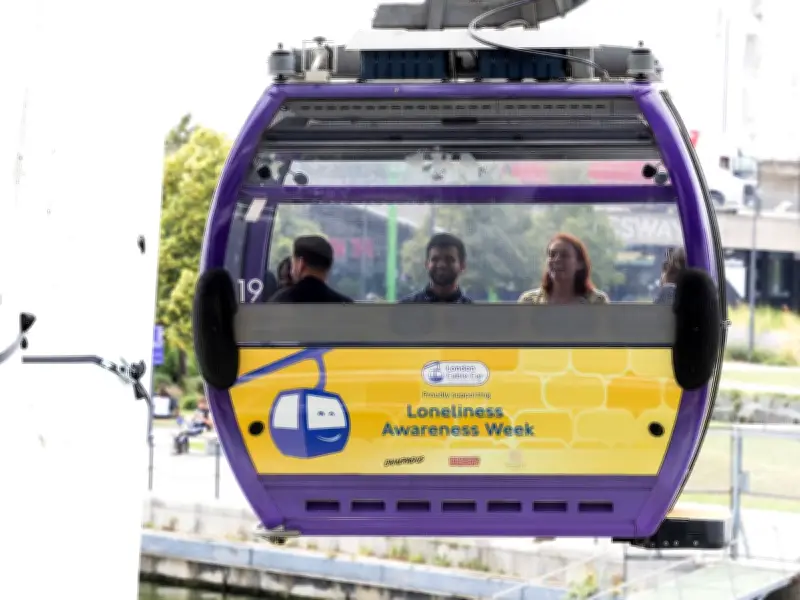
All 3,000 tickets for Transport for London's (TfL) third 'Chatty Cabins' initiative were taken up, the transport authority confirmed, as the scheme aims to tackle loneliness and counter disinformation in the capital. The initiative, which ran last week, offers free 20-minute round trips on the cable car, pairing individuals and groups in specially branded cabins with the simple instruction to get to know each other.
Loneliness in London: A Persistent Issue
A 2022 report commissioned by the Greater London Authority, 'Reconceptualising Loneliness in London', found that 700,000 Londoners feel lonely 'most' or 'all of the time'. The research highlighted that young, low-income, LGBTQ+, single parents, deaf or disabled, and ethnic minority Londoners are disproportionately affected. In response, City Hall and TfL have launched several schemes to help people build meaningful relationships, especially amid divisive and false rhetoric about the capital on social media.
Chatty Cabins: Building Connections
Following successful runs in February and June 2025, the latest Chatty Cabins event saw all tickets snapped up. Fiona Jones, TfL's Head of London Cable Car, said: 'This has been the best year of the scheme so far. We love giving back, and we thought about how to create a safe environment to get people chatting and connecting. From feedback we've heard, there's people who [met here that] are still in touch now. They might never have crossed paths in their day-to-day life. This is bigger and better than ever.'
Dr Debbie Weekes-Bernard, the Deputy Mayor for Communities and Social Justice, who has helped roll out the Mayor's 'Loved and Wanted' initiative, added: 'It's all about giving Londoners the opportunity to connect with each other, strike up a conversation, in a safe space. Even though London is an incredibly vibrant, busy city, there are those who experience levels of loneliness. This, alongside a couple of other initiatives that we've been developing, is just one way of just trying to allow people who are experiencing difficulties with connecting with each other, an opportunity to find a space, which we've curated for them, where they can strike up a conversation and make a connection that they might not have ordinarily have made.'
Loved and Wanted: Community Spaces Across London
The 'Loved and Wanted' community spaces, funded by £1.8 million from the Mayor of London and the National Lottery Community Fund, are spread across the city and provide opportunities for people to come together and feel accepted regardless of background. An interactive map shows the locations. Dr Weekes-Bernard said: 'London is a city for everyone. We've funded Loved and Wanted community spaces, which are about enabling people to find a space that's local to them, where they can meet people, regardless of their background, strike up a conversation, get to know another person, but also, perhaps just learn something new about a culture that they've never come across or don't know that much about. That's as much about trying to tackle loneliness as it is around recognising that we're living in some challenging times.'
Combatting Disinformation
Last week, Mayor Sir Sadiq Khan announced £7 million would be spent on combatting disinformation about London on social media. He said the city had been subjected to a 'relentless and unprecedented attack of lies and hatred', with a GLA report earlier this year finding a nearly 200% increase in posts portraying the capital as dangerous or in decline over the past two years. Dr Weekes-Bernard suggested this may have contributed to an atmosphere of fear, compelling individuals to become more reclusive. She said: 'We know that social media can be a place which can both connect people and people find their communities online, but also it can be quite a divisive place. Some of what people see can contribute to them feeling isolated, or feeling harassed or targeted. Our whole campaign is about trying to provide those occasions for people to come together, perhaps learn a new skill or take part in a particular initiative or a service that they might not have ordinarily come across.'
She added: 'We know that we have to kind of be quite intentional about this. We can't really leave people to just try to make these connections themselves, because we're living in a time when there is a lot of fear around. So if we can do anything to provide spaces and opportunities for people to make those connections, then we'd really like to have to do that. We want to remind people that there are more individuals out there who are kind, who care about each other, who look out for their neighbours, than there are people who are intentionally quite divisive. If you spend a lot of time online and you're from a particular minority community, you would think that this is an unsafe society for you. All of that work together, hopefully, goes some way towards enabling people to feel a little safer in our city, and to be able to counter some of the disinformation online.'