
Seven Nations and UK Government to Boycott Paralympics Opening Ceremony
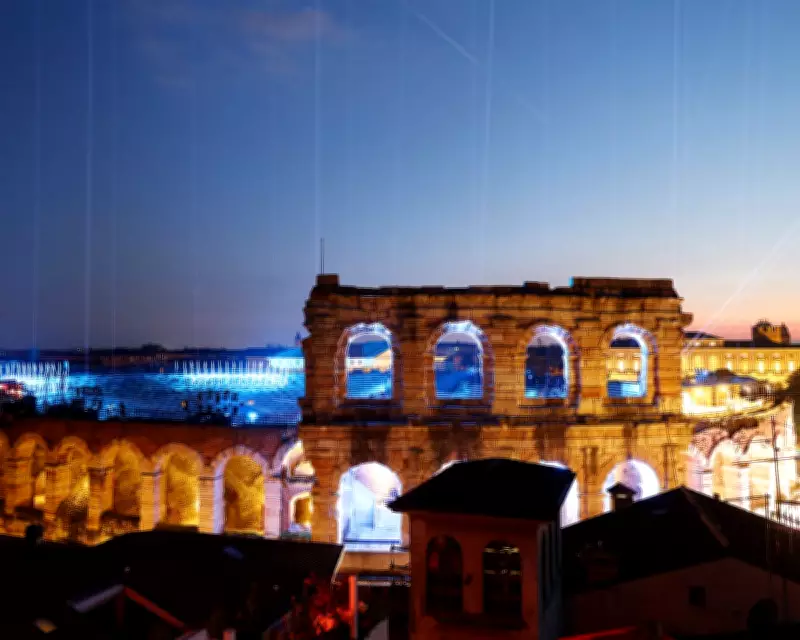
The International Paralympic Committee (IPC) has confirmed that seven nations and the British government will boycott the opening ceremony of the Winter Paralympics in protest against the inclusion of Russian and Belarusian athletes competing under their own flags. The Czech Republic, Estonia, Finland, Latvia, Lithuania, Poland, and Ukraine will not send athletes or officials to the ceremony at the historic Arena di Verona on Friday night.
Limited Participation and Geopolitical Tensions
Organizers estimate that fewer than 60% of competing countries will send full delegations to the event, reflecting widespread discontent. Great Britain has stated it will not provide athletic representation due to the imminent start of competition, though the UK government reiterated its opposition to Russian participation. "We have been clear that the Russian and Belarusian states should not be represented in international sport while the barbaric full-scale invasion of Ukraine is ongoing," a government spokesperson said.
The UK confirmed that Minister for Sport Stephanie Peacock will be in Cortina solely to support ParalympicsGB athletes, not to attend the ceremony. This boycott marks a significant diplomatic stance against the IPC's decision to allow Russian athletes to compete under their national flag for the first time since 2014, following their ban from the 2022 Paralympics after the invasion of Ukraine.
IPC President Defends Democratic Process
IPC President Andrew Parsons defended the controversial decision, emphasizing that it was made through democratic principles by the IPC general assembly. "I acknowledge this decision has not been well received in some parts of the world," Parsons stated. "But I want to stress that the IPC is a democratic global organization whose decisions on member suspension are determined by its members."
Parsons outlined the voting history: in 2022, the assembly voted for full suspension of Russia; in 2023, for partial suspension; and in 2025, for no suspension. "Each time the IPC respected and implemented the decision of our member organizations, as we are bound by our constitution to do so. We cannot pick and choose when to be democratic," he added.
Middle East Conflict Adds to Uncertainty
Amid the boycott, there is mounting uncertainty over the participation of nations affected by the conflict involving the US, Israel, and Iran. Parsons declined to comment on specific risks but noted, "our thoughts are with those affected." The IPC is closely monitoring the situation to assess its impact on the Games and the wider Paralympic movement.
Focus on the Games and Social Impact
Despite geopolitical crises, Parsons sought to refocus attention on the Winter Paralympics, which will be the largest in history and mark its 50th anniversary. Approximately 612 athletes from 56 nations are expected to compete, a significant increase from the 474 athletes from 38 countries at Torino 2008. The event spans from Milan to Cortina, including Tesero, making it the most geographically extensive Paralympic Games ever.
"This only event of global reach that puts persons with disabilities centre stage is the Paralympic Games," Parsons emphasized. "So this is an important message to the world that if given opportunities, if we remove the barriers, persons with disability can do whatever they want. The games are important to send that message."
The IPC remains committed to ensuring the event serves as a platform to drive social change for the world's 1.3 billion persons with disabilities, even as it navigates complex international disputes.