Norway's Winter Olympics Triumph: A Lesson in Joyful Sports Development
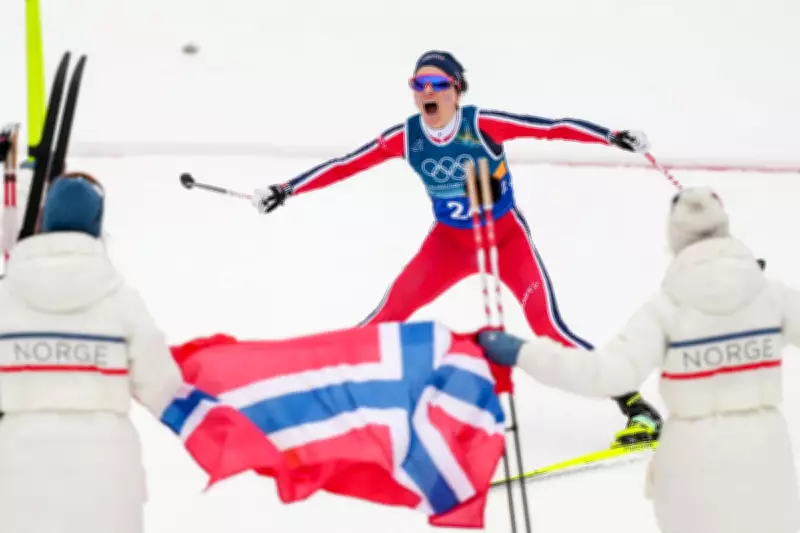
Heidi Weng's triumphant finish in the women's 4x7.5km cross-country skiing relay symbolized Norway's commanding performance at the Milano Cortina Winter Olympics, where the Nordic nation secured 18 gold medals and 41 total medals to top the medal table. This remarkable achievement by a country of just 5.6 million people has sparked global curiosity about their sustainable sports system.
The Norwegian Philosophy: Sport as Joy, Not Suffering
While Britain and many other nations implement early talent identification schemes, competitive mini-leagues, and intensive pathways for young athletes, Norway takes a fundamentally different approach. Norwegian children experience no competitive sports before age 12, focusing instead on the national youth sports strategy "Joy of Sport for All." This contrasts sharply with the UK's "Get Active" strategy, which Norwegian sports leaders view as more of a reprimand than an inspiring vision.
The Norwegian system liberates coaches and volunteers from archaic competitive tropes that still dominate many Western sports cultures. Norwegian coaches operate under one overarching principle: to create experiences of joy for every child. This philosophy extends to giving trophies to all participants—a practice often ridiculed in Britain as "soft" or "pathetic," yet one that Norway has proven creates resilient, successful athletes.
Sustainable Excellence Through Delayed Specialization
Norwegian athletes like Johannes Høsflot Klæbo, who won six gold medals at Milano Cortina and now holds 11 Olympic golds total, exemplify the system's success. Klæbo only entered the performance system at age 15 after enjoying a childhood filled with diverse sports experiences. Norwegian children are not pressured into early specialization, with early bloomers receiving no preferential treatment over late developers.
The results speak for themselves: 90% of Norwegian young children remain physically active, with more than 70% of teenagers maintaining regular activity. This contrasts starkly with UK statistics showing fewer than half of children get basic daily exercise, with rapidly increasing dropout rates before adulthood.
The Social Fabric of Norwegian Sports
Norwegian sports culture is deeply integrated into family and community life. Schools organize winter ski days, families ski together on weekends, and children learn that sport is something fun they do with friends. Tore Øvrebø, Norway's director of elite sport, questions why other systems focus more on eliminating young participants than developing them: "The biggest motivation for kids to do sports is that they do it with their friends and they have fun."
Research confirms this approach: British studies show children drop out primarily when sports stop being enjoyable. Norwegian children avoid the damaging separation into "talented" and "untalented" categories that traumatizes many young athletes elsewhere.
Reimagining Youth Sports Worldwide
The Norwegian model presents a paradox that challenges conventional wisdom: by being less competitive in youth sports, Norway produces more competitive elite athletes. Their system emphasizes:
- More play and creativity in early sports experiences
- Development of wider movement ranges and coordination skills
- Stronger team experiences and social connection building
- Consistent investment ensuring access for all children
Norwegian sports leaders argue that the deep divide between "sport for fun" and "serious competitive sport" is a fiction that needs dismantling. They advocate for coaching courses that help instructors understand what makes children want to return to sports throughout their lives.
The ultimate win-win scenario: if every child learned to love sport through joyful experiences, societies would produce both better athletes and healthier humans. Norway's Olympic dominance proves that sustainable excellence emerges not from early suffering, but from childhoods filled with thriving sports experiences.