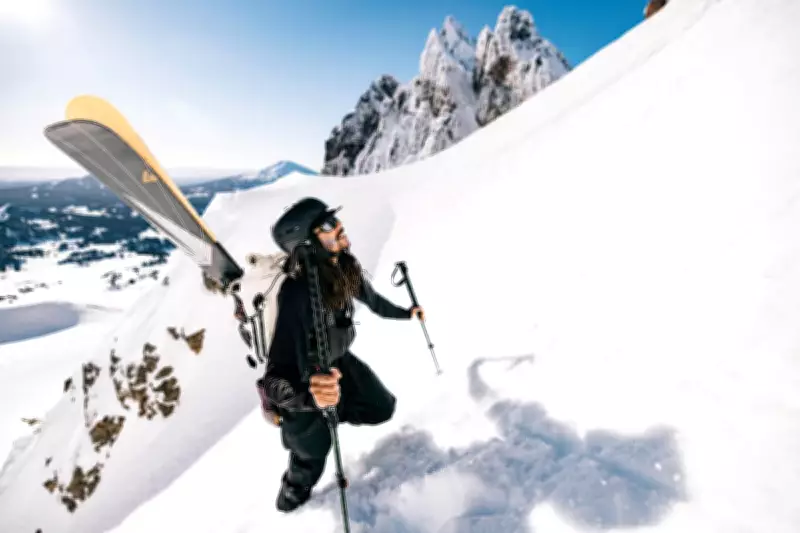
Mallory Duncan: Redefining Skiing Through Jazz and Creative Freedom
Mallory Duncan, a professional skier, award-winning filmmaker, entrepreneur, and saxophonist, has come to accept that he doesn't always fit into the traditional ski industry. The Californian, who once harbored ambitions of winning gold at the Winter Olympics, now focuses on what skiing can do for the soul, blending his passion for jazz with his love for the mountains.
A Hybrid Childhood in California
Growing up in the Hayward Hills just south of Oakland, California, Duncan lived what he describes as a hybrid lifestyle. Weekdays were spent at school, where he often avoided homework, disrupted class, and found himself in trouble. Weekends, however, were reserved for Alpine Meadows, a ski resort on the northwest shores of Lake Tahoe, where he would jump off cliffs and ski powder with friends. Every Sunday, he enjoyed dinner at his grandfather's house, watching football and listening to jazz.
"I've come to accept that I don't always fit into the ski industry," says Duncan, who now lives in Portland and embraces city life, music, and the integration of art into his work. "Being exposed to many different types of experiences helps me be more creative in everything I do."
The Inextricable Link Between Jazz and Skiing
To Duncan, jazz and skiing have been deeply connected since childhood. He began playing the saxophone in third-grade band class, inspired by a Charlie Parker album cover at his grandfather's house. "I could memorize a song and play it, but I couldn't read music," admits the 33-year-old. "That's largely still true today. I still can't play sheet music well, but I loved playing the sax right away."
Simultaneously, Duncan was progressing as a skier. He learned to ski at just 18 months old, and his parents later used the ski hill as a de facto daycare. At eight, a family friend recommended the Alpine Meadows development program, leading him to pursue skiing more seriously. By age 13, he was the second-ranked skier in his division, earning a scholarship at Sugar Bowl Academy, a private high school near Lake Tahoe focused on skiing.
From Olympic Dreams to a New Path
Had circumstances differed, Duncan might have been competing for an Olympic medal this month. "My ambition was to be one of the best in the country, to win a gold medal at the Olympics, even if that sounds bold now," he recalls. "There were around 10 kids in my class. We lived on campus and it was very regimented, which felt stifling at the time. But we got to ski almost every day, which kept me in line. For a decade, racing was my whole life."
Despite his comfort on the slopes, Duncan didn't always fit in at school. He was one of the few kids who listened to hip-hop, soul, funk, and jazz, and he dreamed of working as a producer at a record label. "I remember my dad listening to Stevie Wonder, Marvin Gaye and Kool & The Gang," says Duncan, "and stealing my sister's hip-hop CDs, but I didn't develop my own taste until I moved away from home."
With a goal to race at the highest level with the US Ski Team, Duncan enrolled at the University of Vermont, home to one of the best collegiate programs in the country. However, he didn't make the team and decided to step away from the sport. A year later, friends brought him back to the slopes, and he quickly reconnected with skiing in a new way.
Relearning Skiing Through the Soul
"When I stopped racing, it was like relearning how to ski," Duncan explains. "Without gates, it felt like playing music from the soul, flowing with what felt natural. A friend later said to me that playing from sheet music is like learning to ski backwards. You first need to learn how to ski from your soul."
For the first time, Duncan felt an alignment between music and the way he wanted to ski: no one could dictate where he could go or what he could do. "It was all about exploring new areas, following your heart, being adaptable, and seeing what Mother Nature gave you, it didn't have to be uniform [giant slalom] turns down the fall line," he says. "That's just like jazz. You listen to what's happening in order to keep that song moving forward."
He elaborates: "Jazz is a disruptive genre that doesn't always follow the rules, an improvisational thing. You don't always play the right notes or stay in the same key as everyone else. Both give you endless opportunities to express yourself."
Career Milestones and Creative Entrepreneurship
In 2019, Duncan signed his first ski sponsor, a major step in his career. The timing was nearly perfect, as backcountry skiing—his primary discipline—exploded in popularity during the pandemic, with many skiers seeking safe ways to get outside and experience freedom. He also launched his own creative agency, focusing on sales, marketing, and film projects.
"Creativity isn't just music and art, it's the way you bring an idea to life," Duncan asserts. "Entrepreneurship is one of the best ways I've found to be creative, finding new ways to create, form, and mould a business. It's an expression of my creativity."
Breaking Barriers and Expanding Perspectives
Duncan started turning heads with his fresh perspective on the industry. Despite being one of the very few Black pro skiers, he wanted his work to speak for him. "I like to be about things, not talk about them," he states. "I live a Black experience, but being Black doesn't define me as a skier."
His award-winning short film, Blackcountry Journal, premiered in the fall of 2023 and exemplified his ethos. It blends backcountry skiing with jazz in a groundbreaking way, surprising much of the ski industry. "I wanted to show that Black people have a place in skiing, not tell people they do," Duncan explains. "Jazz is a historically Black discipline, but by not saying that explicitly opened the door for more people to connect with it."
This insight stems from years of bias he felt growing up, always trying to fit into a ski industry where he didn't always feel he belonged. "I didn't always feel like a skier," Duncan admits. "I sometimes still don't. When I'm in a space with a lot of people just talking just about skiing, I feel othered because that's not why I got into it. I got into skiing for freedom, so I'm trying to expand what it means to be a skier so others can have that."
Evolving Goals and Artistic Vision
Duncan's goals have evolved from traditional accolades and achievements to improvements in his personal style and new ways to be creative. He has lost all desire to be the fastest or perform the biggest tricks; instead, he simply wants to finish a backcountry ski line and, "look up to see art." Through his unique blend of jazz, skiing, and entrepreneurship, Mallory Duncan continues to redefine the boundaries of the ski industry, inspiring others to embrace creativity and freedom on and off the slopes.