IOC President Appeals for Respect Towards Americans at Winter Olympics
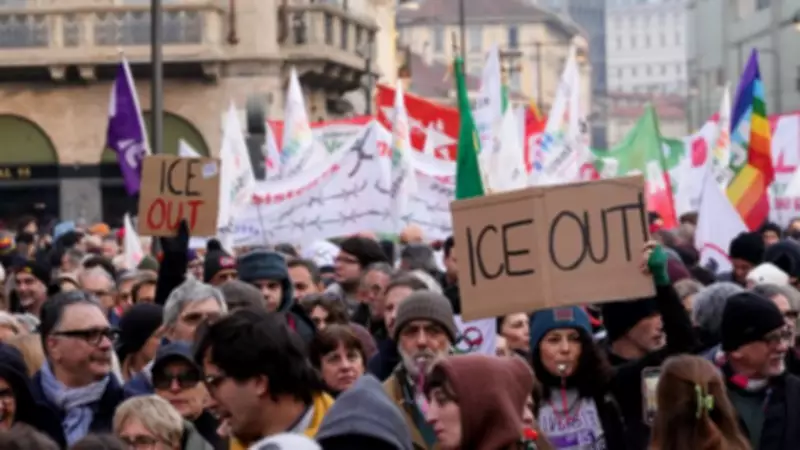
The International Olympic Committee (IOC) president, Kirsty Coventry, has issued a heartfelt plea for spectators to show respect rather than jeer American officials and athletes during the opening ceremony of the Milan-Cortina Winter Olympics. This call comes amid escalating tensions and protests in Milan, where hundreds of demonstrators have gathered in recent days to voice their opposition to the deployment of US Immigration and Customs Enforcement (ICE) personnel at the Games.
Protests Target US ICE Deployment in Milan
Local protests in Milan have intensified, focusing on the presence of ICE agents who are in the city to protect the official US delegation. This delegation is expected to include high-profile figures such as Vice President JD Vance and Secretary of State Marco Rubio during the opening ceremony visits. The decision to deploy ICE has sparked controversy, particularly after Milan mayor Beppe Sala described the agency as a "militia that kills" following the deaths of two Americans in Minneapolis last month.
Despite attempts by the Italian government to reassure the public, insisting that ICE personnel will not have policing powers on the streets, their mere presence has become a significant concern for protesting locals. The situation is further complicated by broader geopolitical tensions, including recent disputes between former US President Donald Trump and Europe over issues like his threats to capture Greenland, which have contributed to a potentially hostile atmosphere.
Coventry Emphasises Olympic Spirit of Unity
In response to the growing unrest, Kirsty Coventry was asked whether jeering at the opening ceremony would constitute freedom of expression or if there is a need for spectators to demonstrate respect. She expressed hope that the ceremony would serve as an opportunity for everyone to be respectful of each other, reflecting on her observations of athletes from different countries mingling in the official Olympic village in Milan.
"It was a real opportunity to put into perspective how we could be," Ms Coventry remarked. "And so I hope that the opening ceremony will do that and will be a reminder for everyone how we could be." Her comments underscore the IOC's commitment to fostering a spirit of unity and sportsmanship, even in the face of political and social divisions.
Broader Implications for Future Olympics
The current situation in Milan has broader implications for upcoming Olympic events, particularly the Los Angeles Olympics scheduled for 2028. Ms Coventry has yet to meet Donald Trump, despite the proximity of the LA Games, and Olympic chiefs are facing pressure from IOC members in Africa to address concerns about the impact of Trump's travel bans on delegations. Officials from countries like Ethiopia and Djibouti have challenged LA 2028 organisers during meetings in Milan, emphasising the need for equal access for all nations beyond just athletes.
Ms Coventry's own country, Zimbabwe, is subject to some US entry restrictions, highlighting the personal and political complexities involved. Her lack of contact with Trump contrasts with the US leader's regular engagements with FIFA president Gianni Infantino, whose World Cup is imminent this summer. Meanwhile, the IOC's move towards a ban on transgender women competing in women's sports is seen as a policy that may placate Trump, with Ms Coventry noting that relations are expected to strengthen as the Olympics approach.
Navigating a Challenging Environment
As the Winter Olympics proceed, the IOC and American athletes must navigate a tricky and challenging environment in Milan-Cortina. The protests and geopolitical tensions have created a backdrop of uncertainty, but Ms Coventry's appeal for respect aims to uphold the Olympic values of peace and international cooperation. The success of this effort will be closely watched, as it could set a precedent for how future Games handle similar political and social conflicts.