Curling's Olympic Spirit Questioned Amid Heated Controversy
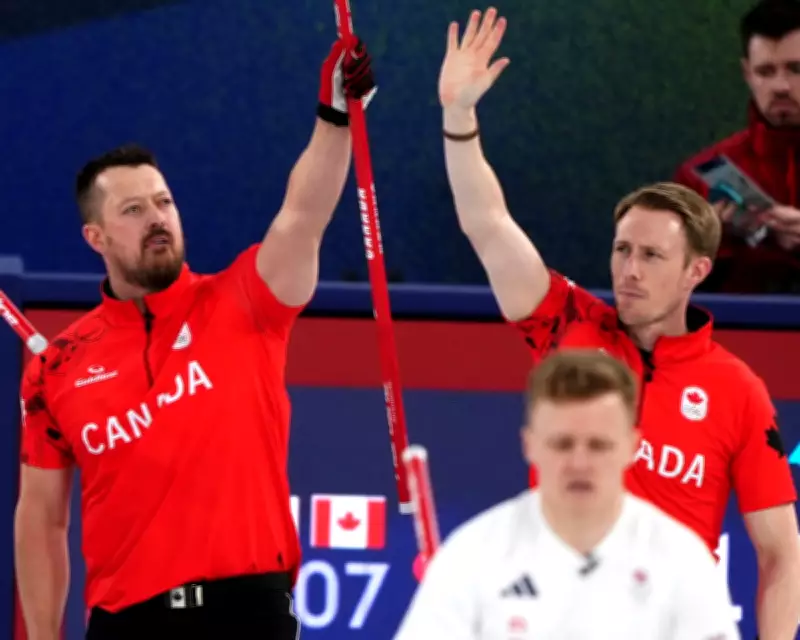
The normally genteel world of Olympic curling has been plunged into turmoil following a series of contentious incidents that have players questioning the very soul of their sport. What began as a technical dispute over a double-touch violation has escalated into a full-blown crisis of sportsmanship, with Canada's Marc Kennedy declaring "the whole spirit of curling is dead" after his team's commanding performances.
Canada Dominates While Controversy Simmers
On Tuesday, the Canadian men's curling team delivered a decisive 9-5 victory over Great Britain, significantly dimming British hopes for a semi-final berth. Bruce Mouat's British squad now faces the daunting task of defeating the United States while relying on favorable results from other matches to advance in the competition. Kennedy acknowledged the unusual circumstances, noting that "Mouat gave us a couple of misses to work with, which isn't something we've had from him before."
The Canadian victory comes amidst an ongoing controversy that began last Friday when Swedish curler Oskar Eriksson accused Kennedy of making an illegal double-touch during their match. The incident escalated when Kennedy responded with profanity, sparking a chain reaction that has consumed the curling community for days. Slow-motion footage of Kennedy's alleged infraction has gone viral across social media platforms, generating millions of views and transforming what was once a niche winter sport into global trending news.
The Spirit of Curling Under Scrutiny
Kennedy has been vocal about his concerns regarding the evolving nature of competitive curling. "This whole trying to catch people in the act of an infraction sucks," he stated on Monday. "We don't look for infractions at grand slams. We don't look for that kind of stuff on tour. We just trust that the people around us aren't trying to cheat."
The Canadian curler emphasized that traditional curling etiquette involves competitors taking each other's word at face value, with minor infractions being handled immediately between players rather than through official intervention. "That's where the spirit of curling is in a little bit of trouble," Kennedy lamented, "and, honestly, that's probably come from the quest for medals."
Unprecedented Olympic Attention
The controversy has generated more attention for curling than any event since the sport's reintroduction to the Olympic program in 1998. Social media platforms have exploded with creative content, including TikTok videos parodying the Kennedy-Eriksson rivalry that have amassed over 2.5 million views. The organizing committee found themselves scrambling to manage the situation, initially deploying additional referees to monitor the hog-line before removing them following complaints from competitors.
Canada's team coach, Paul Webster, expressed concerns about the handling of the situation, stating, "We're not at some bonspiel in Saskatchewan, we're at the Olympics. We have untrained people doing things they've never done before. I have a lot of respect for people who are here and volunteering their time, but I think we really have to question if we're doing new things at the Olympic Games."
Silver Linings in the Controversy
Despite the negative aspects of the controversy, some curlers recognize potential benefits for the sport's visibility. Canadian skip Brad Jacobs offered a pragmatic perspective: "When you actually look at everything that's gone on, and you consider how many eyeballs turned to curling over the last 72 hours, it's probably the best thing ever for our sport. What does the world feed off nowadays? Negativity. But that's OK. Like I said, all of that negativity brought a lot of eyeballs to the sport of curling that maybe have never even considered looking at it before."
The timing of the controversy coincides with significant developments in professional curling, including the upcoming launch of The Rock League international franchise competition next April. Several top curlers, including Mouat, have already committed to participate in the new tournament, suggesting that the increased attention could translate into greater commercial opportunities for the sport.
However, the irony remains that unless Great Britain receives favorable results from other matches, spectators may miss the opportunity to watch Mouat—widely regarded as the world's best curler—compete in the semi-finals. As the curling world grapples with questions about sportsmanship, officiating, and the pressure of Olympic competition, one thing remains clear: the ice has never been hotter for this traditionally reserved winter sport.