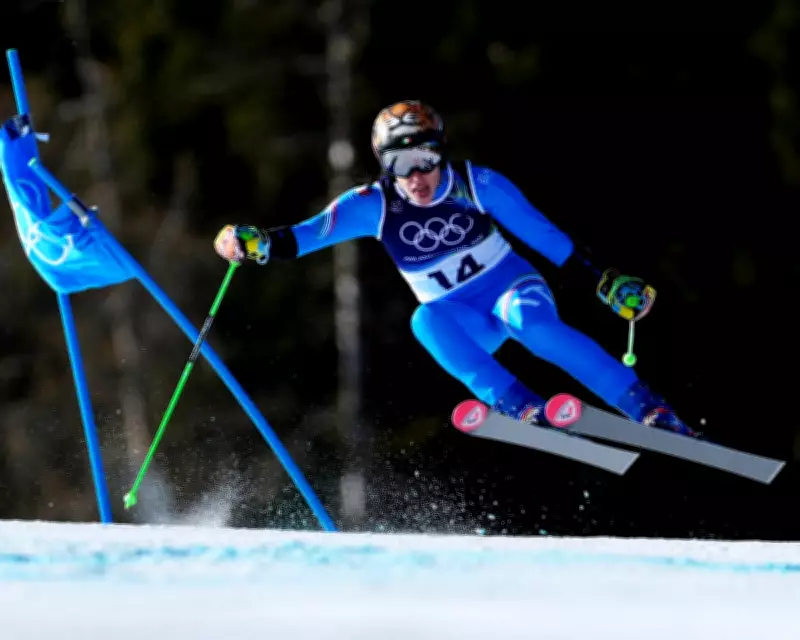
Federica Brignone Secures Second Gold Medal in Cortina with Dominant Giant Slalom Performance
Italian skiing sensation Federica Brignone has delivered a breathtaking performance at the Winter Olympics in Cortina, capturing her second gold medal in just three days. Following her triumph in the women's Super-G event on Friday, Brignone demonstrated exceptional skill and determination to win the giant slalom competition by a decisive margin.
A Commanding Victory on Home Soil
The 35-year-old champion finished with a winning gap of just over six-tenths of a second, which represents an enormous advantage in elite alpine skiing. To put this into perspective, the margin between Brignone and second place was equivalent to the difference between second and fifteenth position in the final standings.
Behind Brignone, an incredibly tight race unfolded for the remaining podium positions. Sweden's Sara Hector and Norway's Thea Louise Stjernesund tied for second place, separated by a mere six-hundredths of a second from each other and from Italian teammate Lara Della Mea, who finished just behind them.
Emotional Triumph After Severe Injury
Brignone's victory becomes even more remarkable considering her challenging journey to these Olympics. Just three hundred days before the competition, the Italian skier faced uncertainty about whether she would ever walk normally again, let alone compete at this level.
During the Italian national championships in April of last year, Brignone suffered a devastating crash that resulted in four fractures in her left knee and a torn anterior cruciate ligament. The injury required three separate surgical procedures, the insertion of metal screws and plates into her joint, and seven months of intensive rehabilitation.
"I have too many emotions. I can't believe it, this is just crazy," Brignone exclaimed after her victory. "My attitude was that I would be happy just to be here. That was already an achievement. Just to be back as an athlete."
Shiffrin's Struggles and Brignone's Historic Achievement
Meanwhile, American skiing superstar Mikaela Shiffrin, who defeated Brignone in this event at the 2018 Winter Olympics, faced significant challenges in Cortina. The 30-year-old, who holds the record for most World Cup victories in skiing history, has been openly discussing her struggles with post-traumatic stress disorder following a near-fatal crash in November 2024.
That accident at Killington resulted in a puncture wound that nearly proved fatal by tearing open her colon. Shiffrin has acknowledged that she is essentially relearning how to race in the manner she once took for granted. She finished eleventh in the giant slalom, nearly a full second behind Brignone's winning time.
Brignone's Cortina gold medals add to her impressive Olympic collection, which now includes five medals total after the silver and two bronze medals she earned in Beijing and Pyeongchang. With this achievement, she has become the most decorated Italian skier in Olympic history.
A Memorable Moment of Sportsmanship
The conclusion of the race provided a particularly poignant moment of sportsmanship. Both Sara Hector and Thea Louise Stjernesund, after realizing they had tied for second place, dropped to their knees and bowed before Brignone in a gesture of respect for her dominant performance.
The Italian fans in attendance created an electric atmosphere, with grandstands bouncing with celebration as Brignone crossed the finish line. "I crossed the finish line and I said: 'I don't know if it's enough,'" Brignone recalled. "Then I heard the crowd and I said: 'Oh, maybe yes.' Then I turned around and I saw number one."
Brignone's performance on the L'Olympia delle Tofane course represents not just a personal triumph over adversity, but a historic moment for Italian winter sports. Her journey from severe injury to double Olympic gold champion in less than a year stands as one of the most remarkable comeback stories in recent Olympic history.