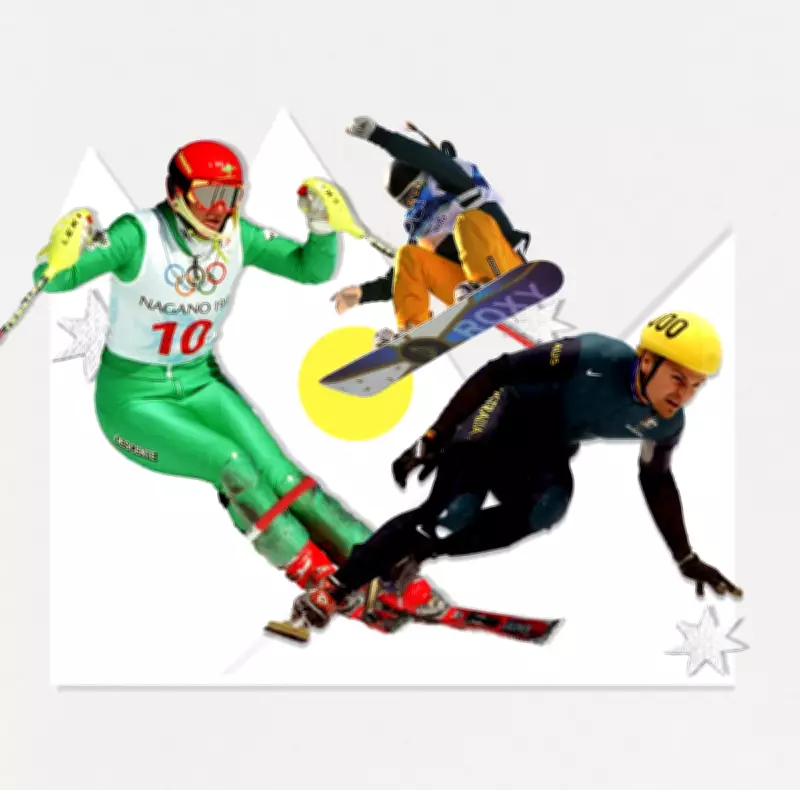
While Australia may be renowned for its sun-drenched beaches and summer sports, the nation has steadily carved out an impressive legacy in the frosty arenas of the Winter Olympics. From unexpected triumphs to consistent excellence in skiing and snowboarding, Australian athletes have delivered some of the most celebrated moments in the country's sporting history.
A Growing Winter Sports Powerhouse
Australia participated in twelve Winter Games with varying degrees of success before finally securing its first podium finish, marking its arrival among established snow and ice nations. To date, Australian competitors have collected six gold, seven silver, and six bronze medals, with hopes high for adding to this tally at the upcoming Milano Cortina Games. This growing medal collection represents not just athletic achievement but a significant shift in Australia's winter sports capabilities.
1. Steven Bradbury's Legendary Gold Medal
In what remains one of the most extraordinary moments in Olympic history, Steven Bradbury claimed Australia's first Winter Olympics gold medal in the 2002 Salt Lake City 1,000m short-track speed skating final. The 28-year-old skater acknowledged that his ageing legs couldn't match the speed of his four competitors, so he adopted a cautious strategy, staying well behind the leading pack.
Remarkably, Bradbury had already benefited from competitors' falls in both the quarter-finals and semi-finals. In the final, with just fifteen metres remaining on the last corner, all four skaters ahead of him collided and crashed to the ice. Bradbury calmly raised his arms and glided across the finish line, creating an iconic moment that would enter Australian sporting folklore and give birth to the phrase "doing a Bradbury" to describe an unexpected victory.
2. Zali Steggall's Alpine Skiing Breakthrough
Before Zali Steggall's bronze medal performance in the slalom at Nagano 1998, Australia often felt like an unexpected participant at Winter Games. The 23-year-old skier, who had already become the first Australian woman to win a World Cup alpine skiing event, demonstrated that the nation could genuinely compete on snow and ice.
Steggall finished just 0.27 seconds behind the gold medallist with a time of 1 minute 32.67 seconds, proving that Australian athletes could challenge the traditional winter sports powerhouses. Her achievement significantly boosted funding and support for elite winter sport athletes in Australia, paving the way for future successes.
3. Australia's Freestyle Skiing Excellence
Alisa Camplin became Australia's second Winter Olympics gold medallist shortly after Bradbury's triumph, winning the aerials event at Salt Lake City 2002. Remarkably, she achieved this victory while competing with two fractured ankles, defying medical advice to land two triple-twisting, double backflip jumps.
Camplin added a bronze medal four years later, while Lydia Lassila continued Australia's aerial skiing success with gold at Vancouver 2010 and bronze in Sochi. These achievements established freestyle skiing as an unexpected strength for Australia, with hopes that this legacy will continue at future Games.
4. The Historic First Winter Medal
Before Steven Bradbury's individual gold, Australia's first Winter Olympics medal came from the 5,000m short-track relay team at Lillehammer 1994. The quartet, which included Bradbury alongside Kieran Hansen, Andrew Murtha, and Richard Nizielski, adopted a strategy focused on maintaining stability rather than chasing higher positions.
This bronze medal breakthrough represented a crucial milestone for Australian winter sports, demonstrating that the nation could compete at the highest level and setting the stage for future achievements across various disciplines.
5. Torah Bright and Dale Begg-Smith's Success
Dale Begg-Smith's decision to switch allegiance from Canada to Australia as a teenager paid dividends when he won moguls gold at Turin 2006 at just 21 years old. The tech entrepreneur added a silver medal four years later in Vancouver, his birthplace, despite controversy over judging decisions.
Torah Bright faced her own dramatic path to Olympic glory in 2010. After crashing on her first run in the snowboard halfpipe final, the 23-year-old flag bearer delivered a high-risk, high-scoring second run to secure Australia's first Olympic snowboarding gold medal. She followed this with silver in the same event at Sochi 2014, joining Begg-Smith as Australia's most successful Winter Olympian to date.
These five moments represent just part of Australia's growing winter sports story. From Steven Bradbury's legendary last-minute victory to Torah Bright's snowboard excellence, Australian athletes have repeatedly demonstrated that determination and skill can overcome geographical disadvantages. As the nation prepares for future Winter Games, these historic achievements continue to inspire new generations of winter sports competitors.